Rick Santorum & the Data Behind the Catholic, Evangelical, Youth & Women’s Vote
The divide between the truth of the election results and the punditry of the mainstream media is seemingly growing every major primary election night. Perhaps none more than the recent Super Tuesday results, especially those of Ohio. How could it possibly be that Rick Santorum, the former Pennsylvania Senator won the youth vote, all voters under 44, and the married women vote? If one listens to the mainstream media, especially that of NBC, MSNBC and the New York Times one would think the only people voting for Rick Santorum would be rust belt pre-Vatican II ordained Catholic priests, and an amalgamation of southern characters such as Jed Clampett, Mr. Haney, as well as some assorted extras from the set of Deliverance. However, the true exit poll results tell us something quite different.
The mainstream media seemed shocked that Rick Santorum didn’t win the Catholic vote and won the Evangelical Vote as well as the others I indicated earlier; young people and married women. I want to delve into the nitty grtty of the statistics and demographics in a few paragraphs but first let me give you some background on those in the heartland who became liberals even though they grew up in GOP circles and folks like myself who became conservative after growing up in a Democratic household.
I grew up in a working class steel and railroad town in Ohio. My family, like many around us was Democrat in party affiliation and social conservative in our mindset. I was educated in Catholic schools (during the 1970s & 80s) and though it was the warm fuzzy era of Catholic education, our nuns and lay teachers never completely bought into the liberal model that was so the rage in cool, upscale areas. Continue reading
In The Birth Control Controversy; The Mocking of Conservative Religious Women By Militant Secularists Will Soon Backfire
We have all seen the supposed polls indicating that 99% of Catholic women use birth control. However, has anyone ever bothered to look at who conducted the poll? It was the Guttmacher Institute; the driving force behind abortion and other leftist social movements. Finally someone in the Mainstream Media (The Washington Post) has weeks after the fact realized the untruthful nature behind this canard. This is just one of many red herrings thrown at religious conservatives to discredit and mock them. It seems some in mainstream media are making it their mission to ask former Pennsylvania Senator and Republican Presidential candidate Rick Santorum every question imaginable with regard to birth control. Whatever happens to Santorum in the primary race, it does seem as if the Hand of Providence is helping bring up the topic of birth control and the faithful alternative of Natural Family Planning.
While there is some dispute between Catholics and some Evangelicals on birth control; there are signs that many Evangelicals are seeing what Catholics and some Orthodox Jews have long believed about birth control. In my previous book and forthcoming book; The Tide Continues To Turn Toward Catholicism, I cite quotes from Chuck Colson and R Albert Mohler, two towering figures in the Evangelical world. They have genuine affection for Pope Paul VI’s 1968 prophetic encyclical Humanae Vitae which cemented the Catholic view on birth control in the modern birth control pill era. If you want to really rile up a militant secularist you might mention that it wasn’t until 1930 that the first religious group (the Anglican Church) even approved of birth control. The Progressive Teddy Roosevelt said the idea of birth control was “ridiculous” and even liberal hero Dr Sigmund Freud said the whole concept was “narcissistic.”
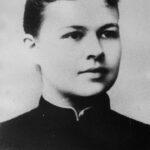
Dorothy Day (1897-1980) the late women’s rights activist, who used birth control back before any religious group approved of it, spoke out forcefully against abortion and birth control once she converted to Catholicism later in life. She told men and women that in using birth control they were becoming engaged in a culture that was disconnecting them from God’s plans, along with not using their bodies in accordance with the Holy Spirit. Though her women’s rights and libertarian economic views remained, she became a social conservative, who lashed out at Margaret Sanger and Planned Parenthood, something you aren’t likely to hear or read in the mainstream media.
Families that adhere to the clinically proven facts of Natural Family Planning are treated as if they are some sort of religious nuts. Militant secularists in the corridors of power (Legislative and Fourth Estate) have even thrown out their favorite term “sexually repressed.” Now this term is so widely repeated in our popular culture, perhaps we should examine where it came from. Herbert Marcuse (1898-1979) of the infamous Marxist “Frankfurt School” came up with the term. Marcuse left pre-World War II Germany and taught at Columbia. Marcuse believed in free love and surmised that the more narcissistic society was with regard to sexual relations, the better the world would become. Before his death, he claimed his prized student was 1960s militant radical Angela Davis. Marcuse was way out in left field in his day and yet the militant secularists in our pop culture have made him seem as mainstream as Dr. Phil. When societies turn away from religion they embrace the crazies like Marcuse; sadly something has to fill the vacuum and it is usually the ideas which come from the half baked among us that do so. Continue reading
Narcissism in Music (or, “How Gregorian Chant can Save the World”)
Last week National Public Radio ran a story called “Narcissism on Rise in Pop Music Lyrics.” It opened up with,
On this very day in 1985, the number one song on the Billboard Top 100 was…”We Are the World” (“We are the world. We are the children.”) Fast-forward to 2007 when Timbaland’s “Give It to Me” featuring Nelly Furtado topped the charts: “…love my a$$ and my abs in the video for ‘Promiscuous.’ My style is ridiculous.”
So more than two decades ago, we were holding hands and swaying to a song of unity, and these days, we’re bouncing to pop stars singing about how fabulous they are. Psychologist Nathan DeWall has had the pleasure of listening to it all for research, and he found that lyrics in pop music from 1980 to 2007 reflect increasing narcissism in society. And DeWall is an associate psychology professor at the University of Kentucky.
Dr. DeWall proceeded to explain:
I was listening to a song that, really, one of my favorite bands, Weezer, had on one of their albums recently, and it’s called “The Greatest Man That Ever Lived,” and I kept wondering, who would actually say that out loud? ”I am the greatest man that ever lived. I was born to give and give and give.”
The ironic thing is it’s a song about how I’m the greatest person in the world, but it’s to the tune of “‘Tis A Gift To Be Simple,” which is a song about humility. And so what I wanted to do, instead of relying on self-report measures of personality like narcissism, I wanted to actually go into our culture, our cultural products, which are tangible artifacts of our cultural environment. And so, for that, I thought maybe song lyrics would be a very good jumping-off spot.
What we found over time is that there’s an increasing focus on me and my instead of we and our and us. So, for example, instead of talking about love being between we and us and us finding new things together, it’s mostly about how, you know, for example, Justin Timberlake in 2006 said, “I’m bringing sexy back. Yeah. Them other boys don’t know how to act. Yeah.”
There is no doubt that DeWall is correct. Pop music is becoming more narcissistic. The broader, age old question is: Does art imitate life, or does life imitate art? The answer is probably some of both. Our culture is increasingly narcissistic. In the spirit of the NPR article, which was about music, I wish to propose a possible antidote for narcissism: the liturgy, specifically liturgical music.
Unfortunately, we must first distinguish between music that might be heard in any given liturgy and liturgical music, properly speaking. While the Catholic Church has been plagued with bad versions of the four-hymn sandwich for decades, the fact remains that Holy Mother Church has given us a liturgical hymnbook: The Graduale Romanum, In this book, one will find the ancient Gregorian chants. But what many will be surprised to find is that the Church has given us specific chants for every Sunday of the year in the places that we currently sing “hymns.” For any given Mass, there are prescribed chants for the Introit (think here of the “Opening Hymn” you are used to hearing), the Gradual (“Responsorial Psalm”), the Offertorio (“Offertory”), and the Communio (“Communion Song”). Most of these date back more than a thousand years. Of course, in the Graduale Romanum, one will find the chant written in Latin. However, vernacular versions of these exist. What is key is that the liturgical rubrics, while they permit hymns, call for a preference given to these chants. Vatican II itself held that the Gregorian chant tradition should enjoy a “pride of place” in our liturgies.
Why do I see this as an antidote for narcissism? The surest way to deal with this problem is to give people the sense that they are not the center of reality, nor are they the source. The Cartesian turn to the subject has flipped classical metaphysics on its head so that people come to view reality as what is in their own minds rather than what their minds encounter on the outside. The liturgy is a reality that is given to us, not one that is created by us. In fact, it is in the liturgy itself that we find our own fulfillment. When we go to Mass, we participate in reality itself, something that is much bigger than us. If we see the Liturgy as something that we fit into rather than something that fits into our lives, we can come to understand that we are not the center of reality: God is.
The problem is, as has been observed on several observations over the past decade, there is an increasing narcissism even within the liturgy itself: both priests and people come to think that the liturgy is something that can be created and recreated with the fickle winds of changing culture. In fact, the lack of narcissistic language in the new translation of the Roman Missal has been pointed out in comparison with the current, defective translation. Currently, there are several places in the texts that seem to order God to do certain things and to give a primacy to the people over the divine. The new translation, being more faithful to the Latin, has sought to correct many of these errors. What remains to be fixed is the same problem in the hymns that are often chosen for Sunday worship. Many of the modern hymns focus on man rather than God (think here of “Gather Us In,” or the ever-elusive “Sing a New Church Into Being”). Quite simply, these hymns are self-centered rather than God-centered.
Contrast this with the use of the Graduale Romanum. These chants have been given to us by the Church, each carefully constructed around sacred texts in order to serve as a sort of lectio divina for the readings of the day. Indeed, when Gregorian chant is properly performed, it seems as if it is not of this world. Part of that is due to the inherent structure of the music, for chant lacks a strict meter (though it has an internal rhythm of its own). Unlike a hymn, which marches forward towards a climactic conclusion, chant allows the listener to rest in contemplation, a mirror of the eternity which we, God willing, will experience someday. But another part is due to the words, which become primary (unlike modern pop music, where the words are often a later add-on to an already existing rhythm/chord structure).
Perhaps the most important point, however, is the fact that the music of the Mass inevitably (forgive the pun) sets the tone of the entire celebration. It stands to reason, then, if we employ a music that is provided for us by the Church (not to mention encouraged by the rubrics), then the people will better understand that the liturgy itself is given and not created. If they come to understand the liturgy, which is the objective center of reality, in this manner, then they will come to see that they are not the center of reality. Thus, my rapid fire, probably incomplete, but hopefully coherent, argument that an antidote for the rise in narcissism is Gregorian Chant. Save the liturgy, save the world.
Gather Us In, A Bad Song Is Playing
A reader writes into Fr. Z to ask why Gregorian Chant is to be preferred at Mass to hymns like “Gather Us In” which the reader, a newly minted Catholic, happens to like. Fr. Z responds here, and the commenters also chime in with responses that hit the mark.
Fr. Z writes:
As a preamble, music for liturgical worship is not a mere add on or decoration. It is liturgical worship. Therefore the texts used should be sacred texts. The texts of those ditties mentioned in the question are not sacred, liturgical texts. They are not the prayer of the Church.
He then discusses the quality of the hymns under discussion. This is a more subjective argument. After all, there are people who think the hymns located in the Gather hymnal are quite extraordinary. I question the sanity of such people, but that’s neither here nor there. This is a country that consistently puts American Idol at the top of the ratings, so I’m obviously a bit out of the loop with my musical tastes.
Besides, even non banal hymns seem out of place in our liturgy. On Holy Thursday I attended Mass at St. Mathew’s Cathedral. As always, it was a beautiful, reverent, and yes, Novus Ordo liturgy. I don’t remember the entrance hymn. It was a nice hymn – something more fitting than one of the turds from the Gather hymnal. And yet there was something a bit off. It was a fairly upbeat hymn, and as Cardinal Wuerl incensed the altar it just felt jarring. Here is this solemn moment marking the beginning of the Triduum, and the accompanying music just does not fit what is happening up there in the sanctuary. It’s the sort of thing that just snaps you out of the moment, and that’s the problem.
The liturgy is prayer, not entertainment. The reason that these hymns are generally inappropriate, no matter the quality, is that they simply don’t fit in with what’s supposed to be happening. Instead of amplifying our prayers they drown them out. That’s why I find the incessant need to have some kind of music playing at all times whenever there is more than five seconds of silence so frustrating. You’ve all probably heard organists vamp when the hymn ends before the Priest has reached the sanctuary, or after Communion when not all have returned to their places. Why can’t he or she just let silence reign for a few minutes? Why is there such a need for constant noise, especially when it does not fit in appropriately with that moment in the liturgy?


Recent Comments
(4 hours ago)
(4 hours ago)
(5 hours ago)
(6 hours ago)
(6 hours ago)
(6 hours ago)
(6 hours ago)
(6 hours ago)
(7 hours ago)
(7 hours ago)
(7 hours ago)
(7 hours ago)
(7 hours ago)
(8 hours ago)
(8 hours ago)
(8 hours ago)
(8 hours ago)
(8 hours ago)
(8 hours ago)
(9 hours ago)