Shakespeare

597 Years Since Agincourt

YouTube Preview Image

We are in God’s hand, brother, not in theirs.

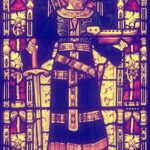
King Henry V

The anniversary of the long ago battle of Saint Crispin’s Day gives us yet another opportunity to recall the immortal “Band of Borthers Speech” that Shakespeare put into the mouth of Henry V, a speech that could put fight into a dog dead three days, or, mirabile dictu, even a live Congress Critter:

WESTMORELAND. O that we now had here

    But one ten thousand of those men in England      

That do no work to-day!

  KING. What’s he that wishes so?

    My cousin Westmoreland? No, my fair cousin;      

If we are mark’d to die, we are enow

    To do our country loss; and if to live,

    The fewer men, the greater share of honour.

    God’s will! I pray thee, wish not one man more.

    By Jove, I am not covetous for gold,      

 Nor care I who doth feed upon my cost;

    It yearns me not if men my garments wear;

    Such outward things dwell not in my desires.      

 But if it be a sin to covet honour,      

I am the most offending soul alive.

    No, faith, my coz, wish not a man from England.      

God’s peace! I would not lose so great an honour

    As one man more methinks would share from me

    For the best hope I have. O, do not wish one more!     

  Rather proclaim it, Westmoreland, through my host,     

  That he which hath no stomach to this fight,      

Let him depart; his passport shall be made,

    And crowns for convoy put into his purse;

    We would not die in that man’s company

    That fears his fellowship to die with us.      

This day is call’d the feast of Crispian.

    He that outlives this day, and comes safe home,

    Will stand a tip-toe when this day is nam’d,

    And rouse him at the name of Crispian.

    He that shall live this day, and see old age,

    Will yearly on the vigil feast his neighbours,

    And say ‘To-morrow is Saint Crispian.’

    Then will he strip his sleeve and show his scars,      

And say ‘These wounds I had on Crispian’s day.’

    Old men forget; yet all shall be forgot,

    But he’ll remember, with advantages,

    What feats he did that day. Then shall our names,

    Familiar in his mouth as household words-      

 Harry the King, Bedford and Exeter,

    Warwick and Talbot, Salisbury and Gloucester-

    Be in their flowing cups freshly rememb’red.

    This story shall the good man teach his son;      

And Crispin Crispian shall ne’er go by,

    From this day to the ending of the world,      

 But we in it shall be remembered-      

We few, we happy few, we band of brothers;

    For he to-day that sheds his blood with me

    Shall be my brother; be he ne’er so vile,      

This day shall gentle his condition;     

  And gentlemen in England now-a-bed

    Shall think themselves accurs’d they were not here,

    And hold their manhoods cheap whiles any speaks

    That fought with us upon Saint Crispin’s day. Continue reading

Ides of March: Brutus

YouTube Preview Image

This was the noblest Roman of them all:

All the conspirators, save only he,

 Did that they did in envy of great Caesar;

He, only in a general honest thought

And common good to all, made one of them.

Mark Antony referring to Brutus in Julius Caesar

I think it would have amused the Romans of Caesar’s generation if they could have learned that the assassination of Julius Caesar would eventually receive immortality through a play written more than 16 centuries after the event by a barbarian playwright in the Tin Islands that Caesar had briefly invaded.  It would have tickled their well developed concept of the ludicrous, judging from Roman comedy. Continue reading

Henry V, Shakespeare and Just War

YouTube Preview Image

In the comments to  my post last week, Henry V Times Four, which may be viewed here, and which had four versions of the immortal “band of brothers” speech, commenter Centinel posed a very interesting question to me:

Mr. McClarey,

I’ve come to respect your knowledge of history and your insights. I just wanted to get your honest opinion on oneissue. As I understand it, Catholic doctrine would say that wars of aggression are not justified (most of the time). Though I enjoy Shakespeare’s plays, it bothers me that Henry V was fighting a war of aggression – hence, an unjust war.

From Henry V’s point of view, the war was about his (legitimate?) claim to the French throne. But from the point of view of the French peasantry, whichever dynasty sat on the French thronedid not really make any difference in their lives. They were merely caught in the middle; the longer the war lasted, the greater the collateral damage to French civilians. Besides, Henry V already had the Kingdom of England. Hence, it was just pure greed driving Henry V to claim the French throne.

I would appreciate your opinion on this.

My response:

Centinel thank you for very kind words and for inspiring a forthcoming post! The more I thought about your question the more complicated my answer became and only a post length reply, which I will attempt to do in the next week, will do it justice. The short answer is that Henry V, by the just war analysis of his day, had a defensible claim to be fighting a just war, while under the just war analysis of our day his war would be unjust. However, there is much more to say than that, and I will attempt to do this intriguing question justice in my forthcoming post.

In answering the question we must first examine how the formulation of the Just War doctrine has changed from the time of Henry V to our time. Continue reading

October 25, 1415

YouTube Preview Image YouTube Preview Image

WESTMORELAND. O that we now had here
    But one ten thousand of those men in England
    That do no work to-day!
 
KING. What’s he that wishes so?
    My cousin Westmoreland? No, my fair cousin;
    If we are mark’d to die, we are enow
    To do our country loss; and if to live,
    The fewer men, the greater share of honour.
    God’s will! I pray thee, wish not one man more.
    By Jove, I am not covetous for gold,
    Nor care I who doth feed upon my cost;
    It yearns me not if men my garments wear;
    Such outward things dwell not in my desires.
    But if it be a sin to covet honour,
    I am the most offending soul alive. Continue reading

Follow TAC by Clicking on the Buttons Below
Bookmark and Share
Subscribe by eMail

Enter your email:

Recent Comments
Archives
Our Visitors. . .
Our Subscribers. . .