Some Hypotheticals
If you saw someone who was going to jump off a cliff… would you stop them? Assume that you would prevent them from physical death. I think you would probably try to stop them.
Now assume you are an Archbishop, and you know of Catholics who are advocating very publicly for grave sin, and that this itself is a grave sin. Unrepented grave sin, as you know as an Archbishop, brings spiritual death. You know in your heart that spiritual death is eternal, and is God’s most hated thing. You also know that this spiritual death is very real, and very dangerous: infinitely more dangerous than mere physical death. Would you not, as an Archbishop, care enough about your fellow Brother or Sister in Christ to do everything in your power to prevent further spiritual death?
And you would also know, as an Archbishop, that someone who is manifestly and publicly in a state of grave sin ought to refrain from receiving Communion, for their own sake, since receiving Communion unworthily is yet another grave sin that further wounds their soul.
And it would probably strike you, as an Archbishop, that this particular sin is a sin with a pedagogical dimension (public advocacy of sin teaches sin). Would your counsel to this person not also have a public dimension, to correct those who may have been misinformed by this person’s very public advocacy (perhaps even encouragement) of sin?
Would you not see three very important things which demand your prophetic teaching voice? Is not the most pastoral thing to do preventing such a person from further grave sin? Can your message not be delivered in a spirit of charity and sincere concern and love?
John Murtha, 1932 to 2010 Anno Domini, Requiescat In Pace
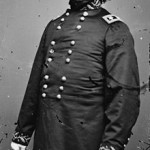
John Patrick “Jack” Murtha, Jr. died Wednesday morning at Virginia Hospital Center in Arlington, VA, after complications from gallbladder surgery. Murtha was 77.[1]
Congressman Murtha was a Democrat with a relatively populist economic outlook, and is generally much more socially conservative than most other House Democrats. He is opposed to abortion, consistently receiving a 0% rating from NARAL and 70% rating from National Right to Life Committee; however, he supports embryonic stem cell research. He generally opposes gun control, earning an A from the National Rifle Association. Murtha was also one of the few Democrats in Congress to vote against the Bipartisan Campaign Reform Act of 2002 and also one of the few Democrats to vote in favor of medical malpractice tort reform.[2]
May he rest in peace.
_._
[1] Fox News entry by Chad Pergram.
[2] Wikipedia entry for John Murtha, Political Views
Are You Listening Madame Speaker?
Archbishop George H. Niederauer of San Francisco addressed on January 13, 2010 a free will defense of abortion by Nancy Pelosi, Speaker of the House:
In a recent interview with Eleanor Clift in Newsweek magazine (Dec. 21, 2009), House Speaker Nancy Pelosi was asked about her disagreements with the United States Catholic bishops concerning Church teaching. Speaker Pelosi replied, in part: “I practically mourn this difference of opinion because I feel what I was raised to believe is consistent with what I profess, and that we are all endowed with a free will and a responsibility to answer for our actions. And that women should have the opportunity to exercise their free will.”
Embodied in that statement are some fundamental misconceptions about Catholic teaching on human freedom. These misconceptions are widespread both within the Catholic community and beyond. For this reason I believe it is important for me as Archbishop of San Francisco to make clear what the Catholic Church teaches about free will, conscience, and moral choice.
Catholic teaching on free will recognizes that God has given men and women the capacity to choose good or evil in their lives. The bishops at the Second Vatican Council declared that the human person, endowed with freedom, is “an outstanding manifestation of the divine image.” (Gaudium et Spes, No. 17) As the parable of the Grand Inquisitor in Dostoevsky’s novel, The Brothers Karamazov, makes so beautifully clear, God did not want humanity to be mere automatons, but to have the dignity of freedom, even recognizing that with that freedom comes the cost of many evil choices.
"I agree with the Church in principle, but …"
Last week I posted a reaction to House Speaker Pelosi’s interview in Newsweek (cross-posted to First Things‘ “First Thoughts”). Perusing the comments, I discovered that the author of No Hidden Magenta — a blog with the daunting task of “bridging the gap between ‘Red and Blue State’ groupthink” — has responded with fury and dismay:
At least one reason why neither the Pope nor the Archbishop have denied Pelosi Holy Communion–despite having ample opportunity to do so–is because prudential judgments about how best to reflect a moral principle in public policy involved technical considerations of practical reason that do not go to the heart of what it means to be a Roman Catholic; in other words, they are not about the central value at stake. If Speaker Pelosi believes that abortion is a positive good that should be promoted by the state (rather than as a privacy right for all women) that is one thing (and her recent actions with regard to Stupak suggest that she doesn’t think this), but there are any number of good reasons for supporting less-than-perfect public policy as she claims to be doing in trying to reduce the number of abortions while not supporting an abortion ban. …
Now, we can and should have debate about this question–and I think Pelosi is profoundly mistaken in her position on public policy–but let’s be clear: both the Pope and her Archbishop do not think such a position puts her status as a Roman Catholic or as a communicant in jeopardy. And those who think it does would do well to follow their example in distinguishing between ‘moral principle’ and ‘public policy.’
I’m relieved that the author believes Pelosi is “profoundly mistaken” in her position on public policy. I’m less convinced, however, that “the Pope and her Archbishop do not think such a position puts her status as a Roman Catholic or as a communicant in jeopardy”, and the author’s explanation for why they allegedly do not think so.
Nancy Pelosi to Bishops on Abortion: I practically mourn this difference of opinion
House Speaker Nancy Pelosi was interviewed in a recent edition of Newsweek, in which she had the opportunity to set the bishops straight on the participation of Catholics in public life.
I think you have had some brushes with [church] hierarchy.
I have some concerns about the church’s position respecting a woman’s right to choose. I have some concerns about the church’s position on gay rights. I am a practicing Catholic, although they’re probably not too happy about that. But it is my faith. I practically mourn this difference of opinion because I feel what I was raised to believe is consistent with what I profess, and that is that we are all endowed with a free will and a responsibility to answer for our actions. And that women should have that opportunity to exercise their free will.
Is it difficult for you to reconcile your faith with the role you have in public life?
You know, I had five children in six years. The day I brought my fifth baby home, that week my daughter turned 6. So I appreciate and value all that they want to talk about in terms of family and the rest. When I speak to my archbishop in San Francisco and his role is to try to change my mind on the subject, well then he is exercising his pastoral duty to me as one of his flock. When they call me on the phone here to talk about, or come to see me about an issue, that’s a different story. Then they are advocates, and I am a public official, and I have a different responsibility.
Fr. John Zuhlsdorf applies the necessary fisking and muses: “I cannot fathom why she hasn’t been told she must not receive Holy Communion. How much more public scandal does she have to give before the bishops of the places where she resides take concrete action?”
My thoughts exactly. Note that she has already received an admonishment from the Holy See and an invitation to “converse” from San Francisco Archbishop George H. Niederauer.
Cardinal Rigali: Catholic Politicians Cannot Support Senate Health Care Bill with Abortion
[vodpod id=Groupvideo.4019473&w=425&h=350&fv=]
Justin Cardinal Rigali of the Archdiocese of Philadelphia emphatically stated that no Catholic can vote for a health care bill that carries abortion. He did say that the American bishops have been working diligently in getting health care for all individuals here in America and that the Catholic bishops do support a health care bill that does not provide or pay for abortions in anyway possible.
Cardinal Rigali’s comments came at the press conference announcing an unprecedented coalition of Catholic, Orthodox, and Protestant leaders uniting behind a call to Christian conscious, the Manhattan Declaration.
Senator Bob Casey, Jr., I hope you’re listening, your soul is on the line.
_._
To read about the Manhattan Declaration click here.
(Biretta Tip: CNSNEWS.COM)
Patrick Kennedy Barred From Communion
Patrick Kennedy, a son of Ted Kennedy and a Democrat Congressman from Rhode Island, has been engaging in a very public conflict with the Bishop of Providence Thomas J. Tobin. Prior posts on this combative dialogue are here and here. Kennedy has now revealed that he is barred from receiving communion. The Bishop has responded by releasing this letter:
I am disappointed and really surprised that Congressman Patrick Kennedy has chosen to reopen the public discussion about his practice of the faith and his reception of Holy Communion. This comes almost two weeks after the Congressman indicated to local media that he would no longer comment publicly on his faith or his relationship with the Catholic Church. The Congressman’s public comments require me to reply.
On February 21, 2007, I wrote to Congressman Kennedy stating: “In light of the Church’s clear teaching, and your consistent actions, therefore, I believe it is inappropriate for you to be receiving Holy Communion and I now ask respectfully that you refrain from doing so.” My request came in light of the new statement of the United States Conference of Catholic Bishops that said, “If a Catholic in his or her personal or professional life were knowingly and obstinately to repudiate her definite teachings on moral issues, he or she would seriously diminish his or her communion with the Church. Reception of Holy Communion in such a situation would not accord with the nature of the Eucharistic celebration, so that he or she should refrain.” (Happy Are Those Who Are Called to His Supper, December, 2006)


Father Roger J. Landry concludes 

Recent Comments
(4 hours ago)
(4 hours ago)
(6 hours ago)
(6 hours ago)
(6 hours ago)
(6 hours ago)
(6 hours ago)
(7 hours ago)
(7 hours ago)
(7 hours ago)
(7 hours ago)
(8 hours ago)
(8 hours ago)
(8 hours ago)
(8 hours ago)
(8 hours ago)
(8 hours ago)
(8 hours ago)
(9 hours ago)
(9 hours ago)