
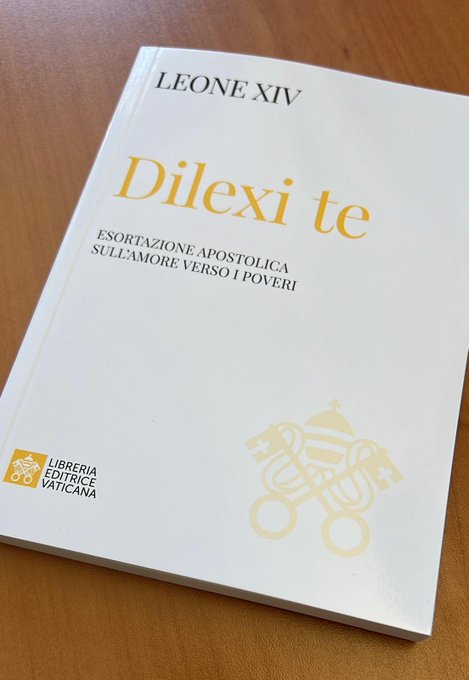
Go here to read part one of the fisk, go here to read part two, go here to read part three and go here to read part four.
Witnesses of evangelical poverty
63. In the thirteenth century, faced with the growth of cities, the concentration of wealth and the emergence of new forms of poverty, the Holy Spirit gave rise to a new type of consecration in the Church: the mendicant orders. Unlike the stable monastic model, mendicants adopted an itinerant life, without personal or communal property, entrusting themselves entirely to providence. They did not merely serve the poor: they made themselves poor with them. They saw the city as a new desert and the marginalized as new spiritual teachers. These orders, such as the Franciscans, Dominicans, Augustinians and Carmelites, represented an evangelical revolution, in which a simple and poor lifestyle became a prophetic sign for mission, reviving the experience of the first Christian community (cf. Acts 4:32). The witness of the mendicants challenged both clerical opulence and the coldness of urban society.
It would be more correct that the popes allowed these orders to exist. They usually arose spontaneously through the appearance of a charismatic founder, like Saint Francis and Saint Dominic. The urban emphasis is exaggerated by the Pope, the friars being both urban and rural, and what we understand as urban tended to be few on the ground in thirteenth Europe, with most “cities” by our standards being small towns with pretensions. The friars in general did much good work, although the loose discipline they operated under gave opportunities for shenanigans recalled in popular tales and legends, Friar Tuck of Robin Hood fame being only one example.
64. Saint Francis of Assisi became the icon of this spiritual springtime. By embracing poverty, he wanted to imitate Christ, who was poor, naked and crucified. In his Rule, he asks that “the brothers should not appropriate anything, neither house, nor place, nor anything else. And as pilgrims and strangers in this world, serving the Lord in poverty and humility, they should go about begging with confidence, and should not be ashamed, because the Lord made himself poor for us in this world.” [52] His life was one of continuous self-emptying: from the palace to the leper, from eloquence to silence, from possession to total gift. Francis did not found a social service organization, but an evangelical fraternity. In the poor, he saw brothers and sisters, living images of the Lord. His mission was to be with them, and he did so through a solidarity that overcame distances and a compassionate love. Francis’ poverty was relational: it led him to become neighbor, equal to, or indeed lesser than others. His holiness sprang from the conviction that Christ can only be truly received by giving oneself generously to one’s brothers and sisters.
Not a bad summary of Saint Francis and his embrace of Lady Poverty. Wise heads within the Church at the time were concerned whether lesser men than Francis who would follow him in his Order could so successfully embrace a life of such sacrifice. Hint: by and large they could not, certainly not with the joy and enthusiasm that ever marked Saint Francis.
65. Saint Clare of Assisi, who was inspired by Francis, founded the Order of Poor Ladies, later called the Poor Clares. Her spiritual struggle consisted in faithfully maintaining the ideal of radical poverty. She refused the papal privileges that could have guaranteed material security for her monastery and, with firmness, obtained from Pope Gregory IX the so-called Privilegium Paupertatis, which guaranteed the right to live without any material goods. [53] This choice expressed her total trust in God and her awareness that voluntary poverty was a form of freedom and prophecy. Clare taught her sisters that Christ was their only inheritance and that nothing should obscure their communion with him. Her prayerful and hidden life was a cry against worldliness and a silent defense of the poor and forgotten.
Saint Clare was indeed a remarkable woman. The Pope needs an editor with a red marker to mark over woke flourishes like a silent defense of the poor and forgotten. That is the 21st speaking and not the 13th century. Ever seeing the past through the prism of the present, is indeed to see in a glass, darkly.
66. Saint Dominic de Guzmán, a contemporary of Francis, founded the Order of Preachers, with a different charism but the same radicalism of life. He wanted to proclaim the Gospel with the authority that comes from a life of poverty, convinced that the Truth needs witnesses of integrity. The example of poverty in their lives accompanied the Word they preached. Free from the weight of earthly goods, the Dominican Friars were better able to dedicate themselves to their principal work of preaching. They went to the cities, especially the universities, in order to teach the truth about God. [54] In their dependence on others, they showed that faith is not imposed but offered. And by living among the poor, they learned the truth of the Gospel “from below,” as disciples of the humiliated Christ.
The main motivation of Saint Dominic was to reclaim the Albigensian heretics of southern France for the Church. The sons of Saint Dominic were notable in that fight, and Dominicans by 1250 were dominating the ranks of inquisitors throughout the Church. Small wonder that the Pope does not recall that history. What was considered a good thing to do in the 13th century, being looked at with embarrassment, to put it mildly, in the 21st century, and the Pope, as we all tend to be to greater and lesser extents, a prisoner of his time.
67. The mendicant orders were therefore a living response to exclusion and indifference. They did not expressly propose social reforms, but an individual and communal conversion to the logic of the Kingdom. For them, poverty was not a consequence of a scarcity of goods, but a free choice: to make themselves small in order to welcome the small. As Thomas of Celano said of Francis: “He showed that he loved the poor intensely… He often stripped himself naked to clothe the poor, whom he sought to resemble.” [55] Beggars became the symbol of a pilgrim, humble and fraternal Church, living among the poor not to proselytize but as an expression of their true identity. They teach us that the Church is a light when she strips herself of everything, and that holiness passes through a humble heart devoted to the least among us.
And here we have in one paragraph the main problem with this exhortation. The Pope is riding the hobby horse of poverty which limits his vision of what the Church can and should be. It has been noted that if your only tool is a hammer, every problem looks like a nail, and that is the main error here.
The Church and the education of the poor
68. Addressing educators, Pope Francis recalled that education has always been one of the highest expressions of Christian charity: “Yours is a mission full of obstacles as well as joys… A mission of love, because you cannot teach without loving.” [56] In this sense, since ancient times, Christians have understood that knowledge liberates, gives dignity, and brings us closer to the truth. For the Church, teaching the poor was an act of justice and faith. Inspired by the example of the Master who taught people divine and human truths, she took on the mission of forming children and young people, especially the poorest, in truth and love. This mission took shape with the founding of congregations dedicated to education.
The Church came late to this. There were always some priests and brothers who would teach the boys of the poor their letters, but the vast majority of people were almost totally illiterate, including among the nobility. The invention of the printing press in the 15th century, and the appearance of the Protestant sects changed this, with the Church now emphasizing at least basic literacy among the boys of the poor and founding colleges to educate the nobility, to some extent, and the true scholars who arose from the poor. To expect more from the Church prior to the printing press, is to exchange the priorities of past ages with those of our time. Presentism is ever a historical heresy to be avoided, especially with the history of the 20 centuries of the Church.
69. In the sixteenth century, Saint Joseph Calasanz, struck by the lack of education and training among the poor young people of Rome, established Europe’s first free public school in some rooms adjacent to the church of Santa Dorotea in Trastevere. This was the seed from which the Poor Clerics Regular of the Mother of God of the Pious Schools, known as the Piarists, would later emerge and develop, though not without difficulty. Their goal was that of transmitting to young people “not only secular knowledge but also the wisdom of the Gospel, teaching them to recognize, in their personal lives and in history, the loving action of God the Creator and Redeemer.” [57] In fact, we can consider this courageous priest as the “true founder of the modern Catholic school, aimed at the integral formation of people and open to all.” [58] Inspired by the same sensitivity, Saint John Baptist de La Salle, realizing the injustice caused by the exclusion of the children of workers and ordinary people from the educational system of France at that time, founded the Brothers of the Christian Schools in the seventeenth century, with the ideal of offering them free education, solid formation, and a fraternal environment. De La Salle saw the classroom as a place for human development, but also for conversion. In his colleges, prayer, method, discipline and sharing were combined. Each child was considered a unique gift from God, and the act of teaching was a service to the Kingdom of God.
Correct.
70. In the nineteenth century, also in France, Saint Marcellin Champagnat founded the Institute of the Marist Brothers of the Schools. “He was sensitive to the spiritual and educational needs of his time, especially to religious ignorance and the situation of neglect experienced in a particular way by the young.” [59] He dedicated himself wholeheartedly to the mission of educating and evangelizing children and young people, especially those most in need, during a period when access to education continued to be the privilege of a few. In the same spirit, Saint John Bosco began the great work of the Salesians in Italy based on the three principles of the “preventive method” — reason, religion, and loving kindness. [60] Blessed Antonio Rosmini founded the Institute of Charity, in which “intellectual charity” was placed alongside “material charity,” with “spiritual-pastoral charity” at the top, as an indispensable dimension of any charitable action aimed at the good and integral development of the person. [61]
Also correct.
71. Many female congregations were protagonists of this pedagogical revolution. Founded in the eighteenth and nineteenth centuries, the Ursulines, the Sisters of the Company of Mary Our Lady, the Maestre Pie and many others, stepped into the spaces where the state was absent. They created schools in small villages, suburbs and working-class neighborhoods. In particular, the education of girls became a priority. The religious sisters taught literacy, evangelized, took care of practical matters of daily life, elevated their spirits through the cultivation of the arts, and, above all, formed consciences. Their pedagogy was simple: closeness, patience and gentleness. They taught by the example of their lives before teaching with words. In times of widespread illiteracy and systemic exclusion, these consecrated women were beacons of hope. Their mission was to form hearts, teach people to think and promote dignity. By combining a life of piety and dedication to others, they fought abandonment with the tenderness of those who educate in the name of Christ.
The girls were taught basic literacy, but the main emphasis was in teaching them their religion, the need for cleanliness and the skills they would need, cooking, cleaning and mending, to be good wives and mothers. This fitted their education well with the ambitions of almost all these girls, a commonplace observation in their day and a shocking one in our time for people who have little understanding of the past.
72. For the Christian faith, the education of the poor is not a favor but a duty. Children have a right to knowledge as a fundamental requirement for the recognition of human dignity. Teaching them affirms their value, giving them the tools to transform their reality. Christian tradition considers knowledge a gift from God and a community responsibility. Christian education does not only form professionals, but also people open to goodness, beauty and truth. Catholic schools, therefore, when they are faithful to their name, are places of inclusion, integral formation and human development. By combining faith and culture, they sow the seeds of the future, honor the image of God and build a better society.
A duty unknown to the Church, except for instruction in religion, prior to the printing press. Too many people, perhaps the current Pope is among their number, think of people of the past being just like us, except for different clothes and technology. That is not the case.
The term “inclusion” should be shot in the head and buried. It has become a mindless mantra, devoid of any meaningful content.
Accompanying migrants
73. The experience of migration accompanies the history of the People of God. Abraham sets out without knowing where he is going; Moses leads the pilgrim people through the desert; Mary and Joseph flee with the child Jesus to Egypt. Christ himself, who “came to what was his own, and his own people did not accept him” (Jn 1:11), lived among us as a stranger. For this reason, the Church has always recognized in migrants a living presence of the Lord who, on the day of judgment, will say to those on his right: “I was a stranger and you welcomed me” (Mt 25:35).
Here we go.
74. In the nineteenth century, when millions of Europeans emigrated in search of better living conditions, two great saints distinguished themselves in the pastoral care of migrants: Saint John Baptist Scalabrini and Saint Frances Xavier Cabrini. Scalabrini, Bishop of Piacenza, founded the Missionaries of Saint Charles to accompany migrants to their destinations, offering them spiritual, legal and material assistance. He saw migrants as recipients of a new evangelization, warning of the risks of exploitation and loss of faith in a foreign land. Responding generously to the charism that the Lord had given him, “Scalabrini looked forward to a world and a Church without barriers, where no one was a foreigner.” [62] Saint Frances Cabrini, born in Italy and a naturalized American, was the first citizen of the United States of America to be canonized. To fulfill her mission of assisting migrants, she crossed the Atlantic several times. “Armed with remarkable boldness, she started schools, hospitals and orphanages from nothing for the masses of the poor who ventured into the new world in search of work. Not knowing the language and lacking the wherewithal to find a respectable place in American society, they were often victims of the unscrupulous. Her motherly heart, which allowed her no rest, reached out to them everywhere: in hovels, prisons and mines.” [63] In the Holy Year of 1950, Pope Pius XII proclaimed her Patroness of All Migrants. [64]
People emigrated from Europe in the 19th and earlier centuries often because there was much poverty and little room for advancement in the “old countries”. The Church was a member in good standing in Catholic countries where the poor were always the vast majority. This would be an opportunity for the Pope to praise the countries of the New World that took in the waves of migrants produce by the manifest failings of the nations of the Old World. Do not hold your breath.
75. The Church’s tradition of working for and with migrants continues, and today this service is expressed in initiatives such as refugee reception centers, border missions and the efforts of Caritas Internationalis and other institutions. Contemporary teaching clearly reaffirms this commitment. Pope Francis has recalled that the Church’s mission to migrants and refugees is even broader, insisting that “our response to the challenges posed by contemporary migration can be summed up in four verbs: welcome, protect, promote and integrate. Yet these verbs do not apply only to migrants and refugees. They describe the Church’s mission to all those living in the existential peripheries, who need to be welcomed, protected, promoted and integrated.” [65] He also said: “Every human being is a child of God! He or she bears the image of Christ! We ourselves need to see, and then to enable others to see, that migrants and refugees do not only represent a problem to be solved, but are brothers and sisters to be welcomed, respected and loved. They are an occasion that Providence gives us to help build a more just society, a more perfect democracy, a more united country, a more fraternal world and a more open and evangelical Christian community.” [66] The Church, like a mother, accompanies those who are walking. Where the world sees threats, she sees children; where walls are built, she builds bridges. She knows that her proclamation of the Gospel is credible only when it is translated into gestures of closeness and welcome. And she knows that in every rejected migrant, it is Christ himself who knocks at the door of the community.
So predictable. Not a word about the distinction between legal and illegal aliens. Not a word about the traditional teaching of the Church regarding the right to national borders. Not a word about the duty of aliens to obey the laws of their host nations. Not a word about the problems posed to people already living in nations in reference to mass illegal immigration. Not a word about the wisdom of Pope Francis, and apparently Pope Leo, of encouraging massive illegal immigration from Islam to the West. In reference to these questions the Holy Father is silent or abusive. I like the phrase “contemporary teaching”, since little in Church teaching prior to Francis pulling out of his hind end his support of mass illegal immigration, supports any of this.
At the side of the least among us
76. Christian holiness often flourishes in the most forgotten and wounded places of humanity. The poorest of the poor — those who lack not only material goods but also a voice and the recognition of their dignity — have a special place in God’s heart. They are the beloved of the Gospel, the heirs to the Kingdom (cf. Lk 6:20). It is in them that Christ continues to suffer and rise again. It is in them that the Church rediscovers her call to show her most authentic self.
The poorest of the poor of course is always the unborn child under the threat of abortion.
77. Saint Teresa of Calcutta, canonized in 2016, has become a universal icon of charity lived to the fullest extent in favor of the most destitute, those discarded by society. Foundress of the Missionaries of Charity, she dedicated her life to the dying abandoned on the streets of India. She gathered the rejected, washed their wounds and accompanied them to the moment of death with the tenderness of prayer. Her love for the poorest of the poor meant that she did not only take care of their material needs, but also proclaimed the good news of the Gospel to them: “We are wanting to proclaim the good news to the poor that God loves them, that we love them, that they are somebody to us, that they too have been created by the same loving hand of God, to love and to be loved. Our poor people are great people, are very lovable people, they do not need our pity and sympathy, they need our understanding love. They need our respect; they need that we treat them with dignity.” [67] All this came from a deep spirituality that saw service to the poorest as the fruit of prayer and love, the source of true peace, as Pope John Paul II reminded the pilgrims who came to Rome for her beatification: “Where did Mother Teresa find the strength to place herself completely at the service of others? She found it in prayer and in the silent contemplation of Jesus Christ, his Holy Face, his Sacred Heart. She herself said as much: ‘The fruit of silence is prayer; the fruit of prayer is faith; the fruit of faith is love; the fruit of love is service.’ It was prayer that filled her heart with Christ’s own peace and enabled her to radiate that peace to others.” [68] Teresa did not consider herself a philanthropist or an activist, but a bride of Christ crucified, serving with total love her suffering brothers and sisters.
Not a word about Mother Teresa’s unremitting opposition to abortion.
78. In Brazil, Saint Dulce of the Poor — known as “the good angel of Bahia” — embodied the same evangelical spirit with Brazilian characteristics. Referring to her and two other religious women canonized during the same celebration, Pope Francis recalled their love for the most marginalized members of society and said that the new saints “show us that the consecrated life is a journey of love at the existential peripheries of the world.” [69] Sister Dulce responded to precariousness with creativity, obstacles with tenderness and need with unshakeable faith. She began by taking in the sick in a chicken coop and from there founded one of the largest social services in the country. She assisted thousands of people a day, without ever losing her gentleness, making herself poor with the poor for the love of the Poorest One. She lived with little, prayed fervently and served with joy. Her faith did not distance her from the world, but drew her even more deeply into the pain of the least among us.
“The least among us.”
79. We could also mention individuals such as Saint Benedict Menni and the Sisters Hospitallers of the Sacred Heart of Jesus, who worked alongside people with disabilities; Saint Charles de Foucauld among the communities of the Sahara; Saint Katharine Drexel for the most underprivileged groups in North America; Sister Emmanuelle, with the garbage collectors in the Ezbet El Nakhl neighborhood of Cairo; and many others. Each in their own way discovered that the poorest are not only objects of our compassion, but teachers of the Gospel. It is not a question of “bringing” God to them, but of encountering him among them. All of these examples teach us that serving the poor is not a gesture to be made “from above,” but an encounter between equals, where Christ is revealed and adored. Saint John Paul II reminded us that “there is a special presence of Christ in the poor, and this requires the Church to make a preferential option for them.” [70] Therefore, when the Church bends down to care for the poor, she assumes her highest posture.
More cant.
Popular Movements
80. We must also recognize that, throughout centuries of Christian history, helping the poor and advocating for their rights has not only involved individuals, families, institutions, or religious communities. There have been, and still are, various popular movements made up of lay people and led by popular leaders, who have often been viewed with suspicion and even persecuted. I am referring to “all those persons who journey, not as individuals, but as a closely-bound community of all and for all, one that refuses to leave the poor and vulnerable behind… ‘Popular’ leaders, then, are those able to involve everyone… They do not shun or fear those young people who have experienced hurt or borne the weight of the cross.” [71]
I am pleased by the Pope’s whole-hearted endorsement of the populist MAGA movement. (Tongue removed from cheek.)
81. These popular leaders know that solidarity “also means fighting against the structural causes of poverty and inequality; of the lack of work, land and housing; and of the denial of social and labor rights. It means confronting the destructive effects of the empire of money… Solidarity, understood in its deepest sense, is a way of making history, and this is what the popular movements are doing.” [72] For this reason, when different institutions think about the needs of the poor, it is necessary to “include popular movements and invigorate local, national and international governing structures with that torrent of moral energy that springs from including the excluded in the building of a common destiny.” [73] Popular movements, in fact, invite us to overcome “the idea of social policies being a policy for the poor, but never with the poor and never of the poor, much less part of a project which can bring people back together.” [74] If politicians and professionals do not listen to them, “democracy atrophies, turns into a slogan, a formality; it loses its representative character and becomes disembodied, since it leaves out the people in their daily struggle for dignity, in the building of their future.” [75] The same must be said of the institutions of the Church.
Latin American Leftism. Francis and Leo, I assume, rail against ideologies they oppose and embrace the ideologies they favor.
That is as much as I can stand for one day. The fisk continues in part six.


Doing yeoman’s work fisking this, good sir! It is not easy to do, to be sure.
I reiterate what I said a couple days ago about how pedestrian Leo’s writing is. I could point to elements in the writings of popes prior to Francis that made me think, ponder, and reassess. This exhortation reads like a standard congressional floor speech with a religious bow on it.
“The Pope is riding the hobby horse of poverty which limits his vision of what the Church can and should be. “
Oddly it’s not a humble horse that rails.
Migrants…
no mention of the conditions which cause young people to leave… nor of how an exodus of the entrepreneurial young cause poverty to be entrenched back home.
Don, I can’t stomach the Bergoglioian document. I can only read your commentary. Thanks.
This is a classic line, “The term “inclusion” should be shot in the heard and buried. It has become a mindless mantra, devoid of any meaningful content.”
Thanks JFK. I have corrected “heard” to head. Trying not to swear as I was reading all this tripe distracted me from being as careful in my typing as I should have been.
More meandering through church and religious orders history with occasional flashes in the darkness of where we are going with this (#73, 75, implied praise of migrants as if they are the Holy Family in Egypt) (Matt. 2:13-15).
It is interesting that many, perhaps most theologians today who consider the Gospels as merely symbolic and quasi-apocryphal cite passages such as this as historical fact when useful to them to do so. But: it appears another ecclesiastical sledgehammer against those opposed to mass illegal immigration is coming.
Here is the mordant fact: No one except those here at TAC actually read much any more: and this River Amazon of words is flowing into the sea basically unnoticed.