
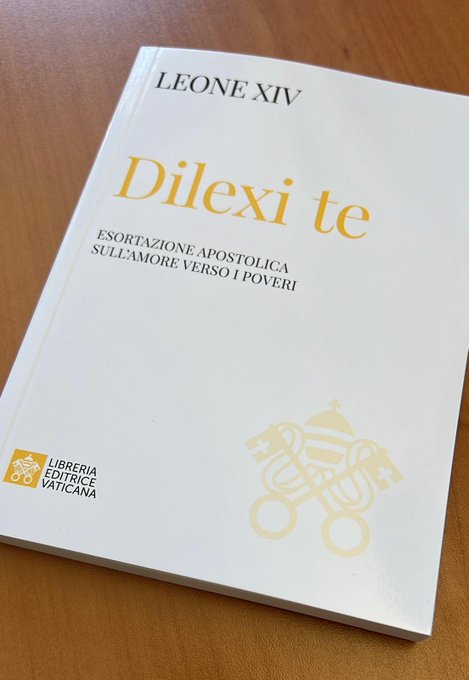
Go here to read part one of the fisk, and go here to read part two.
CHAPTER THREE
A CHURCH FOR THE POOR
35. Three days after his election, my predecessor expressed to the representatives of the media his desire that care and attention for the poor be more clearly present in the Church: “How I would like a Church which is poor and for the poor!” [19]
If we had followed the economic policies favored by Francis, there certainly would have been far more poor.
36. This desire reflects the understanding that the Church “recognizes in those who are poor and who suffer, the likeness of its poor and suffering founder.” [20] Indeed, since the Church is called to identify with those who are least, at her core “[T]here can be no room for doubt or for explanations which weaken so clear a message… We have to state, without mincing words, that there is an inseparable bond between our faith and the poor.” [21] In this regard, we have numerous witnesses from disciples of Christ spanning almost two millennia. [22]
The Pope continues with his effort to make the materially poor the essence of Christianity.
37. Saint Paul recounts that among the faithful of the nascent Christian community not many were “wise according to the flesh, not many were powerful, not many were of noble birth” (1 Cor 1:26). However, despite their poverty, the early Christians were clearly aware of the necessity to care for those who were most in need. Already at the dawn of Christianity, the Apostles laid their hands on seven men chosen from the community. To a certain extent, they integrated them into their own ministry, instituting them for the service — diakonía in Greek — of the poorest (cf. Acts 6:1-5). It is significant that the first disciple to bear witness to his faith in Christ to the point of shedding his blood was Stephen, who belonged to this group. In him, the witness of caring for the poor and of martyrdom are united.
The Apostles appointed the Deacons because they didn’t want to “wait on tables”. They had more important things to do. The martyrdom of Saint Stephen of course had nothing to do with his service to the poor, and everything to do with his magnificent faith in Christ.
38. A little less than two centuries later, another deacon, Saint Lawrence, will demonstrate his fidelity to Jesus Christ in a similar way by uniting martyrdom and service to the poor. [23] From Saint Ambrose’s account, we learn that Lawrence, a deacon in Rome during the pontificate of Pope Sixtus II, was forced by the Roman authorities to turn over the treasures of the Church. “The following day he brought the poor with him. Questioned about where the promised treasures might be, he pointed to the poor saying, ‘These are the treasures of the Church’.” [24] While narrating this event, Saint Ambrose asks: “What treasures does Jesus have that are more precious than those in which he loves to show himself?” [25] And, remembering that ministers of the Church must never neglect the care of the poor, much less accumulate goods for their own benefit, he says: “This task must be carried out with sincere faith and wise foresight. Certainly, if anyone derives personal advantage from it, he commits a crime; but if he distributes the proceeds to the poor or redeems a prisoner, he performs a work of mercy.” [26]
Peculation by clerics of funds allocated for the relief of the poor is a problem that has plagued the Church since Judas was stealing from the common purse.
The Fathers of the Church and the Poor
39. From the first centuries, the Fathers of the Church recognized in the poor a privileged way to reach God, a special way to meet him. Charity shown to those in need was not only seen as a moral virtue, but a concrete expression of faith in the incarnate Word. The community of the faithful, sustained by the strength of the Holy Spirit, was rooted in being close to the poor, whom they considered not just an “appendage,” but an essential part of Christ’s living body. For example, while he was on his way to face martyrdom, Saint Ignatius of Antioch exhorted the community of Smyrna not to neglect the duty to carry out acts of charity for those most in need, admonishing them not to behave like those who oppose God. “But consider those who are of a different opinion with respect to the grace of Christ, which has come to us, how opposed they are to the will of God. They have no regard for love; no care for the widow, or the orphan, or the oppressed; of the bond, or of the free; of the hungry, or of the thirsty.” [27] The Bishop of Smyrna, Polycarp, expressly stated that ministers of the Church should take care of the poor: “And let the presbyters be compassionate and merciful to all, bringing back those that wander, visiting all the sick, and not neglecting the widow, the orphan, or the poor, but always ‘providing for that which is becoming in the sight of God and man’.” [28] From these two witnesses, we see that the Church appears as a mother of the poor, a place of welcome and justice.
The Church has always called for the care of the poor, prisoners, the sick, etc. as a duty. The Pope is correct on this. Where he goes awry is attempting to gild the lily with statements like a privileged way to reach God, a special way to meet him. Christ is our special way to meet God.
40. For his part, Saint Justin, who addressed his First Apology to Emperor Adrian, the Senate and people of Rome, explained that Christians bring all that they can to those in need because they see them as brothers and sisters in Christ. Writing about the assembly gathered in prayer on the first day of the week, he underscored that at the heart of the Christian liturgy, it is not possible to separate the worship of God from concern for the poor. Consequently, at a certain point in the celebration: “they who are well-to-do, and willing, give what each thinks fit; and what is collected is deposited with the president, who succors the orphans and widows, and those who, through sickness or any other cause, are in want, and those who are in bonds, and the strangers sojourning among us, and in a word takes care of all who are in need.” [29] This demonstrates that the nascent Church did not separate belief from social action: faith without witness through concrete actions was considered dead, as Saint James taught us (cf. 2:17).
That was part of his Apology in which he was attempting to paint Christians in the best possible light. He spent far more time in explaining how Christians worshiped Christ through the Mass, and why they worshiped Him.
Saint John Chrysostom
41. Among the Eastern Fathers, perhaps the most ardent preacher on social justice was Saint John Chrysostom, Archbishop of Constantinople from the late 300s to the early 400s. In his homilies, he exhorted the faithful to recognize Christ in the needy: “Do you wish to honor the body of Christ? Do not allow it to be despised in its members, that is, in the poor, who have no clothes to cover themselves. Do not honor Christ’s body here in church with silk fabrics, while outside you neglect it when it suffers from cold and nakedness… [The body of Christ on the altar] does not need cloaks, but pure souls; while the one outside needs much care. Let us therefore learn to think of and honor Christ as he wishes. For the most pleasing honor we can give to the one we want to venerate is that of doing what he himself desires, not what we devise… So you too, give him the honor he has commanded, and let the poor benefit from your riches. God does not need golden vessels, but golden souls.” [30] Affirming with crystal clarity that, if the faithful do not encounter Christ in the poor who stand at the door, they will not be able to worship him even at the altar, he continues: “What advantage does Christ gain if the sacrificial table is laden with golden vessels, while he himself dies of hunger in the person of the poor? Feed the hungry first, and only afterward adorn the altar with what remains.” [31] He understood the Eucharist, therefore, as a sacramental expression of the charity and justice that both preceded and accompanied it. That same charity and justice should perpetuate the Eucharist through love and attention to the poor.
Christianity was now the state religion and clerics enjoyed state power and state support. Golden Throat was reminding his hearers and his fellow clerics that now that they were frequently materially well off, they must not forget the poor, a perfectly orthodox sentiment.
42. Consequently, charity is not optional but a requirement of true worship. Chrysostom vehemently denounced excessive wealth connected with indifference for the poor. The attention due to them, rather than a mere social requirement, is a condition for salvation, which gives unjust wealth a condemnatory weight. “It is very cold and the poor man lies in rags, dying, freezing, shivering, with an appearance and clothing that should move you. You, however, red in the face and drunk, pass by. And how do you expect God to deliver you from misfortune?… You often adorn an unfeeling corpse, which no longer understands honor, with many varied and gilded garments. Yet you despise the one who feels pain, who is torn apart, tortured, tormented by hunger and cold.” [32] This profound sense of social justice leads him to affirm that “not giving to the poor is stealing from them, defrauding them of their lives, because what we have belongs to them.” [33]
See above comment to 41. It should be noted that Golden Throat died in exile, going a bit too far perhaps when he compared the Empress Eudoxia to Salome, once again calling for the head of John.
Saint Augustine
43. Augustine’s spiritual guide was Saint Ambrose, who insisted on the ethical requirement to share material goods: “What you give to the poor is not your property, but theirs. Why have you appropriated what was given for common use?” [34] For the Bishop of Milan, almsgiving is justice restored, not a gesture of paternalism. In his preaching, mercy takes on a prophetic character: he denounces structures that accumulate things and reaffirms communion as the Church’s vocation.
The Pope returns to common goods. This belief that property belongs to the poor is popular among some clerics. Less popular usually among those who had to work to gain that property.
44. Formed in this tradition, the holy Bishop of Hippo taught for his part about the preferential love for the poor. A vigilant pastor and theologian of rare insight, he realizes that true ecclesial communion is expressed also in the communion of goods. In his Commentaries on the Psalms, he reminds us that true Christians do not neglect love for those most in need: “Observing your brothers and sisters, you know if they are in need, but if Christ dwells in you, also be charitable to strangers.” [35] This sharing of goods therefore stems from theological charity and has as its ultimate goal the love of Christ. For Augustine, the poor are not just people to be helped, but the sacramental presence of the Lord.
I will be charitable and assume the Pope is innocently misinterpreting Saint Augustine who was in favor of charity, and said it was a duty of the rich, but was not in favor of common goods outside of those clergy pledged to poverty and living in ecclesiastical communities. Odd lapse for an Augustinian. To be fair Saint Augustine did write quite a bit, and sometimes contradicted himself.
45. The Doctor of Grace saw caring for the poor as concrete proof of the sincerity of faith. Anyone who says they love God and has no compassion for the needy is lying (cf. 1 Jn 4:20). Commenting on Jesus’ encounter with the rich young man and the “treasure in heaven” reserved for those who give their possessions to the poor (cf. Mt 19:21), Augustine puts the following words in the Lord’s mouth: “I received the earth, I will give heaven; I received temporal goods, I will give back eternal goods; I received bread, I will give life… I have been given hospitality, but I will give a home; I was visited when I was sick, but I will give health; I was visited in prison, but I will give freedom. The bread you have given to my poor has been consumed, but the bread I will give will not only refresh you, but will never end.” [36] The Almighty will not be outdone in generosity to those who serve the people most in need: the greater the love for the poor, the greater the reward from God.
Charity yes. Christ’s encounter with the rich young man, who was obviously hoping for a pat on the back from Christ as to what a good fellow he was, is instructive. Jesus, perhaps wishing to take him down a peg or two in his self regard tells him: “If you would be perfect, give all you have to the poor and come follow me.” The clergy sometimes forget that they are called to a much higher standard than the laity.
46. This Christocentric and deeply ecclesial perspective leads us to affirm that offerings, when born of love, not only alleviate the needs of one’s brother or sister, but also purify the heart of the giver, if he or she is willing to change. Indeed, in the words of Pseudo-Augustine: “almsgiving can be beneficial to you in erasing past sins, if you have amended your ways.” [37] It is, so to speak, the ordinary path to conversion for those who wish to follow Christ with an undivided heart.
Charity can be a spiritual aid to the giver, if done with love and without pride. Charity of course should never be confused with the taxes governments extort at gunpoint.
47. In a Church that recognizes in the poor the face of Christ and in material goods the instrument of charity, Augustine’s thought remains a sure light. Today, fidelity to Augustine’s teachings requires not only the study of his works, but also a readiness to live radically his call to conversion, which necessarily includes the service of charity.
Yes, and especially for the clergy.
48. Many other Fathers of the Church, both Eastern and Western, have spoken about the primacy of attention to the poor in the life and mission of every Christian. From this perspective, in summary, it can be said that patristic theology was practical, aiming at a Church that was poor and for the poor, recalling that the Gospel is proclaimed correctly only when it impels us to touch the flesh of the least among us, and warning that doctrinal rigor without mercy is empty talk.
Caring for the poor, yes. A Church that was poor, not really.
The Fisk continues in part four.


So, this leads to unity, unity, unity for todos, todos, todos?
Gimme a break 🙄
A long, overwrought attempt to paint Marxist liberation theology with the brush of the Magisterium. Whoever buys this package has been duped.
Back to praying that God will grant us a truly Catholic pope.
Sigh.
Thank you, Frank:
I was going to say “liberation theology”. Glad you said it first.
I believe it was Pope John Paul II who forbade liberation theology and threatened excommunication to anyone who preached it.
All this terrible focus on material goods, doesn’t lead to detachment, but attachment in a bad way.
A blast from the past Mary De Voe;
Ernesto Cardenal
Pope St. John Paul II scolds Communist priest Ernesto Cardenal In 1983, Pope St. John Paul II famously publicly chastised Ernesto Cardenal because of the latter’s Liberation Theology and involvement in the leftist revolutionary Sandinista government of Nicaragua which was restricting the Church.
I do remember the finger pointing, a camera crew caught the reprimand on film.
Children playing with Pope Cards …Topps chewing gum might want to look into this;
Tim ] Ok….okay. You can have my Pope Francis and Pope Benedict XVI for your Pope St. John Paul II.
Billy ]. Are you nuts? Thrown in the rookie card of Pope Leo the XIV and I’ll consider it a done deal.
Philip, I remember that occasion too. He agreed to his face to do whatever JP2 said and apparently as soon as JP2 left he returned to doing his communist ways.
Although he eventually turned again his old comrade Ortega, the current dictator of Nicaragua,
https://www.latinamericanstudies.org/nicaragua/ortega-cardenal.htm
https://www.americamagazine.org/politics-society/2020/03/04/remembering-revolutionary-priest-and-poet-ernesto-cardenal/
and was reconciled with the Church prior to his death. An interesting figure and a man of obvious convictions, even if the convictions were often mistaken.
[…] here to read part one of the fisk, go here to read part two and go here to read part […]
If Pope Leo is correct and the Church should be poor, then this justifies the many protestants (my former self included) who ask why the Vatican keeps all the material wealth in artwork, buildings etc. The money could house and care for many poor people! This all sounds like more of the same modernist, Marxist ideas.
[…] here to read part one of the fisk, go here to read part two, go here to read part three and go here to read part […]