
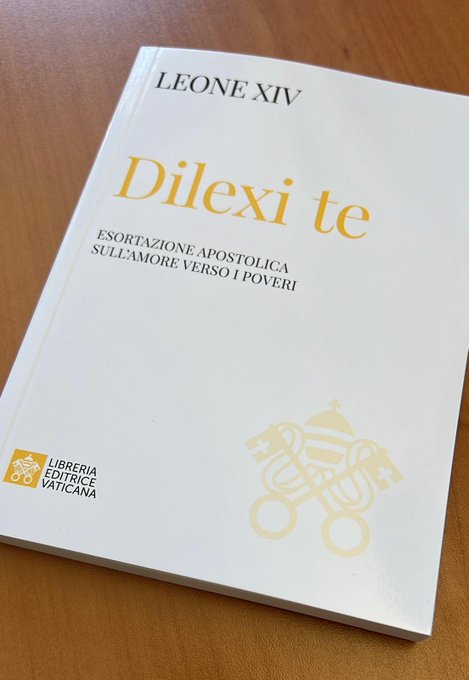
Go here to read part one of the fisk.
The choice of the poor
16. God is merciful love, and his plan of love, which unfolds and is fulfilled in history, is above all his descent and coming among us to free us from slavery, fear, sin and the power of death. Addressing their human condition with a merciful gaze and a heart full of love, he turned to his creatures and thus took care of their poverty. Precisely in order to share the limitations and fragility of our human nature, he himself became poor and was born in the flesh like us. We came to know him in the smallness of a child laid in a manger and in the extreme humiliation of the cross, where he shared our radical poverty, which is death. It is easy to understand, then, why we can also speak theologically of a preferential option on the part of God for the poor, an expression that arose in the context of the Latin American continent and in particular in the Puebla Assembly, but which has been well integrated into subsequent teachings of the Church. [12] This “preference” never indicates exclusivity or discrimination towards other groups, which would be impossible for God. It is meant to emphasize God’s actions, which are moved by compassion toward the poverty and weakness of all humanity. Wanting to inaugurate a kingdom of justice, fraternity and solidarity, God has a special place in his heart for those who are discriminated against and oppressed, and he asks us, his Church, to make a decisive and radical choice in favor of the weakest.
More Liberation theology. This is a very parochial Latin American document, the continent where the Church since the last century has done an absolutely miserable job of evangelization, inspiring vocations and simply retaining the allegiance of cradle Catholics. Most people are dubious about Left-wing politics, and a Church that goes loony Left is following a well traveled road to extinction. The preferential option for the poor, as it has played out, almost always results in the Church becoming a conduit for Caesar’s tax dollars, a situation which stands the Gospel on its head. Christ asked nothing from governments and everything from individuals.
17. It is in this perspective that we can understand the numerous pages of the Old Testament in which God is presented as the friend and liberator of the poor, the one who hears the cry of the poor and intervenes to free them (cf. Ps 34:7). God, the refuge of the poor, denounces through the prophets — we recall in particular Amos and Isaiah — the injustices committed against the weakest, and exhorts Israel to renew its worship from within, because one cannot pray and offer sacrifice while oppressing the weakest and poorest. From the beginning of Scripture, God’s love is vividly demonstrated by his protection of the weak and the poor, to the extent that he can be said to have a particular fondness for them. “God’s heart has a special place for the poor… The entire history of our redemption is marked by the presence of the poor.” [13]
Old Testament jeremiads against the rich are always part of prophecies against the ongoing falling away from the worship of God. The worship of false gods, including Mammon, is always the target. Sole concern for material well being is condemned again and again in the Old Testament, the people of Israel longing for the fleshpots of Egypt for example, and the New Testament, Christ telling Satan that Man does not live by bread alone. Making relief of the poor the Alpha and Omega of Christianity is to miss God’s point entirely.
Jesus, the poor Messiah
18. The Old Testament history of God’s preferential love for the poor and his readiness to hear their cry — to which I have briefly alluded — comes to fulfillment in Jesus of Nazareth. [14] By his Incarnation, he “emptied himself, taking the form of a slave, being born in human likeness” ( Phil 2:7), and in that form he brought us salvation. His was a radical poverty, grounded in his mission to reveal fully God’s love for us (cf. Jn 1:18; 1 Jn 4:9). As Saint Paul puts it in his customarily brief but striking manner: “You know well the grace of our Lord Jesus Christ, that though he was rich, yet for your sakes he became poor, so that by his poverty you might become rich” ( 2 Cor 8:9).
This relates back to a debate within the Church in the Middle Ages, raised by the heretical Franciscan Fraticelli, as to whether Christ and his Apostles owned any property. The temptation of any movement is to become fanatics on a single point. The heretical Franciscans turned the embrace of poverty into the be all and end all. Christ of course was raised in a carpenter’s family, may have been a carpenter himself, a middle class occupation in His time. Christ forsook mundane occupations but never refused the assistance of wealthy disciples, and the Gospels are replete with examples of this. His concern for material poverty was always entirely secondary to his concern for the spiritual poverty that would land so many in Gehenna. The rich man should have helped Lazarus and turned his heart to God. Riches become a snare then they become the be all and end all.
19. The Gospel shows us that poverty marked every aspect of Jesus’ life. From the moment he entered the world, Jesus knew the bitter experience of rejection. The Evangelist Luke tells how Joseph and Mary, who was about to give birth, arrived in Bethlehem, and then adds, poignantly, that “there was no place for them in the inn” (Lk 2:7). Jesus was born in humble surroundings and laid in a manger; then, to save him from being killed, they fled to Egypt (cf. Mt 2:13-15). At the dawn of his public ministry, after announcing in the synagogue of Nazareth that the year of grace which would bring joy to the poor was fulfilled in him, he was driven out of town (cf. Lk 4:14-30). He died as an outcast, led out of Jerusalem to be crucified (cf. Mk 15:22). Indeed, that is how Jesus’ poverty is best described: he experienced the same exclusion that is the lot of the poor, the outcast of society. Jesus is a manifestation of this privilegium pauperum. He presented himself to the world not only as a poor Messiah, but also as the Messiah of and for the poor.
Very tendentious. There was no room at the inn, not that Joseph could not pay. He had the funds to take Mary and Jesus into Egypt. He established himself as a carpenter in Nazareth, and had the funds to take Mary and Jesus to the Temple in Jerusalem. Christ, after He began His mission, had disciples who took care of His material needs, Joseph of Arimathea for example providing His tomb. Attempting to use Christ as an example of the poor is misplaced.
20. There are some clues about Jesus’ social status. First of all, he worked as a craftsman or carpenter, téktōn (cf. Mk 6:3). These were people who earned their living by manual labor. Not owning land, they were considered inferior to farmers. When the baby Jesus was presented in the Temple by Joseph and Mary, his parents offered a pair of turtledoves or pigeons (cf. Lk 2:22-24), which according to the prescriptions of the Book of Leviticus (cf. 12:8) was the offering of the poor. A fairly significant episode in the Gospel tells us how Jesus, together with his disciples, gathered heads of grain to eat as they passed through the fields (cf. Mk 2:23-28). Only the poor were allowed to do this gleaning in the fields. Moreover, Jesus says of himself: “Foxes have holes, and birds of the air have nests; but the Son of Man has nowhere to lay his head” (Mt 8:20; Lk 9:58). He is, in fact, an itinerant teacher, whose poverty and precariousness are signs of his bond with the Father. They are also conditions for those who wish to follow him on the path of discipleship. In this way, the renunciation of goods, riches and worldly securities becomes a visible sign of entrusting oneself to God and his providence.
Once again tendentious. Most farmers in the time and place of Jesus were tenants, and their lot generally was not a happy one. Carpenters, on the other hand, tended to be town dwellers, often having shops of their own. Skilled craftsmen frequently earned a decent living. The offering at the Temple may well have been a result of the fact that Joseph was smart enough not to take a lot of funds with him on the journey to Jerusalem, bandits, as demonstrated by the Good Samaritan parable, being a constant peril for travelers. The story of the gleaning in the fields is related to Jesus’ refusal to be bound by the ritual purity laws of the Old Testament, He and His disciples being criticized for not having washed their hands before eating the results of the gleaning. To repeat a point, during His mission Christ did not lack for disciples taking care of his material needs.
Mercy towards the poor in the Bible
24. The Apostle John writes: “Those who do not love a brother or sister whom they have seen, cannot love God whom they have not seen” (1 Jn 4:20). Similarly, in his reply to the scribe’s question, Jesus quotes the two ancient commandments: “You shall love the Lord your God with all your heart, and with all your soul, and with all your might” (Deut 6:5), and “You shall love your neighbor as yourself” (Lev 19:18), uniting them in a single commandment. The Evangelist Mark reports Jesus’ response in these terms: “The first is, ‘Hear, O Israel: the Lord our God, the Lord is one; you shall love the Lord your God with all your heart, and with all your soul, and with all your mind, and with all your strength.’ The second is this, ‘You shall love your neighbor as yourself.’ There is no other commandment greater than these” (12:29-31).
Mercy towards all. Once again the Pope wishes to restrict what is a universal call to repentance and salvation.
25. The passage from the Book of Leviticus teaches love for one’s neighbor, while other texts call for respect — if not also love — even for one’s enemy: “When you come upon your enemy’s ox or donkey going astray, you shall bring it back. When you see the donkey of one who hates you lying under its burden and you would hold back from setting it free, you must help to set it free” (Ex 23:4-5). Here the intrinsic value of respect for others is expressly stated: anyone in need, even an enemy, always deserves our assistance.
A universal application to all. Other passages in the Old Testament call for a more vigorous, shall we say, approach to the enemies of Israel.
26. Jesus’ teaching on the primacy of love for God is clearly complemented by his insistence that one cannot love God without extending one’s love to the poor. Love for our neighbor is tangible proof of the authenticity of our love for God, as the Apostle John attests: “No one has ever seen God; if we love one another, God lives in us, and his love is perfected in us… God is love, and those who abide in love abide in God, and God abides in them” (1 Jn 4:12,16). The two loves are distinct yet inseparable. Even in cases where there is no explicit reference to God, the Lord himself teaches that every act of love for one’s neighbor is in some way a reflection of divine charity: “Truly I tell you, just as you did it to one of the least of these my brethren, you did it to me” (Mt 25:40).
The Pope makes a Procrustean attempt to transform a universal call for love into a more restricted focus upon the materially poor, who are never as much to be pitied, in the grand scheme of things, as the spiritually poor. Mother Teresa noted this when she said that nations which embraced legal abortion were the true poor.
27. For this reason, works of mercy are recommended as a sign of the authenticity of worship, which, while giving praise to God, has the task of opening us to the transformation that the Spirit can bring about in us, so that we may all become an image of Christ and his mercy towards the weakest. In this sense, our relationship with the Lord, expressed in worship, also aims to free us from the risk of living our relationships according to a logic of calculation and self-interest. We are instead open to the gratuitousness that surrounds those who love one another and, therefore, share everything in common. In this regard, Jesus advises: “When you give a dinner or a banquet, do not invite your friends or your brothers or your relatives or rich neighbors, lest they also invite you in return, and you be repaid. But when you give a feast, invite the poor, the maimed, the lame, the blind, and you will be blessed, because they cannot repay you” (Lk 14:12-14).
The corporal works of mercy is a much briefer way of saying this.
28. The Lord’s appeal to show mercy to the poor culminates in the great parable of the last judgment (cf. Mt 25:31-46), which can serve as a vivid illustration of the Beatitude of the merciful. In that parable, the Lord offers us the key to our fulfillment in life; indeed, “if we seek the holiness pleasing to God’s eyes, this text offers us one clear criterion on which we will be judged.” [16] The clear and forceful words of the Gospel must be put into practice “without any ‘ifs or buts’ that could lessen their force. Our Lord made it very clear that holiness cannot be understood or lived apart from these demands.” [17]
He also makes it clear that it is a personal duty. There is no merit in leaving those in need to the tender care of Caesar.
29. In the early Christian community, acts of charity were performed on the basis not of preliminary studies or advance planning, but directly following Jesus’ example as presented in the Gospel. The Letter of James deals at length with the problem of relations between rich and poor, and asks the faithful two questions in order to examine the authenticity of their faith: “What good is it, my brothers and sisters, if you say you have faith but do not have works? Can faith save you? If a brother or sister is naked and lacks daily food, and one of you says to them, ‘Go in peace; keep warm and eat your fill,’ and yet you do not supply their bodily needs, what is the good of that? So faith by itself, if it has no works, is dead” (2:14-17).
Correct.
30. James goes on to say: “Your gold and silver have rusted, and their rust will be evidence against you, and it will eat your flesh like fire. You have laid up treasure for the last days. Listen! The wages of the laborers who mowed your fields, which you kept back by fraud, cry out, and the cries of the harvesters have reached the ears of the Lord of hosts. You have lived on the earth in luxury and in pleasure; you have fattened your hearts in a day of slaughter” (5:3-5). These are powerful words, even if we would rather not hear them! A similar appeal can be found in the First Letter of John: “How does God’s love abide in anyone who has the world’s goods and sees a brother or sister in need and yet refuses help?” (3:17).
Also correct.
31. The message of God’s word is “so clear and direct, so simple and eloquent, that no ecclesial interpretation has the right to relativize it. The Church’s reflection on these texts ought not to obscure or weaken their force, but urge us to accept their exhortations with courage and zeal. Why complicate something so simple? Conceptual tools exist to heighten contact with the realities they seek to explain, not to distance us from them.” [18]
I am all in favor of brevity on the part of clerics.
32. Indeed, we find a clear ecclesial example of sharing goods and caring for the poor in the daily life of the first Christian community. We can recall in particular the way in which the question of the daily distribution of subsidies to widows was resolved (cf. Acts 6:1-6). This was not an easy problem, partly because some of these widows, who came from other countries, were sometimes neglected because they were foreigners. In fact, the episode recounted in the Acts of the Apostles highlights a certain discontent on the part of the Hellenists, the Jews who were culturally Greek. The Apostles do not respond with abstract words, but by placing charity towards all at the center, reorganizing assistance to widows by asking the community to seek wise and respected people to whom they could entrust food distribution, while they take care of preaching the Word.
It didn’t work and was quickly abandoned. We read about the common goods system breaking down in Acts and the Epistles.
33. When Paul went to Jerusalem to consult the Apostles lest somehow he “should be running or had run in vain” (Gal 2:2), he was asked not to forget the poor (cf. Gal 2:10). Therefore, he organized various collections in order to help the poor communities. Among the reasons for which Paul makes this gesture, the following stands out: “God loves a cheerful giver” (2 Cor 9:7). The word of God reminds those of us not normally prone to benevolent and disinterested gestures, that generosity to the poor actually benefits those who exercise it: God has a special love for them. In fact, the Bible is full of promises addressed to those who give generously to others: “Whoever is kind to the poor lends to the Lord, and will be repaid in full” (Prov 19:17). “Give, and it will be given to you… for the measure you give will be the measure you get back” (Lk 6:38). “Then your light shall break forth like the dawn, and your healing shall spring up quickly” (Is 58:8). Of this, the early Christians had no doubt.
Paul was a very practical tent maker, and he had no patience for those able to work who sought to live off of the charity of the Church.
34. The life of the first ecclesial communities, described in the pages of the Bible and handed down to us as God’s revealed word, has been given to us as an example to imitate, but also as a witness to the faith that works through charity and an enduring inspiration for generations yet to come. Throughout the centuries, those pages have moved the hearts of Christians to love and to perform works of charity, which, like fruitful seeds, never cease to produce a rich harvest.
Charity yes, common goods no. Christians in the first centuries after Christ almost entirely restricting that system to monasteries and convents. Some heretical movements did attempt to carry on the common goods system.
The fisk continues in part three.


Don, you have a lawyer’s eye and the fortitude of a sanitation engineer.
🙂
I’m struck by how…pedestrian…his writing is. I usually get these sorts of things from my high school upperclassmen who write well for 17 year olds, but without any life’s experience tend to lapse into pie in the sky and utopian tropes about poverty and how to deal with it.
The Pope should be writing and preaching about righteousness and holiness, conversion and repentance, heaven, hell, death, and judgment, not this Marxist leftist Chicago Democrat crap. But look at who and what he is. A Chicago Democrat who spent a decade or more in that cesspool of liberation theology known as Latin America. No more chances for any of these post Vatican II clerics. They’re supposed to know Sacred Scripture and Sacred Tradition than any of us, and they demonstrably don’t know squat.
Thank you for this series Don. I’m not sure I could make myself read the entire document otherwise. For a very short time I had hope for Pope Leo but that’s gone. He makes it more clear day by day that his pontificate is Francis 2.0. The thought occurred to me, that I hesitate to express, but isn’t it a bit lazy to use someone’s work and just add a bit to it? If this is a thing that is done in pontificate writings, please excuse my ignorance.
I think it is a bit unusual Jeri. Popes often leave incomplete writings at the time of their death, and I think this type of post mortem “collaboration” with the next Pope is fairly rare. Pope Leo does seem to be Francis, to the worst of his ability, in all but name. Let use hope that he will change his policy as we get further from the death of Francis. I am not optimistic.
If Francis I forfeited his office of Pope by rejecting the duty and office of the Vicar of Christ, which he, Francis I certainly did. Leo XIV needs to abstain from Francis I’s popeless way.
Our taxes belong to the taxpayers even as the taxes are administered by the Administration.
We, the people, every human being ever created by “their Creator” carry on the work of Christ and the Divine Providence called for in our Founding Principles.
The widow put two coins in the temple treasury . All she had to live on and trusted in Divine Providence to care for her…and God did care for her.
Hoping without Thanksgiving is heresy.
This is very helpful, although deeply disheartening. It seems that “poverty” (material, of course) has replaced sin as the default condition of the human race.
[…] here to read part one of the fisk, go here to read part two, go here to read part three and go here to read part […]
[…] here to read part one of the fisk, go here to read part two, go here to read part three, go here to read part four and go here to read part […]
[…] here to read part one of the fisk, go here to read part two, go here to read part three, go here to read part four, go here to read part five […]