
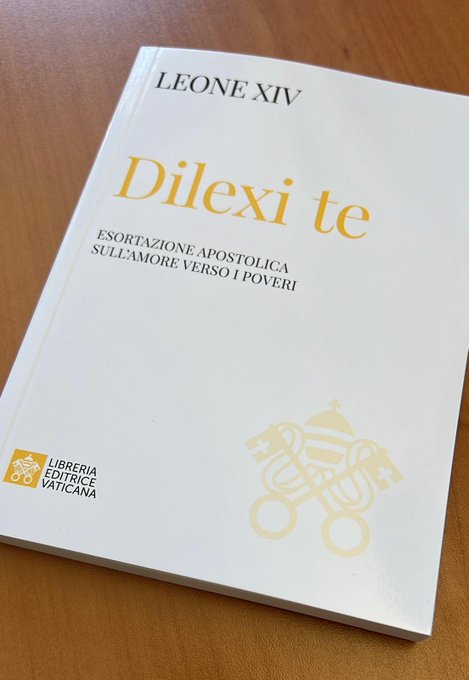
Go here to read part one of the fisk, go here to read part two, go here to read part three, go here to read part four and go here to read part five.
CHAPTER FOUR
A HISTORY THAT CONTINUES
The century of the Church’s Social Doctrine
82. The acceleration of technological and social change in the past two centuries, with all its contradictions and conflicts, not only had an impact on the lives of the poor but also became the object of debate and reflection on their part. The various movements of workers, women and young people, and the fight against racial discrimination, gave rise to a new appreciation of the dignity of those on the margins of society. The Church’s social doctrine also emerged from this matrix. Its analysis of Christian revelation in the context of modern social, labor, economic and cultural issues would not have been possible without the contribution of the laity, men and women alike, who grappled with the great issues of their time. At their side were those men and women religious who embodied a Church forging ahead in new directions. The epochal change we are now undergoing makes even more necessary a constant interaction between the faithful and the Church’s Magisterium, between ordinary citizens and experts, between individuals and institutions. Here too, it needs to be acknowledged once more that reality is best viewed from the sidelines, and that the poor are possessed of unique insights indispensable to the Church and to humanity as a whole.
The social doctrine of the Church was largely, albeit not entirely, devised by the namesake of the Pope, Pope Leo XIII, an incisive thinker and writer. An intriguing papal document could be written contrasting Pope Leo XIII’s writings on social justice and those of his successors. If honest I think it would result in something like this in both the writer and the reader:
I find these sentences disturbing:
At their side were those men and women religious who embodied a Church forging ahead in new directions. The epochal change we are now undergoing makes even more necessary a constant interaction between the faithful and the Church’s Magisterium, between ordinary citizens and experts, between individuals and institutions. Here too, it needs to be acknowledged once more that reality is best viewed from the sidelines, and that the poor are possessed of unique insights indispensable to the Church and to humanity as a whole.
To be blunt, this is crap. There is only one direction for the Church, that of Christ. The magisterium does not, or at least should not, change according to the popular prejudices of the day. The poor contain no insights that cannot be found among all of of fallen humanity.
83. The Church’s Magisterium in the past 150 years is a veritable treasury of significant teachings concerning the poor. The Bishops of Rome have given voice to new insights refined through a process of ecclesial discernment. By way of example, in his Encyclical Letter Rerum Novarum, Leo XIII addressed the labor question, pointing to the intolerable living conditions of many industrial workers and arguing for the establishment of a just social order. Other popes also spoke on this theme. Saint John XXIII, in his Encyclical Mater et Magistra (1961), called for justice on a global scale: rich countries could no longer remain indifferent to countries suffering from hunger and extreme poverty; instead, they were called upon to assist them generously with all their goods.
The new social order discerned by Pope Leo was to come about through a rebirth of Christian faith. Mater et Magistra, on the other hand, was a laundry list of what the Caesars of the world should do. Pope Leo’s writings still seem fresh to me, while Mater et Magistra seems as dated as faith in the UN.
84. The Second Vatican Council represented a milestone in the Church’s understanding of the poor in God’s saving plan. Although this theme remained marginal in the preparatory documents, Saint John XXIII, in his Radio Message of 11 September 1962, a month before the opening of the Council, called attention to the issue. In his memorable words, “the Church presents herself as she is and as she wishes to be: the Church of all and in particular the Church of the poor.” [76] The intense efforts of bishops, theologians and experts concerned with the renewal of the Church — with the support of Saint John XXIII himself — gave the Council a new direction. The centrality of Christ in these considerations both on a doctrinal and social level would prove fundamental. Many Council Fathers supported this approach, as eloquently expressed by Cardinal Lercaro in his intervention of 6 December 1962: “The mystery of Christ in the Church has always been and today is, in a particular way, the mystery of Christ in the poor.” [77] He went on to say that, “this is not simply one theme among others, but in some sense the only theme of the Council as a whole.” [78] The Archbishop of Bologna, in preparing the text for this intervention, noted the following: “This is the hour of the poor, of the millions of the poor throughout the world. This is the hour of the mystery of the Church as mother of the poor. This is the hour of the mystery of Christ, present especially in the poor.” [79] There was a growing sense of the need for a new image of Church, one simpler and more sober, embracing the entire people of God and its presence in history. A Church more closely resembling her Lord than worldly powers and working to foster a concrete commitment on the part of all humanity to solving the immense problem of poverty in the world.
Rah, rah Vatican II. I have heard that all my life since I was a boy. It becomes no more convincing with repetition.
85. At the opening of the second session of the Council, Saint Paul VI took up this concern voiced by his predecessor, namely that the Church looks with particular attention “to the poor, the needy, the afflicted, the hungry, the suffering, the imprisoned, that is, she looks to all humanity that suffers and weeps: she is part of them by evangelical right.” [80] In his General Audience of 11 November 1964, he pointed out that “the poor are representatives of Christ,” and compared the image of the Lord in the poor to that seen in the Pope. He affirmed this truth with these words: “The representation of Christ in the poor is universal; every poor person reflects Christ; that of the Pope is personal… The poor man and Peter can be one in the same person, clothed in a double representation; that of poverty and that of authority.” [81] In this way, the intrinsic link between the Church and the poor was expressed symbolically and with unprecedented clarity.
Once again the poor as the be all and end all of Christianity.
86. The Pastoral Constitution Gaudium et Spes, building on the teachings of the Church Fathers, forcefully reaffirms the universal destination of earthly goods and the social function of property that derives from it. The Constitution states that “God destined the earth and all it contains for all people and nations so that all created things would be shared fairly by all humankind under the guidance of justice tempered by charity… In their use of things people should regard the external goods they lawfully possess as not just their own but common to others as well, in the sense that they can benefit others as well as themselves. Therefore, everyone has the right to possess a sufficient amount of the earth’s goods for themselves and their family… Persons in extreme necessity are entitled to take what they need from the riches of others… By its nature, private property has a social dimension that is based on the law of the common destination of earthly goods. Whenever the social aspect is forgotten, ownership can often become the object of greed and a source of serious disorder.” [82] This conviction was reiterated by Saint Paul VI in his Encyclical Populorum Progressio. There we read that no one can feel authorized to “appropriate surplus goods solely for his [or her] own private use when others lack the bare necessities of life.” [83] In his address to the United Nations, Pope Paul VI spoke as the advocate of poor peoples [84] and urged the international community to build a world of solidarity.
This type of tripe would never have been written when the popes were secular rulers and had a real country to run, rather than a Catholic theme park. Utopianism is the great unrecognized heresy within the clerics of the Church since World War II.
87. With Saint John Paul II, the Church’s preferential relationship with the poor was consolidated, particularly from a doctrinal standpoint. His teaching saw in the option for the poor a “special form of primacy in the exercise of Christian charity, to which the whole tradition of the Church bears witness.” [85] In his Encyclical Sollicitudo Rei Socialis, he went on to say: “Today, furthermore, given the worldwide dimension which the social question has assumed, this love of preference for the poor, and the decisions which it inspires in us, cannot but embrace the immense multitudes of the hungry, the needy, the homeless, those without medical care and, above all, those without hope of a better future. It is impossible not to take account of the existence of these realities. To ignore them would mean becoming like the ‘rich man’ who pretended not to know the beggar Lazarus lying at his gate (cf. Lk 16:19-31).” [86] Saint John Paul II’s teaching on work is likewise important for our consideration of the active role that the poor ought to play in the renewal of the Church and society, thus leaving behind a certain “paternalism” that limited itself to satisfying only the immediate needs of the poor. In his Encyclical Laborem Exercens, he forthrightly stated that “human work is a key , probably the essential key , to the whole social question.” [87]
It is easy to cherry pick from the writings of John Paul II since he wrote with great complexity and at length. He was the least infected by utopianism overall of the post war popes, having seen what a Communist Caesar could do.
88. Amid the multiple crises that marked the beginning of the third millennium, the teaching of Benedict XVI took a more distinctly political turn. Hence, in the Encyclical Caritas in Veritate, he affirms that “the more we strive to secure a common good corresponding to the real needs of our neighbors, the more effectively we love them.” [88] He observed, moreover, that “hunger is not so much dependent on lack of material things as on shortage of social resources, the most important of which are institutional. What is missing, in other words, is a network of economic institutions capable of guaranteeing regular access to sufficient food and water for nutritional needs, and also capable of addressing the primary needs and necessities ensuing from genuine food crises, whether due to natural causes or political irresponsibility, nationally and internationally.” [89]
To a certain extent that is unfair to Pope Benedict, but he did often seem that utopia was just around the corner if the Caesars of the world willed it.
89. Pope Francis recognized that in recent decades, alongside the teachings of the Bishops of Rome, national and regional Bishops’ Conferences have increasingly spoken out. He could personally attest, for example, to the particular commitment of the Latin American episcopate to rethinking the Church’s relationship with the poor. In the immediate post-conciliar period, in almost all Latin American countries, there was a strong sense of the Church’s need to identify with the poor and to participate actively in securing their freedom. The Church was moved by the masses of the poor suffering from unemployment, underemployment, unjust wages and sub-standard living conditions. The martyrdom of Saint Oscar Romero, the Archbishop of San Salvador, was a powerful witness and an inspiration for the Church. He had made his own the plight of the vast majority of his flock and made them the center of his pastoral vision. The Conferences of the Latin American Bishops held in Medellín, Puebla, Santo Domingo and Aparecida were also significant events for the life of the Church as a whole. For my part, having served as a missionary in Peru for many years, I am greatly indebted to this process of ecclesial discernment, which Pope Francis wisely linked to that of other particular Churches, especially those in the global South. I would now like to take up two specific themes of this episcopal teaching.
The blundering and ineffectual Church in South America has only a negative example to provide to the rest of the Church. Go thou and do otherwise is my constant thought when reading about the Church in that continent since 1950.
Structures of sin that create poverty and extreme inequality
90. At Medellín, the bishops declared themselves in favor of a preferential option for the poor: “Christ our Savior not only loved the poor, but, ‘being rich, he became poor.’ He lived a life of poverty, focused his mission on preaching their liberation, and founded his Church as a sign of this poverty in our midst… The poverty endured by so many of our brothers and sisters cries out for justice, solidarity, witness, commitment and efforts directed to ending it, so that the saving mission entrusted by Christ may be fully accomplished.” [90] The bishops stated forcefully that the Church, to be fully faithful to her vocation, must not only share the condition of the poor, but also stand at their side and work actively for their integral development. Faced with a situation of worsening poverty in Latin America, the Puebla Conference confirmed the Medellín decision in favor of a frank and prophetic option for the poor and described structures of injustice as a “social sin.”
The Faithful in Sud America have responded to this preferential option for Leftist politics by deserting the Church in droves. (Does the Pope really believe what he is writing? If so he is dimmer than his predecessor.)
91. Charity has the power to change reality; it is a genuine force for change in history. It is the source that must inspire and guide every effort to “resolve the structural causes of poverty,” [91] and to do so with urgency. It is my hope that we will see more and more “politicians capable of sincere and effective dialogue aimed at healing the deepest roots — and not simply the appearances — of the evils in our world.” [92] For “it is a matter of hearing the cry of entire peoples, the poorest peoples of the earth.” [93]
Don’t just stand there Caesars do something! Caesars doing something is often why poor nations are poor. Looking at you Cuba.
92. We must continue, then, to denounce the “dictatorship of an economy that kills,” and to recognize that “while the earnings of a minority are growing exponentially, so too is the gap separating the majority from the prosperity enjoyed by those happy few. This imbalance is the result of ideologies that defend the absolute autonomy of the marketplace and financial speculation. Consequently, they reject the right of states, charged with vigilance for the common good, to exercise any form of control. A new tyranny is being born, invisible and often virtual, which unilaterally and relentlessly imposes its own laws and rules.” [94] There is no shortage of theories attempting to justify the present state of affairs or to explain that economic thinking requires us to wait for invisible market forces to resolve everything. Nevertheless, the dignity of every human person must be respected today, not tomorrow, and the extreme poverty of all those to whom this dignity is denied should constantly weigh upon our consciences.
In a world filled with jihadists, dictatorial regimes, Communist China and Putin’s Russia, the main enemy are those darn free markets. “Economy that kills!” Francis II indeed.
93. In his Encyclical Dilexit Nos, Pope Francis reminded us that social sin consolidates a “structure of sin” within society, and is frequently “part of a dominant mindset that considers normal or reasonable what is merely selfishness and indifference. This then gives rise to social alienation.” [95] It then becomes normal to ignore the poor and live as if they do not exist. It then likewise seems reasonable to organize the economy in such a way that sacrifices are demanded of the masses in order to serve the needs of the powerful. Meanwhile, the poor are promised only a few “drops” that trickle down, until the next global crisis brings things back to where they were. A genuine form of alienation is present when we limit ourselves to theoretical excuses instead of seeking to resolve the concrete problems of those who suffer. Saint John Paul II had already observed that, “a society is alienated if its forms of social organization, production and consumption make it more difficult to offer the gift of self and to establish solidarity between people.” [96]
This exhortation is basically the greatest hits of Francis. We have a sock puppet as Pope who is giving Francis the Worst a second pontificate.
94. We need to be increasingly committed to resolving the structural causes of poverty. This is a pressing need that “cannot be delayed, not only for the pragmatic reason of its urgency for the good order of society, but because society needs to be cured of a sickness which is weakening and frustrating it, and which can only lead to new crises. Welfare projects, which meet certain urgent needs, should be considered merely provisional responses.” [97] I can only state once more that inequality “is the root of social ills.” [98] Indeed, “it frequently becomes clear that, in practice, human rights are not equal for all.” [99]
That experiment was tried in the last century Holiness. It produced states with poverty for all, except for the rulers, the nomenklatura.
95. As it is, “the current model, with its emphasis on success and self-reliance, does not appear to favor an investment in efforts to help the slow, the weak or the less talented to find opportunities in life.” [100] The same questions keep coming back to us. Does this mean that the less gifted are not human beings? Or that the weak do not have the same dignity as ourselves? Are those born with fewer opportunities of lesser value as human beings? Should they limit themselves merely to surviving? The worth of our societies, and our own future, depends on the answers we give to these questions. Either we regain our moral and spiritual dignity or we fall into a cesspool. Unless we stop and take this matter seriously, we will continue, openly or surreptitiously, “to legitimize the present model of distribution, where a minority believes that it has the right to consume in a way which can never be universalized, since the planet could not even contain the waste products of such consumption.” [101]
No recognition that it is only free markets that have lifted humanity en masse from poverty. The Pope acts as if the West consists of Dickensian hell holes instead of welfare states, with different pathologies.
96. One structural issue that cannot realistically be resolved from above and needs to be addressed as quickly as possible has to do with the locations, neighborhoods, homes and cities where the poor live and spend their time. All of us appreciate the beauty of “those cities which overcome paralyzing mistrust, integrate those who are different and make this very integration a new factor of development! How attractive are those cities which, even in their architectural design, are full of spaces which connect, relate and favor the recognition of others!” [102] Yet, at the same time, “we cannot fail to consider the effects on people’s lives of environmental deterioration, current models of development and the throwaway culture.” [103] For “the deterioration of the environment and of society affects the most vulnerable people on the planet.” [104]
Provide the poor with “free”, “great housing”, but do it in a green way. I think the Pope has had few original thoughts in his life that contradict the bubble in which he lives.
97. All the members of the People of God have a duty to make their voices heard, albeit in different ways, in order to point out and denounce such structural issues, even at the cost of appearing foolish or naïve. Unjust structures need to be recognized and eradicated by the force of good, by changing mindsets but also, with the help of science and technology, by developing effective policies for societal change. It must never be forgotten that the Gospel message has to do not only with an individual’s personal relationship with the Lord, but also with something greater: “the Kingdom of God (cf. Lk 4:43); it is about loving God who reigns in our world. To the extent that he reigns within us, the life of society will be a setting for universal fraternity, justice, peace and dignity. Both Christian preaching and life, then, are meant to have an impact on society. We are seeking God’s Kingdom.” [105]
Foolish and naive would actually be kind descriptors of this papal dog’s breakfast.
98. Finally, in a document that was not initially well received by everyone, we find a reflection that remains timely today: “The defenders of orthodoxy are sometimes accused of passivity, indulgence, or culpable complicity regarding the intolerable situations of injustice and the political regimes which prolong them. Spiritual conversion, the intensity of the love of God and neighbor, zeal for justice and peace, the Gospel meaning of the poor and of poverty, are required of everyone, and especially of pastors and those in positions of responsibility. The concern for the purity of the faith demands giving the answer of effective witness in the service of one’s neighbor, the poor and the oppressed in particular, in an integral theological fashion.” [106]
This is from the papal document that condemned Liberation theology in 1981.
The poor as subjects
99. The life of the universal Church was enriched by the discernment of the Aparecida Conference, in which the Latin American bishops made clear that the Church’s preferential option for the poor “is implicit in the Christological faith in the God who became poor for us, so as to enrich us with his poverty.” [107] The Aparecida Document situates the Church’s mission in the present context of a globalized world marked by new and dramatic imbalances. [108] In their Final Message, the bishops wrote: “The stark differences between rich and poor invite us to work with greater commitment to being disciples capable of sharing the table of life, the table of all the sons and daughters of the Father, a table that is open and inclusive, from which no one is excluded. We therefore reaffirm our preferential and evangelical option for the poor.” [109]
More rubbish from the failed Church in South America.
100. At the same time, the Document, taking up a theme treated in earlier Conferences of the Latin American episcopate, insists on the need to consider marginalized communities as subjects capable of creating their own culture, rather than as objects of charity on the part of others. This means that such communities have the right to embrace the Gospel and to celebrate and communicate their faith in accord with the values present within their own cultures. Their experience of poverty gives them the ability to recognize aspects of reality that others cannot see; for this reason, society needs to listen to them. The same holds true for the Church, which should regard positively their “popular” practice of the faith. A fine passage from the Aparecida Document can help us reflect on this point and our proper response: “Only the closeness that makes us friends enables us to appreciate deeply the values of the poor today, their legitimate desires, and their own manner of living the faith… Day by day, the poor become agents of evangelization and of comprehensive human promotion: they educate their children in the faith, engage in ongoing solidarity among relatives and neighbors, constantly seek God, and give life to the Church’s pilgrimage. In the light of the Gospel, we recognize their immense dignity and their sacred worth in the eyes of Christ, who was poor like them and excluded among them. Based on this experience of faith, we will share with them the defense of their rights.” [110]
Pachamama we love you!
I need a mini-vacation from this. The fisk will conclude on Monday, October 20, 2025.


It’s the same old nonsense. The poor, the poor, the poor. Poor people, poor nations….and they are all poor because you and I in the USA are not poor.
Watch the Peters Pence collection end up being not enough to buy an ice cream cone at Dairy Queen.
Pope Prevost has been told to his face by Cardinal Burke, Cardinal Sarah and the President of Poland that TC has to go….and we get this.
Francis the Sequel…..not buying it.
The Church as an expertocracy? Why not, the experts™ were so reliable during the
Great ResetCovid years.Perhaps if Meloni were to cede some land back to the Papal States, the pope would have immediate problems to deal with. Perhaps that would limit the time he could spend on documents and interviews that oppress and chide the orthodox. After all, even popes only have 24 hours in a day…
No, he’d just neglect that part of his job too.
frankie two. Those cardinals never fail to let ya down. Heckova job conclave 2025. Heckova job
People are poor because they lack skills to produce things on their own or produce things for others for a medium of exchange. Period. A society benefits from systems which allow skill acquisition and which contain and control those phenomena in social relations which tend to suppress productive activity and favor rent seeking. Societies which wish to be productive benefit from a capable, efficient, and impartial corps of public employees operating according to an intelligently assembled set of law codes and derivative regulations. You need well-ordered land registers, cops, courts. You need the best public works you can afford to produce. You benefit from tax regimes which you can implement given the technology you have, which are as simple as possible, and which are as impartial between productive sectors as possible.
WHY I AM PRO-LIFE
When the living sperm of the husband,(A man who in informed consent became husband, an office of God’s creation along with the creation of mankind.) fertilizes the living ovum of the wife (the woman who in informed consent became wife, an office of God’s creation along with the creation of mankind), a new living human being comes into creation through the procreation of man and woman.
The newest of innocent, rational, immortal human souls is created and instilled by God (their Creator: Dec.).
The rational, immortal human soul of each and every human being directs the growth of the new human baby from fertilization into all eternity. The child, newly begotten has an immortal human soul who will live forever in eternity with God. The newly begotten human baby has a Guardian Angel who will guide and protect him for all time even if and when he meets death, his Guardian Angel will be with him in all eternity. Even as you and I have Guardian Angels to care for us for all eternity.
The rational soul of the one celled human being has a conscience. He has knowledge and he has all the graces, and civil rights enumerated in our Declaration of Independence and protected by our Constitution bestowed by God in Jesus Christ as he is our Constitutional Posterity (Preamble)
Mary gave us Jesus on Christmas Day. Jesus gave us Mary, his Mother on Good Friday.
All souls are in the Sacred Heart of Jesus. Jesus died for each and every soul in His Sacred Heart. Jesus gave all of our souls to His Mother Mary’s Sorrowful Heart when Christ died on the cross. Saint John, the Evangelist took Mary and all of our souls into the Church of Jesus on the first Good Friday.
This is the greatest of truths. However, when Christ was baptized by John the Baptist, our souls, the souls of every human being from Adam until the end of time were implicitly baptized. Then and until the Sacrament of Baptism could be received with informed consent, the souls and bodies of all of mankind were implicitly baptized in the Sacred Heart of Jesus.
The child in the womb grows to receive the Seven Sacraments of the Catholic Church: Baptism, Confirmation, Penance, Holy Eucharist, Holy Orders or Matrimony and the Sacrament of the Sick.
What did Christ not do to redeem mankind?
Christ raised the dead, healed the sick, fed the hungry, clothed the naked (Christ’s garments were taken from Him at the cross); Christ observed the Jewish laws, attended the Temple many times, instructed the ignorant, counseled the doubtful, visited Saint John the Baptist in prison undeservedly; Christ fulfilled every Spiritual and Corporal work of mercy.
Christ is True God and True man, the servant of all, the Savior of all mankind.
Christ loved the children. “Suffer the little ones to come unto me.”
Well? What are we waiting for?
Mary De Voe
Ditto, Penguins Fan. The glamorously symbolic “poor.”
P.S. The rational, immortal human soul is the life of the human being. Death has always been defined as the soul leaving the body. Many Halloween fables tell of the dead man’s soul trying to enter into another’s human body, but that is another post.
With abortion the scientists have bragged about knowing when a seventy year old woman would get cancer so, we ought to abort her now and save her all that trouble.
Never mind that the woman might have given us another Mozart, Da Vinci or George Washington.
The abortionists paid women to grow bigger babies for the baby’s organs. Oh. Yes.
And the organ harvesting goes on and on.
When Jesus Christ died, there was an earthquake. The curtain of the temple was torn in two. The curtain was several tons of gold that required one hundred men to lift it into place.
This brings me to the atheist who died. Facing God, the atheist told God that he, the atheist, did not believe in God.
God said: “I will not contradict Myself. I gave you free will. I AM who I Am, the very essence of being, the Infinite Supreme Sovereign Being, Creator of all. You may go your own way, but you will not use My Name without contradicting yourself.” “You may never say: I AM.”
[…] part two, go here to read part three, go here to read part four, go here to read part five and go here to read part […]