Donald R. McClarey
Cradle Catholic. Active in the pro-life movement since 1973. Father of three, one in Heaven, and happily married for 43 years. Small town lawyer and amateur historian. Former president of the board of directors of the local crisis pregnancy center for a decade.
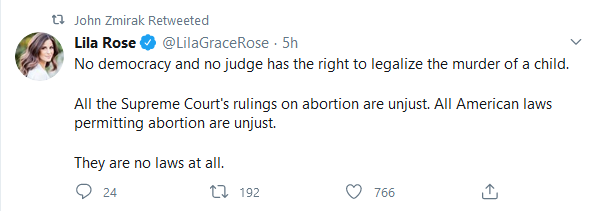






Hmm… this probably gets into deeper philosophical debates, but on the surface I have to say while I agree that the laws are unjust, that does not then make them not-laws. Laws are laws regardless of their broader moral alignment.
I guess what gives me pause here is that I’ve noticed way too many younger people embrace this “unjust laws are not law” mentality as an excuse to act illegally – like the recent rioting and CHAZ debacles. So my instinct is to push back against it and insist: “no this is still the law.” And if you believe you must break it for a higher purpose, then you must accept the punishments that will be meted out to you.
Shadrach, Meshach and Abednego all accepted that they would be thrown into the fire, they didn’t argue with the king over whether the law was the law – no matter how unjust. (also I am very proud I spelled all of their names right on the first try)
The law can be unjust, and still be the law.
Agrees with Nate
An unjust law is still a law. It is simply an unjust law. How unjust it is and what the options are will change the response to it.
snaps fingers
THAT is what bugs me– this avoid the requirement to try to fix the unjust laws. Yelling “it doesn’t exist” does absolutely no good, but it makes you feel like you did something, instead of the hard work involved in showing people it’s unjust and changing the law.
I will defer to Sir William Blackstone:
Upon these two foundations, the law of nature and the law of revelation, depend all human laws; that is to say, no human laws should be suffered to contradict these. There are, it is true, a great number of indifferent points, in which both the divine law and the natural leave a man at his own liberty; but which are found necessary for the benefit of society to be restrained within certain limits. And herein it is that human laws have their greatest force and efficacy; for, with regard to such points as are not indifferent, human laws are only declaratory of, and act in subordination to, the former. To instance in the case of murder: this is expressly forbidden by the divine, and demonstrably by the natural law; and from these prohibitions arises the true unlawfulness of this crime. Those human laws that annex a punishment to it, do not at all increase it’s moral guilt, or superadd any fresh obligation in foro conscientiae to abstain from it’s perpetration. Nay, if any human law should allow enjoin us to commit it, we are bound to transgress that human law, or else we must offend both the natural and the divine.
Laws which are morally good we are obliged to obey. Laws which are morally neutral it is prudential to obey. Laws which are morally evil have no hold upon us, other than the claim of force majeure. That last is usually sufficient for people to comply with even morally unjust laws until such time as they can be remedied, or the enormity grows so immense that the right of revolution set forth in the Declaration of Independence must be asserted.
It sounds like he agrees with Nate, too. 😀
Notice how there’s only geeks, here? The eternal confusion on chaotic neutral folks’ behalf when the lawful good character won’t do evil stuff because It Is The Law comes to mind.