
Something for the weekend. Tchaikovsky’s 1812 Overture. Written in 1880 to commemorate the victory of Russia over Napoleon, its composition was due to the fact that the Cathedral of Christ the Savior, commissioned by Tsar Alexander I in thanksgiving for the victory, was nearing completion. As it happens, Tchaikovsky did not think much of what would become his most famous piece, writing that it was noisy and lacked all artistic merit and was written by him without love. Oddly enough, it has become associated in this country with the Fourth of July, as I have heard it performed on several Independence Day celebrations.
Although it has been endlessly parodied, “the cereal that’s shot from guns”, I have always liked it. Listening to a great piece of music like this, I wonder if the below humor piece does not possess a rare insight:


Love those canons!
Military pieces are rarely the composer’s best. Beethoven admitted that “Wellington’s Victory” was “sh*t” but that his sh*t was better than other composers best music.
My reaction when I first heard it was, “Wut? Beethoven wrote ‘The Bear Went Over the Mountain’?”
If there’s a composer whose name can be mentioned in the same breath as Bach, Mozart, and Beethoven, it’s Tchaikovsky. He suffers from the same dilemma as Mozart: he’s often so accessible that people overlook his skill. In Mozart’s case, the more you study music, the more impressive he gets. In Tchaikovsky’s case, I think that people who study Russian music in greater depth become enchanted with later, less accessible composers.
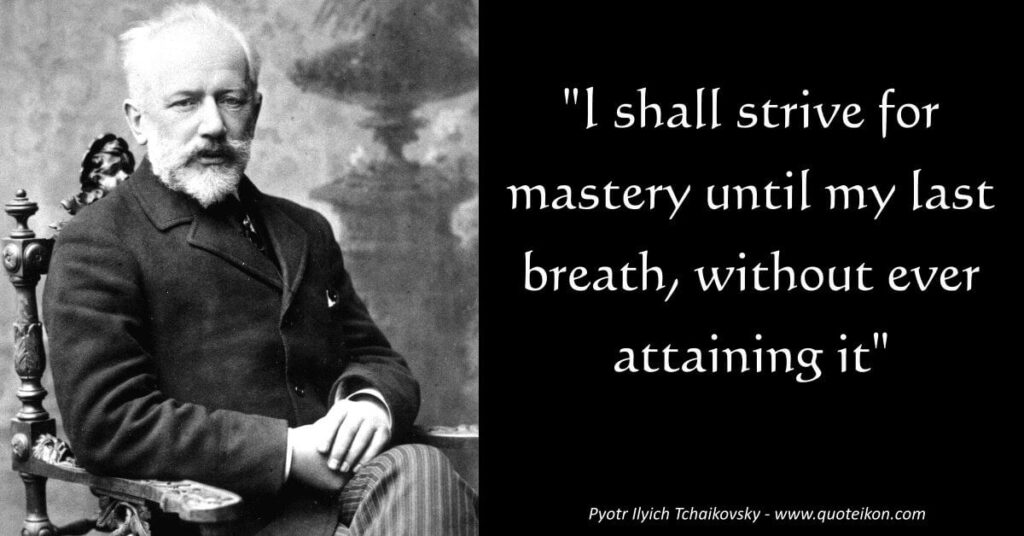
“As it happens, Tchaikovsky did not think much of what would become his most famous piece, writing that it was noisy and lacked all artistic merit and was written by him without love.”
–
If anyone would like to hear what Tchaikovsky considered his love, listen to his Serenade for Strings Op 48 (the 1812 Overture is Op 49, both were written in 1880). The two have similarities, but the Serenade is a very beautiful work, one of the best ever.
very interesting article– the “hologram” of great music seems possible ! 🙂
.
I have always been drawn to pre-Soviet music, prose and poetry…that Russian spirit is also close the the heart of our blessed Mother, I think
https://www.youtube.com/watch?v=KhbuNZ8p3hg
Really good insights! I particularly love the article about great music existing outside the time-space continuum.
It’s true that some of the Overture is clumsily stitched together, almost as if the composer just wanted to put the sections together and be done with it.
On the other hand…what the composer didn’t count on, maybe, was the effect of the hated “Marsellaise” being completely overpowered by the choir singing “God Save the Tsar!” amid all the glorious church bells pealing at once…and then (musically) the rout! The cannons return as does the French anthem, but over all is the great prayer for the Tsar and Russia. I’m not even remotely Russian, and it gives me thrills every time.
Regardless of what one thinks of the leaders, neither the Tsar nor the Emperor were one to emulate, patriotism meant something of significance at that time. Tchaikovsky captured it brilliantly despite his own opinion.
No direct reference to string theory? Or am I behind the times?