
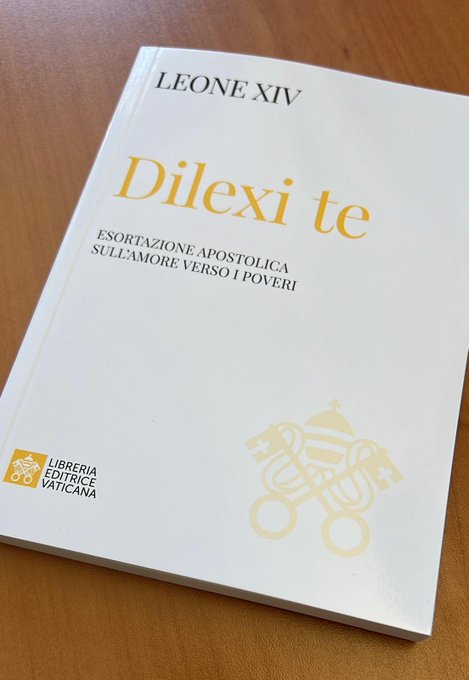
Go here to read part one of the fisk, go here to read part two, go here to read part three, go here to read part four, go here to read part five and go here to read part six.
101. All this entails one aspect of the option for the poor that we must constantly keep in mind, namely that it demands of us an attitude of attentiveness to others. “This loving attentiveness is the beginning of a true concern for their person which inspires me effectively to seek their good. This entails appreciating the poor in their goodness, in their experience of life, in their culture, and in their ways of living the faith. True love is always contemplative, and permits us to serve the other not out of necessity or vanity, but rather because he or she is beautiful above and beyond mere appearances… Only on the basis of this real and sincere closeness can we properly accompany the poor on their path of liberation.” [111] For this reason, I express my heartfelt gratitude to all those who have chosen to live among the poor, not merely to pay them an occasional visit but to live with them as they do. Such a decision should be deemed one of the highest forms of evangelical life.
Living among the poor is useless unless the purpose is to train them to obtain employment so they will cease to be poor. The Pope sounds as if poverty was an incurable disease, rather than often caused by bad policies mixed in with personal failings.
102. In light of this, it is evident that all of us must “let ourselves be evangelized” [112] by the poor and acknowledge “the mysterious wisdom which God wishes to share with us through them.” [113] Growing up in precarious circumstances, learning to survive in the most adverse conditions, trusting in God with the assurance that no one else takes them seriously, and helping one another in the darkest moments, the poor have learned many things that they keep hidden in their hearts. Those of us who have not had similar experiences of living this way certainly have much to gain from the source of wisdom that is the experience of the poor. Only by relating our complaints to their sufferings and privations can we experience a reproof that can challenge us to simplify our lives.
Romanticizing the poor is always a mistake. There is little that is romantic about being poor, at least being poor in the modern world in the West. Those who escape poverty through their own efforts do have useful lessons to impart. An old Irish saying is that there is no shame being born in a ditch, but there is a great deal of shame in staying there.
CHAPTER FIVE
A CONSTANT CHALLENGE
103. I have chosen to recall the age-old history of the Church’s care for the poor and with the poor in order to make clear that it has always been a central part of her life. Indeed, caring for the poor is part of the Church’s great Tradition, a beacon as it were of evangelical light to illumine the hearts and guide the decisions of Christians in every age. That is why we must feel bound to invite everyone to share in the light and life born of recognizing Christ in the faces of the suffering and those in need. Love for the poor is an essential element of the history of God’s dealings with us; it rises up from the heart of the Church as a constant appeal to the hearts of the faithful, both individually and in our communities. As the Body of Christ, the Church experiences the lives of the poor as her very “flesh,” for theirs is a privileged place within the pilgrim people of God. Consequently, love for the poor — whatever the form their poverty may take — is the evangelical hallmark of a Church faithful to the heart of God. Indeed, one of the priorities of every movement of renewal within the Church has always been a preferential concern for the poor. In this sense, her work with the poor differs in its inspiration and method from the work carried out by any other humanitarian organization.
Once again the poor as the be all and end all of Christianity. The Judas option, recalling the response of Judas to the perfuming of the feet of Christ. Relief of the poor is one part of the mission of the Church, but only part. The Church is always about the Gospel and to bring Christ’s message to men to save them from Hell.
104. No Christian can regard the poor simply as a societal problem; they are part of our “family.” They are “one of us.” Nor can our relationship to the poor be reduced to merely another ecclesial activity or function. In the words of the Aparecida Document, “we are asked to devote time to the poor, to give them loving attention, to listen to them with interest, to stand by them in difficult moments, choosing to spend hours, weeks or years of our lives with them, and striving to transform their situations, starting from them. We cannot forget that this is what Jesus himself proposed in his actions and by his words.” [114]
The essence of all heresy is to exaggerate one element of the Faith into the be all and end all of the Faith.
The Good Samaritan, once again
105. The dominant culture at the beginning of this millennium would have us abandon the poor to their fate and consider them unworthy of attention, much less our respect. Pope Francis, in his Encyclical Fratelli Tutti, challenged us to reflect on the parable of the Good Samaritan (cf. Lk 10:25-37), which presents the different reactions of those confronted by the sight of a wounded man lying on the road. Only the Good Samaritan stops and cares for him. Pope Francis went on to ask each of us: “Which of these persons do you identify with? This question, blunt as it is, is direct and incisive. Which of these characters do you resemble? We need to acknowledge that we are constantly tempted to ignore others, especially the weak. Let us admit that, for all the progress we have made, we are still ‘illiterate’ when it comes to accompanying, caring for and supporting the most frail and vulnerable members of our developed societies. We have become accustomed to looking the other way, passing by, and ignoring situations until they affect us directly.” [115]
The first sentence is a lie. At no point in human history have more resources been allocated, wisely or unwisely, to the relief of poverty in the West. Of course without this lie the attempt by the Pope to make the poor into the be all and end all of the Faith stands revealed in all of its insanity.
106. It is important for us to realize that the story of the Good Samaritan remains timely even today. “If I encounter a person sleeping outdoors on a cold night, I can view him or her as an annoyance, an idler, an obstacle in my path, a troubling sight, a problem for politicians to sort out, or even a piece of refuse cluttering a public space. Or I can respond with faith and charity, and see in this person a human being with a dignity identical to my own, a creature infinitely loved by the Father, an image of God, a brother or sister redeemed by Jesus Christ. That is what it is to be a Christian! Can holiness somehow be understood apart from this lively recognition of the dignity of each human being?” [116] What did the Good Samaritan do?
Most poverty in the West today is associated with alcoholism, drug use and mental illness, topics the Pope has not mentioned in this jeremiad. Of course this is not an attempt to truly aid the existing poor, but rather using them as a weapon against free markets: “the economy that kills.’ We can see from this why Latin America lags far behind the rest of the West.
107. These questions become all the more urgent in light of a serious flaw present in the life of our societies, but also in our Christian communities. The many forms of indifference we see all around us are in fact “signs of an approach to life that is spreading in various and subtle ways. What is more, caught up as we are with our own needs, the sight of a person who is suffering disturbs us. It makes us uneasy, since we have no time to waste on other people’s problems. These are symptoms of an unhealthy society. A society that seeks prosperity but turns its back on suffering. May we not sink to such depths! Let us look to the example of the Good Samaritan.” [117] The final words of the Gospel parable — “Go and do likewise” ( Lk 10:37) — represent a mandate that every Christian must daily take to heart.
Of course a prosperous society is the best solution to poverty. I have often been hired by the wealthy and the middle class, almost never by the poor.
An inescapable challenge for the Church today
108. At a particularly critical time in the history of the Church in Rome, when the imperial institutions were collapsing under the pressure of the barbarian invasions, Pope Saint Gregory the Great felt it necessary to remind the faithful: “Every minute we can find a Lazarus if we seek him, and every day, even without seeking, we find one at our door. Now beggars besiege us, imploring alms; later they will be our advocates… Therefore do not waste the opportunity of doing works of mercy; do not store unused the good things you possess.” [118] Gregory courageously denounced contemporary forms of prejudice against the poor, including the belief that they were responsible for their plight: “Whenever you see the poor doing something reprehensible, do not despise or discredit them, for the fire of poverty is perhaps purifying their sinful actions, however slight they be.” [119] Not infrequently, our prosperity can make us blind to the needs of others, and even make us think that our happiness and fulfillment depend on ourselves alone, apart from others. In such cases, the poor can act as silent teachers for us, making us conscious of our presumption and instilling within us a rightful spirit of humility.
I can think of few periods more dissimilar than late sixth century and early seventh century Rome and the contemporary world, especially when it comes to economics and social services.
109. While it is true that the rich care for the poor, the opposite is no less true. This is a remarkable fact confirmed by the entire Christian tradition. Lives can actually be turned around by the realization that the poor have much to teach us about the Gospel and its demands. By their silent witness, they make us confront the precariousness of our existence. The elderly, for example, by their physical frailty, remind us of our own fragility, even as we attempt to conceal it behind our apparent prosperity and outward appearance. The poor, too, remind us how baseless is the attitude of aggressive arrogance with which we frequently confront life’s difficulties. They remind us how uncertain and empty our seemingly safe and secure lives may be. Here again, Saint Gregory the Great has much to tell us: “Let no one consider himself secure, saying, ‘I do not steal from others, but simply enjoy what is rightfully mine.’ The rich man was not punished because he took what belonged to others, but because, while possessing such great riches, he had become impoverished within. This was indeed the reason for his condemnation to hell: in his prosperity, he preserved no sense of justice; the wealth he had received made him proud and caused him to lose all sense of compassion.” [120]
Care of the poor, yes. Reducing Christianity to a social service agency, no.
110. For us Christians, the problem of the poor leads to the very heart of our faith. Saint John Paul II taught that the preferential option for the poor, namely the Church’s love for the poor, “is essential for her and a part of her constant tradition, and impels her to give attention to a world in which poverty is threatening to assume massive proportions in spite of technological and economic progress.” [121] For Christians, the poor are not a sociological category, but the very “flesh” of Christ. It is not enough to profess the doctrine of God’s Incarnation in general terms. To enter truly into this great mystery, we need to understand clearly that the Lord took on a flesh that hungers and thirsts, and experiences infirmity and imprisonment. “A poor Church for the poor begins by reaching out to the flesh of Christ. If we reach out to the flesh of Christ, we begin to understand something, to understand what this poverty, the Lord’s poverty, actually is; and this is far from easy.” [122]
Time for a preferential option for Christ.
111. By her very nature the Church is in solidarity with the poor, the excluded, the marginalized and all those considered the outcast of society. The poor are at the heart of the Church because “our faith in Christ, who became poor, and was always close to the poor and the outcast, is the basis of our concern for the integral development of society’s most neglected members.” [123] In our hearts, we encounter “the need to heed this plea, born of the liberating action of grace within each of us, and so it is not a matter of a mission reserved only to a few.” [124]
A Church that has a “preferential option” for some classes is a Church that discriminates against other classe.
112. At times, Christian movements or groups have arisen which show little or no interest in the common good of society and, in particular, the protection and advancement of its most vulnerable and disadvantaged members. Yet we must never forget that religion, especially the Christian religion, cannot be limited to the private sphere, as if believers had no business making their voice heard with regard to problems affecting civil society and issues of concern to its members. [125]
The Church transmuted into a political movement, precisely what Christ did not preach.
113. Indeed, “any Church community, if it thinks it can comfortably go its own way without creative concern and effective cooperation in helping the poor to live with dignity and reaching out to everyone, will also risk breaking down, however much it may talk about social issues or criticize governments. It will easily drift into a spiritual worldliness camouflaged by religious practices, unproductive meetings and empty talk.” [126]
The last sentence precisely describes the way the Vatican currently operates.
114. Nor is it a question merely of providing for welfare assistance and working to ensure social justice. Christians should also be aware of another form of inconsistency in the way they treat the poor. In reality, “the worst discrimination which the poor suffer is the lack of spiritual care… Our preferential option for the poor must mainly translate into a privileged and preferential religious care.” [127] Yet, this spiritual attentiveness to the poor is called into question, even among Christians, by certain prejudices arising from the fact that we find it easier to turn a blind eye to the poor. There are those who say: “Our task is to pray and teach sound doctrine.” Separating this religious aspect from integral development, they even say that it is the government’s job to care for them, or that it would be better not to lift them out of their poverty but simply to teach them to work. At times, pseudo-scientific data are invoked to support the claim that a free market economy will automatically solve the problem of poverty. Or even that we should opt for pastoral work with the so-called elite, since, rather than wasting time on the poor, it would be better to care for the rich, the influential and professionals, so that with their help real solutions can be found and the Church can feel protected. It is easy to perceive the worldliness behind these positions, which would lead us to view reality through superficial lenses, lacking any light from above, and to cultivate relationships that bring us security and a position of privilege.
Christ of course is to be preached to all men, rich and poor alike, and precisely what is not being done by too many clerics, and this preferential option garbage stands that mission on its head.
Almsgiving today
115. I would like to close by saying something about almsgiving, which nowadays is not looked upon favorably even among believers. Not only is it rarely practiced, but it is even at times disparaged. Let me state once again that the most important way to help the disadvantaged is to assist them in finding a good job, so that they can lead a more dignified life by developing their abilities and contributing their fair share. In this sense, “lack of work means far more than simply not having a steady source of income. Work is also this, but it is much, much more. By working we become a fuller person, our humanity flourishes, young people become adults only by working. The Church’s social doctrine has always seen human work as a participation in God’s work of creation that continues every day, also thanks to the hands, mind and heart of the workers.” [128] On the other hand, where this is not possible, we cannot risk abandoning others to the fate of lacking the necessities for a dignified life. Consequently, almsgiving remains, for the time being, a necessary means of contact, encounter and empathy with those less fortunate.
The Pope, at the end of this word salad, finally concludes that getting a job is historically of how many poor people cease to be poor.
116. Those inspired by true charity know full well that almsgiving does not absolve the competent authorities of their responsibilities, eliminate the duty of government institutions to care for the poor, or detract from rightful efforts to ensure justice. Almsgiving at least offers us a chance to halt before the poor, to look into their eyes, to touch them and to share something of ourselves with them. In any event, almsgiving, however modest, brings a touch of pietas into a society otherwise marked by the frenetic pursuit of personal gain. In the words of the Book of Proverbs: “Those who are generous are blessed, for they share their bread with the poor” (22:9).
Giving alms allows us, usually in a small way, to directly and personally help a poor person, which is what Christ instructed us to do. We do it not only to give a little relief to a person without funds, but to aid ourselves in carrying out His command to do this.
117. Both the Old and New Testaments contain veritable hymns in praise of almsgiving: “Be patient with someone in humble circumstances, and do not keep him waiting for your alms… Store up almsgiving in your treasury, and it will rescue you from every disaster” (Sir 29:8,12). Jesus himself adds: “Sell your possessions, and give alms. Make purses for yourselves that do not wear out, an unfailing treasure in heaven, where no thief comes near and no moth destroys” (Lk 12:33).
Correct.
118. Saint John Chrysostom is known for saying: “Almsgiving is the wing of prayer. If you do not provide your prayer with wings, it will hardly fly.” [129] In the same vein, Saint Gregory of Nazianzus concluded one of his celebrated orations with these words: “If you think that I have something to say, servants of Christ, his brethren and co-heirs, let us visit Christ whenever we may; let us care for him, feed him, clothe him, welcome him, honor him, not only at a meal, as some have done, or by anointing him, as Mary did, or only by lending him a tomb, like Joseph of Arimathea, or by arranging for his burial, like Nicodemus, who loved Christ half-heartedly, or by giving him gold, frankincense and myrrh, like the Magi before all these others. The Lord of all asks for mercy, not sacrifice… Let us then show him mercy in the persons of the poor and those who today are lying on the ground, so that when we come to leave this world they may receive us into everlasting dwelling places.” [130]
Quite correct.
119. Our love and our deepest convictions need to be continually cultivated, and we do so through our concrete actions. Remaining in the realm of ideas and theories, while failing to give them expression through frequent and practical acts of charity, will eventually cause even our most cherished hopes and aspirations to weaken and fade away. For this very reason, we Christians must not abandon almsgiving. It can be done in different ways, and surely more effectively, but it must continue to be done. It is always better at least to do something rather than nothing. Whatever form it may take, almsgiving will touch and soften our hardened hearts. It will not solve the problem of world poverty, yet it must still be carried out, with intelligence, diligence and social responsibility. For our part, we need to give alms as a way of reaching out and touching the suffering flesh of the poor.
Completely agree.
120. Christian love breaks down every barrier, brings close those who were distant, unites strangers, and reconciles enemies. It spans chasms that are humanly impossible to bridge, and it penetrates to the most hidden crevices of society. By its very nature, Christian love is prophetic: it works miracles and knows no limits. It makes what was apparently impossible happen. Love is above all a way of looking at life and a way of living it. A Church that sets no limits to love, that knows no enemies to fight but only men and women to love, is the Church that the world needs today.
Partially agree. However there will always be enemies to fight, Satan and his minions and those on Earth who hate Christ and His Church.
121. Through your work, your efforts to change unjust social structures or your simple, heartfelt gesture of closeness and support, the poor will come to realize that Jesus’ words are addressed personally to each of them: “I have loved you” (Rev 3:9).
“Unjust social structures”. What unjust social structures in the West today contribute to the poor remaining poor? Specific examples please Holy Father.
And with that the Exhortation is done. A very disappointing documents with occasional flashes of common sense. Most of it reads like classic Francis, but we can only assume that Pope Leo agrees with every word.


I had a grand-uncle who would speak like the Pope’s writing – very much chiding and tut-tutting in its substance with a grand verbose style of presentation. I felt like I was 8 once again while listening to my grand-uncle “pass along his wisdom”.
Thank you for the fisk. It is greatly appreciated.
***And with that the Exhortation is done.***
May a new one begin. May this “new” exhortation unearth the poverty of the faithful who have been stripped of their warm garments and denied entrance into a warm structure that has been available to pour sojourners for centuries.
This structure was incorrectly condemned.
May the new pontiff do everything he can to open wide the doors to these poor pilgrims. To clothe them in proper attire for the most prestigious and elegant sacrificial dining event ever to come to earth. An event that combines what is above earth to the earth and assists the Son of God to make other sons of God. This event is solemn, holy, supernatural and worthy of our upmost devotion.
May the new pontiff do all he can to restore this structure to these poor who long to be serving their God in this participation of God becoming man and man at the foot of the Cross asking the Father to accept this perfect sacrifice in reparation for the sins of all men.
This event is a miracle.
The poor who wish to honor this event in full reverence only ask that they be allowed to do so once again.
Pope Leo the XIV. Extend your hand and pen to this poor of Christs Church post haste.
Sorry to be a bore here. There are poor societies due to the technological level and organizational acumen of the societies in question. Improving the situation of the society and the people in it can be accomplished (see south Korea since 1953), but the skills of people who run relief programs make little contribution to that. You need an intention to establish good policy but you also need the skills and effort of public employees to implement it. For example, one good policy is a well-ordered and comprehensive land registry. (Hernando de Soto has been insistent on this point). Producing one takes time and skilled manpower.
==
You also have variation in well-being within societies. The principal reason for that is that there is variation from one person to another and one family to another in the capacity to acquire skills. In this country, about 1/4 of the jobs in the economy are hire-off-the-street jobs for which training consists of instruction in the very particular features of that workplace. People do this sort of work when they’re wading into the world of work, when they’re moonlighting, when their primary activity is schooling or child care or some sort of episodic employment, when they need some extra income for any reason. For most of the people in this segment of the labor force, this is the work they will do all their lives and there’s no getting around that.
==
Next you have variation due to the life cycle and phenomena which generate similar issues. As people age, their capacity to earn declines. They can be ‘aged’ prematurely by injuries or by disease.
==
Next you have people immiserated by discrete events. Could be a war, could be a natural disaster. The preparatory and reconstructive capacity of societies varies a great deal.
==
Aside from that, you have people with peculiar deficits. They have a propensity to commit crimes, or to drink, or to use street drugs, or to have explosions of temper. There is a certain ‘path dependency’ which that generates. The amount of this varies a great deal from one society to another.
==
You have families, you have philanthropies, you have state agencies. The task is to contrive an optimal division of labor between the three to address the foregoing issues. It is impossible to imagine Francis giving such questions a moment of serious thought.
One thing that needs to be considered is the distribution of power in the organizations running a nation. Concentration of power can lead to corruption. America’s Founding Fathers decentralized power with a system of checks and balances, divided government, and the rule of law to counter this. Some modern NGOs and bureaucracies act more like political machines to distribute political patronage (spoils) with little if any accountability.
A relevant quote from Margaret Thatcher from yesterday’s Holy Smoke podcast (Damian Thompson):
“I believe that by taking together these key elements from the Old and New Testaments, we gain a view of the universe, a proper attitude to work, and principles to shape economic and social life. We are told that we must work and use our talents to create wealth. If a man will not work, he shall not eat, wrote St. Paul to the Thessalonians.
Indeed, abundance rather than poverty has a legitimacy which derives from the very nature of creation. Nevertheless, the Tenth Commandment, thou shalt not covet, recognizes that making money and owning things could become selfish activities. But it’s not the creation of wealth that is wrong, but love of money for its own sake.
The spiritual dimension comes in deciding what one does with the wealth. How could we respond to the many calls for help or invest for the future, or support the wonderful artists and craftsmen whose work also glorifies God, unless we had first worked hard and used our talents to create the necessary wealth? And remember, the woman with the alabaster jar of ointment.
I confess, moderator, that I always had difficulty with interpreting the biblical precept to love our neighbours as ourselves, until I read some of the words of CS. Lewis. He pointed out that we don’t exactly love ourselves when we fall below the standards and beliefs we have accepted.
Indeed, we might even hate ourselves for some unworthy deed. None of this, of course, tells us exactly what kind of political and social institutions we should have. And on this point, Christians will very often genuinely disagree, though it is a mark of Christian manners that they will do so with courtesy and mutual respect.”
~ Margaret Thatcher
https://shows.acast.com/holy-smoke/episodes/how-did-faith-shape-margaret-thatcher
The Society of St. Pius X should rename itself the Church. The cast of clowns inside the Vatican walls should rename themselves The Church of the Second Vatican Council and The Poor. It is all they care about.
The Church has suffered through a drastic drop in vocations to the priesthood. Religious orders and monasteries have emptied out. Church attendance has plunged. Western Europe is a wasteland. Central America and Brazil have seen explosive growth in Protestant sects. The Eastern Churches in Ukraine, Iraq, Lebanon, Syria, Egypt and Armenia have faced death for being Christian.
The EU and Canada have sought to crack down on religious practice. Both have imported millions of people who ignore or hate Christianity.
The world just witnessed the burial of a pontiff who praised Communism, put a pagan idol on an altar, trashed all who were attached to the Tridentine Liturgy and wanted to give blessing to homosexual couples and Communion to divorced Catholics.
What do we get? More of this drivel, that’s what we get. Bishops who behave like tyrants in Detroit, Charlotte and Knoxville.
Robert Prevost knows what the hell is going on. He must be as obtuse as Jorge Bergoglio because the Vatican Treasury is going to be empty without the US dollar. There are less than five clergy in the world who knows anything about the creation of wealth and ending poverty with a job.
I pointed out that the architect of the Missal of Paul VI lied to Sacrosanctum Concilium and Paul VI and was rewarded with a one way trip to Teheran. If this Mass were as “rich” as Cardinal Roche (“Roach?”) says it is then nobody would want the TLM.
No, no mention of the salvation of souls or avoiding sin. Just more of the poor…from a bunch who have no idea what leads to poverty or how to cure it.
“Dyslexic Nay” belongs in a trash can, a backyard fire or at the bottom of a birdcage or chicken coop.
“This loving attentiveness is the beginning of a true concern for their person which inspires me effectively to seek their good.”
“a true concern” yada yada yada.
The Pope writes like we, the people, have neglected our neighbors.
Look to the dioceses that have expended millions to victims of abuse.
Ditto, Penguins Fan.
Said it better than I ever could have.
Compare Dilexi Te with the wisdom and substance of Pope St. John Paul II’s Centesimus Annus (1991) that, in many important respects, stands in shining opposition to the shallow and egregiously non-astute words of Francis-Leo.
Also try to get others to read and compare Centesimus Annus with Dilexi Te, and as distasteful as it may be, pit the wisdom and common sense approach to all things economic of Pope St. John Paul II against the too often woke ramblings of Pope Leo, and employ the saintly pope’s wisdom as a form of fraternal correction of Pope Leo wherever possible.