
Early in 1926 the hardest boiled of all the atheists I ever knew sat in my room on the other side of the fire and remarked that the evidence for the historicity of the Gospels was really surprisingly good. ‘Rum thing’, he went on, ‘All that stuff of Frazer’s about the Dying God. Rum thing. It almost looks as if it had really happened once.’ To understand the shattering impact of it, you need to know the man…
CS Lewis, Surprised by Joy, recalling his conversation with Thomas Dewar Weldon during the evening of April 27, 1926.
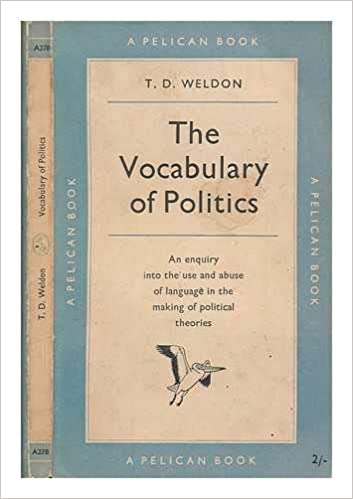
Weldon, known familiarly as “Harry”, was an Oxford Philosopher who earned a Military Cross and Bar, connoting almost insane valor in combat, with the Royal Artillery during World War I. He served with the RAF as a Wing Commander and personal aide to Marshal Arthur “Bomber” Harris during World War II, and defended British bombing of German cities as a means of shortening the War.
CS Lewis wrote about him in his diary:
determined to be a villain. … a frequent and loud laughter …. carries a great deal of liquor without being drunk. … He is insolent by custom to servants and to old men …. He has great abilities, but would despise himself if he wasted them on disinterested undertakings. He gives no quarter and would ask none. He believes that he has seen through everything and lives at rock bottom. … Contempt is his ruling passion: courage his chief virtue.
It is thought by some that CS Lewis partially modeled Dick Devine, Lord Feverstone, one of his villains in Out of the Silent Planet and That Hideous Strength, on Weldon. Assuming this is correct, I suspect that it was part of the type of academic in joke that Lewis was fond of. Surprised by Joy was written in 1955, a decade after That Hideous Strength, and Lewis seems fairly fond in his recollection of his meeting with Weldon. If he could forgive the neologism, doubtful, I think Lewis would have accorded Weldon at least frenemy status. Lewis held intellectual honesty as a high value, and that was displayed by Weldon during that evening ninety-five years ago as to Christ.


Intellectual honesty: the spiritual ability to be truthful with yourself about yourself as you really are; and when there is discord between yourself and new information about reality and (large T) Truth – to be willing to risk all for the sake of something greater than your self, your preconceptions, your firmly held beliefs, your ego.
There is no higher bravery than true intellectual honesty at the spiritual level. And it is liberating, once you have embraced bravery over fear.