

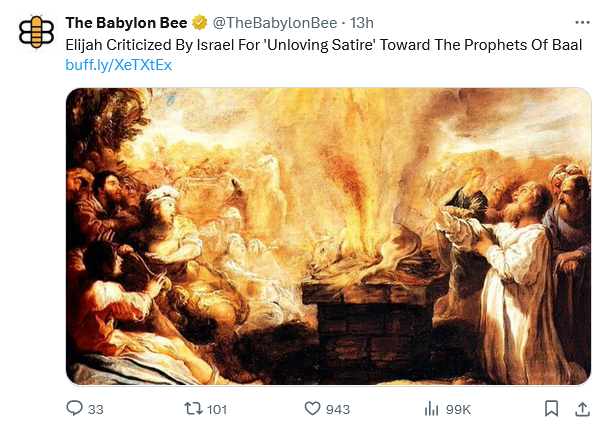
News that I missed, courtesy of The Babylon Bee:
MT. CARMEL – Israel is repenting today after the prophet Elijah showed them the power of Yahweh and exposed the 450 prophets of Baal as frauds who believe in a false god. Still, several leaders throughout Israel have criticized the prophet for his “harsh tone and unloving satire.”
“Yeah, I know our entire nation has forsaken the true God of Heaven to follow idols, but did he really have to use verbal attacks like that?” said one local magistrate. “He told the prophets of Baal ‘maybe your god is taking a dump on the toilet and can’t hear you.’ That’s just crude and uncalled for.”
Sources confirmed that while the prophets of Baal danced around their altar begging Baal to send down fire and consume the sacrifice, Elijah made several abrasive comments, suggesting maybe Baal was too busy thinking, sleeping, or pooping.
“I just don’t see how satire like that reflects the love of God,” said another concerned citizen. “Does Elijah really think people will accept the true God when he’s speaking so harshly all the time?”
Go here to read the rest.





I am reading St Augustine’s City of God and I am surprised by how snarky he is when describing the actions (or inactions) of the Roman gods. Not what we have become used to in this innervating atmosphere of false ecumenism. (I am also surprised how readable he is, and how much Roman history is in there.)
I’ll be reading this for a few months, I’m guessing, but I would recommend it. Sometimes older authors can be daunting due to our diminished capacity for language, but his meaning is clear and engaging.
Optimist:
Part of that “snark” is a tradition in Roman rhetoric (not toward the gods, of course). Cicero could get very sarcastic in court: read his treatment of the infamous Claudia on the witness stand. St. Augustine taught this stuff before his conversion.
Tom-
I’m waaaaaay behind on my Classical reading.
Apart from a brief foray into Eusebius, I doubt I’ve read much since college days. Mostly history then too, not philosophy or rhetoric, so a different style.