
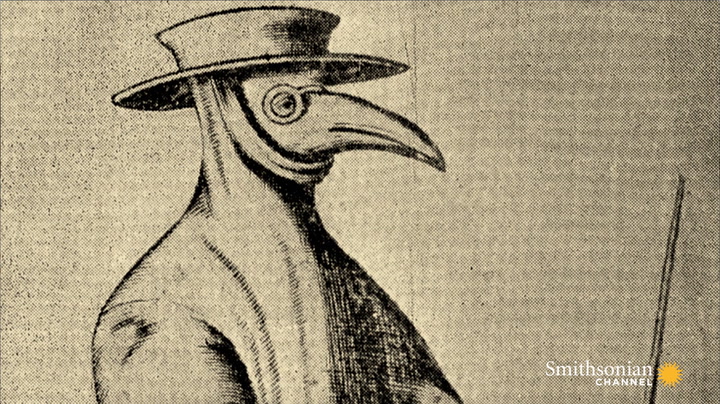
Doctor Russell Blaylock explains why the current insistence on masks in public is a bad idea:
As for the scientific support for the use of face mask, a recent careful examination of the literature, in which 17 of the best studies were analyzed, concluded that, “ None of the studies established a conclusive relationship between mask/respirator use and protection against influenza infection.”1 Keep in mind, no studies have been done to demonstrate that either a cloth mask or the N95 mask has any effect on transmission of the COVID-19 virus. Any recommendations, therefore, have to be based on studies of influenza virus transmission. And, as you have seen, there is no conclusive evidence of their efficiency in controlling flu virus transmission.
It is also instructive to know that until recently, the CDC did not recommend wearing a face mask or covering of any kind, unless a person was known to be infected, that is, until recently. Non-infected people need not wear a mask. When a person has TB we have them wear a mask, not the entire community of non-infected. The recommendations by the CDC and the WHO are not based on any studies of this virus and have never been used to contain any other virus pandemic or epidemic in history.
Now that we have established that there is no scientific evidence necessitating the wearing of a face mask for prevention, are there dangers to wearing a face mask, especially for long periods? Several studies have indeed found significant problems with wearing such a mask. This can vary from headaches, to increased airway resistance, carbon dioxide accumulation, to hypoxia, all the way to serious life-threatening complications.
There is a difference between the N95 respirator mask and the surgical mask (cloth or paper mask) in terms of side effects. The N95 mask, which filters out 95% of particles with a median diameter >0.3 µm2 , because it impairs respiratory exchange (breathing) to a greater degree than a soft mask, and is more often associated with headaches. In one such study, researchers surveyed 212 healthcare workers (47 males and 165 females) asking about presence of headaches with N95 mask use, duration of the headaches, type of headaches and if the person had preexisting headaches.2
They found that about a third of the workers developed headaches with use of the mask, most had preexisting headaches that were worsened by the mask wearing, and 60% required pain medications for relief. As to the cause of the headaches, while straps and pressure from the mask could be causative, the bulk of the evidence points toward hypoxia and/or hypercapnia as the cause. That is, a reduction in blood oxygenation (hypoxia) or an elevation in blood C02 (hypercapnia). It is known that the N95 mask, if worn for hours, can reduce blood oxygenation as much as 20%, which can lead to a loss of consciousness, as happened to the hapless fellow driving around alone in his car wearing an N95 mask, causing him to pass out, and to crash his car and sustain injuries. I am sure that we have several cases of elderly individuals or any person with poor lung function passing out, hitting their head. This, of course, can lead to death.
A more recent study involving 159 healthcare workers aged 21 to 35 years of age found that 81% developed headaches from wearing a face mask.3 Some had pre-existing headaches that were precipitated by the masks. All felt like the headaches affected their work performance.
Go here to read the rest. In the current virus farce people who claim to be governed by science are actually being governed by fads with almost no scientific support.


Thanks for this article, Don. I would guess the “authorities” are aware of this, but require masks, in the same way that Jews and non-believers were required to wear special clothing in the Middle Ages. You identify everyone who might be a possible carrier of covid-19 (or non-belief) and thus make “social distancing” (or belief) more effective.
I have wondered if mask wearing is a form of creeping Sharia law.
Why does the article gloss over the assymptomatic people? It says wear a mask if you are sick but what if you don’t know if you are sick or not (i.e. assymptomatic)? Why does the article mix medical personnel wearing a N95 with the general public? I’ve reached my own conclusion that wearing a surgical mask while mingling in public is a good thing. I an NOT saying make it mandatory anytime you step out of your house. But, because we don’t know if we have the virus or not (until reliable antibody testing is available) it is prudent to protect others and yourself while out and about in the public. I leave medical professionals to their own specific protocols based on their exposure to the virus. I think this video is useful (while I’m not a fan of the strident tone, the logic and video evidence seems compelling): https://www.youtube.com/watch?v=NkN8yCWSGus
Don: Please excuse my typo on “asymptomatic”…
There are places of virus severity—mostly Democrat places–where wearing a mask may be a good idea (self protection from abuse)—but outside of these dreadful places wearing a mask does more harm than good. We should all favor herd immunity as quickly as possible and show we don’t buy into this catastrophic hoax.
Agree. And wearing a mask only signaling your concurrence with the Covid hoax.
There is no data to support the idea that simple masks in any way significantly limit the transmission of the virus.
https://www.cidrap.umn.edu/news-perspective/2020/04/data-do-not-back-cloth-masks-limit-covid-19-experts-say
Masks kill.
“By wearing a mask, the exhaled viruses will not be able to escape and will concentrate in the nasal passages, enter the olfactory nerves and travel into the brain.” — Russell Blaylock, MD
https://www.fort-russ.com/2020/05/dr-blaylock-face-masks-pose-serious-risks-to-the-healthy-hypoxia-and-hypercapnia/
Assertions have a place in a discussion but I think evidence is more useful to arm a person to make better informed decisions. This video from 29 March highlights findings from MIT and other places about how the virus spreads and how, based on earlier SARS studies, how to disinfect masks (which I’ve used). It is a long video (33:50 minutes) but the main info on masks is found between the 4:15 minute mark to the 27:58 point. There are links to articles and studies and data so people can assess the info themselves. Link is here: https://www.youtube.com/watch?v=2w9M6K9vSUM
As a side note, seeing how this site has “Catholic” in its title, I recall teaching my children about how to properly form their consciences using Catholic principles. I stressed that we have our feelings and opinions but those shouldn’t be the primary guide to our actions. Instead, we needed to heed the teachings of the Church to properly form our consciences and, when in doubt, to trust the Church to help us make decisions. To be clear, I am not equating Dr. Chris Martenson’s findings to Church teaching! But I am saying, our opinions in this matter, like with our consciences, ought to be informed by reliable sources of evidence and information. We need to challenge our assumptions and be willing to engage with info that may be unusual or new and discern if it is helpful to us as we go forward. I am aware of some of the political hoaxes in play, of the fake news circulating, of the lies being told. Filtering through the crap to find the gold nuggets is disgusting, hard work. I want the US to go back to work. I want to go to Mass. But the precautionary principle is in play – we know some things about this virus but there is still a lot we don’t know. To properly protect ourselves and others, we need to keep digging and keep learning. God bless the TAC family!
About the only places I’d consider wearing a mask are a subway or an airplane.
It seems to me, for most people under most conditions, mask wearing is the same as carrying a bunch of posies in a pocket.
Frank: No data? Here is some: https://www.youtube.com/watch?v=ycf6bAMKgjg He’s a “doctor” (PhD) but really a nurse with decades of experience and a teacher in the UK. I sense he is just trying to pass on what he discovers. He’s not perfect; all he says is not “gospel”. I find he is a reasonable source of info as I search for ground truth in a very dynamic situation. I am still learning and still digging.
Mike: Masks kill? Always? I have no medical background to assess the validity of the study; I thus accept those findings. But that isn’t the circumstance I suppose you and I would be in when considering when to use a mask. The circumstance for use by the general public – which would wear a mask only for the time when mingling with others who pass within 7-8 meters – is only for a limited time and not within the study parameters the doctor highlighted which involved use by medical personnel. So, no, the study didn’t find that temporary, limited use of masks kill the general public. I don’t use the mask when I exercise outside (but I have a large farm); I don’t use a mask when working in our garden. I don’t use a mask at home or when driving my car. If I interact with the general public when I leave our farm, I put on my mask. Why? To protect them (if I have the virus and am unaware of it – which is how studies in China show most of the virus spread occurs where over 70% of the spread occurs that way) and to protect myself by reducing the inoculum I may ingest (how much of a viral load enters my system). I think using a mask by the general public when mixing with people in a group is prudent. I DON’T advocate mandatory governmental enforcement. I DO advocate people being careful and wearing a mask when moving through public groups until we know more about this virus.
Pick an expert. You can probably find one to support whatever view you wish to have. People should be allowed to go about their business.
DJH: Pick an expert. You are 100% right. Isn’t that something all of us have to do right now unless we are a world-class epidemiologist, financial expert, or military strategist on China? To your larger point: you are correct – confirmation bias exists and is insidious. The “whatever view you wish to have” bias is indeed dangerous. I try to look for “ground truth” if I can find it. I am sure that sounds self-serving but let me explain. I was an instructor for 30+ years and tried to keep myself honest by regularly asking “Says who?”. Was I relying on myth, a figment of my imagination, my own ego, or real policies and actual tactics, techniques and procedures? In this environment, I search for reliable experts to learn from. That has proven very difficult during this pandemic (and life, in general, really). I poke around and probe to see what various “experts” are saying. I look for agendas, political bias, financial conflicts of interests (what they are “selling,” if anything), and if possible, who they might be a front for. I also look for if they are good teachers who can make the complex understandable (I have no medical background). I am fortunate that I am retired and have time to dig and, while I don’t have any medical experience, I can go over and over some topics until they start to make a dent in my noggin. I have a Catholic worldview which holds that the truth is knowable. I’ve found 4-5 reliable sources which help me a little bit to see how the pandemic may unfold. They aren’t perfect. But when considered together, I think they provide me a useful perspective. Every now and then, I offer up some of those insights for the consideration of the TAC group so they can chew on another perspective in this difficult time and hopefully get wiser in the process as they “…go about their business”. That is my agenda.
Bob S in PI, Are you in the Philippine Islands?
Epidemiologists are like Fed economists. They never foresee the catastrophe and their policy recommendations are always wrong. My question is: Can that be resolved by hiring 99,000 more experts, or firing them all?
Apparently, globetrotting, high school drop-out Greta Thunberg is a pandemic expert [per CNN]. She cannot possibly be more stupider than the 99,000+ Worldwide MD’s/PhD’s that every six or eight years are blind-sided by yet another pandemic.
Pandemic panic porn [PPP] is like the climate con. Every day the experts come up with a new horrid ‘something’ to terrorize the lemmings. Plus, blue state lockdown tyrants keep pushing back the goal posts.
We have to eat. I wear a mask indoors at grocery stores b/c I have to, and (in case I am asymptomatic and infectious) to try not to spread the China Murder Virus to innocent bystanders.
In one his talks on the Coronavirus MN’s Governor openly said that the big reason that he wanted people to wear masks was to show that “we are all on the same team.” This was amidst a bunch of platitudes about how Minnesotans are nicer and more caring people than the rest of the country so of course we’d wear masks.
Thankfully he never actually made masks mandatory and a good chunk of the state has decided not to wear them. (Though, predictably, many of those who do wear masks aren’t shy in letting the rest of us know that we are personally responsible for every person that dies.)
Why does the article gloss over the asymptomatic people? It says wear a mask if you are sick but what if you don’t know if you are sick or not (i.e. asymptomatic)?
Because the demonstrated utility for using masks with infected people is for short periods (focused around care takers working on known infected), and because the evidence for asymptomatic spread with this virus is either flawed (such as the original Chinese study where they asked the folks who got infected if they’d noticed the gal having symptoms, and didn’t talk to her; she was having really bad symptoms) or based on contact tracing that assumed that initial report was correct, so anybody who was found to have the virus must have caught it from the known infected. That’s part of why the incubation period for community spread was all over the place, between same day and a month in some reports.
As it happens, there was a large scale study of cloth masks vs a similar virus.
Spanish flu.
Some cities required them, some cities didn’t, and the California medical official had to write up the after-action report going over ’em and explaining why the masks either had no good effect, or actually had bad effects….. (his theory was the masks were too porous)
Though, predictably, many of those who do wear masks aren’t shy in letting the rest of us know that we are personally responsible for every person that dies.
I use to think that was an innocent example of human behavior, though regrettable; given the number of places that publicly urged things that really do cause infection (avoiding folks who have visited China recently is racist, putting infected people into vulnerable populations) it’s starting to look like creating a scapegoat.
Bob,
Here’s a simple question regarding the precauationary principle: It is always the case that there are airborne illnesses in the population, including those that can kill (especially the elderly and those with compromised immune systems). Additionally it is not unlikely at any given time that there are new airborne diseases which have not yet been recognized. After all, there has been such a disease (such as H1N1, MERS, SARS, etc.) every few years.
With those facts in mind, is there any point in the future where it would be acceptable to not wear a mask?
MN’s Governor openly said that the big reason that he wanted people to wear masks was to show that “we are all on the same team.”
Typical Democrat: platitudes as a substitute for policy. Because good intentions.
You Tube has become a conduit for leftist propaganda, and anything that doesn’t agree with The Narrative is censored. I no longer trust anything that survives there for more than 24 hours.
Just saying.
“Epidemiologists are like Fed economists. They never foresee the catastrophe and their policy recommendations are always wrong.”
There are some things that can’t be predicted. Mutations, sudden economic crises, revolutions. You can see the underlying causes of them and note the situation, but one protest in Tunisia can cascade into something world-changing. You can assign probabilities to them, at best.
But, epidemiologists’ recommendations are “always wrong”? What? I know you don’t believe that, because if you did you’d be dead from some infection or raw pork or measles or something.
“With those facts in mind, is there any point in the future where it would be acceptable to not wear a mask?”
NPR the other day had a report on how masks were a new fashion item. Their point – masks were here to stay.
Masks are here to stay–as is my fear: creeping Sharia.
.
I finally managed to buy hand sanitizer and disposable masks yesterday. I think the hand sanitizer is Michigan made. The masks? Straight out of China. I am all for free trade, but if I had known what I was buying, I would have left them on the shelf, especially since mask wearing appears to be a dying fad here in my part of Michigan.
Sorry – been occupied with a typhoon and clean up aftermath here in the Philippines. Let me try to engage with some of the commentators. First, again as this is a “Catholic” site, I will start by saying before I wrote my original comments I had just finished looking at PV 15:22 which commends having many advisers when planning. None of us can possibly be experts in everything; yes, we apply our minds and experience but, as the Bible says, having a group of reliable advisers is a good thing (which is one reason why I come to TAC). To T. Shaw: we are told to “discern” to discover reliable advisers. I offer up what I think are useful viewpoints from those I think are reliable for the TAC group to consider. Factor those thoughts in as you see best. For Rudolph Harrier regarding personal responsibility: we are responsible for acting on what we, to the best of our ability, think is right. I think prudence, not trying to be nicer, is the best guide for us in making difficult choices. I agree with you that it is unhelpful to “shame” people into wearing masks; they should wear masks if they are convinced (as I am) that data warrants doing so in certain circumstances. And to jump ahead to your other comment about does the uncertainty of the existence of other viruses means we wear masks forever. Valid question on one level but who can tell what the future will bring and when? We face something unusual today (laden with many unknowns) and we have to make decisions about how to cope now. Prudence, I think, again suggests we act as wisely as possible despite the dearth of data and there is a case for the use of masks. To Foxfire: the two videos (one a condensed version of a longer explanation) I posted from Dr. Martenson (not a medical guy; his PhD is in Pathology – but he comes across as a clear thinker in search of reliable data and willing to change his views as new info emerges) posits and provides some evidence that masks serve three useful functions: video evidence that masks limit the spread of infectious droplets and aerosol particles; the logical point that masks help remind us not to touch 2 of the 3 major virus entry points (nose and mouth – the eyes being the other) despite the tendency for us to unconsciously touch those areas frequently; and, lastly, masks can reduce the inoculum (or viral load) we may pick up and thus give our immune system a better chance to fend off an infection. Are all three of those reasons baseless? If so, what counters the MIT study, the video evidence, and the doctor who highlighted the importance of inoculum levels? To Frank: as a general theme, you are right about YouTube. However, it is noteworthy that YouTube continually unsubscribes those who try to follow Dr. Martenson. And to allay fears I’m relying on just one guy, for example, I also use Dr. Seheult on YouTube at the “MedCram” channel (here is the episode where he describes how he cares for himself: https://www.youtube.com/watch?v=NM2A2xNLWR4). He’s board certified in Internal medicine, Pulmonary, Critical Care, and Sleep Medicine. He treats COVID-19 Wuhan virus patients regularly and gives more in-depth medical info than found on most sites. I’ve only ever heard him talk about the medical issues he faces when dealing with the Wuhan virus – but, honestly, I haven’t watched all 70+ of his videos so he may have done so – but I’ve seen nothing political in the 55 or so videos that I’ve studied. Sorry for the long reply. Summary: get many reliable viewpoints / advisers when trying to make responsible decisions while facing many unknowns; follow the data and keep learning; and, share what seems useful.
Hey, Philippines!
Suggestion: Try twice tapping “enter” every four or five sentences.
Have ‘they’ locked up the PI?
Trust in God’s Divine Assistance.
Frank: Regarding a YouTube reference I provided, you commented that you no longer “trust anything that survives there for more than 24 hours.” I certainly agree that there is a lot of useless stuff on it; it took me a long time to find anything helpful. But you don’t trust “anything”? That is painting with rather broad strokes, isn’t it? Did you watch the video? I’ve watched several of Dr. Campbell’s and his main focus, as a professor who taught nursing students, seems to be to try and take complex topics and make them easier to understand for laypeople. He can get a touch verbose, and I get annoyed by his acceptance of Chinese info (although he has said he doesn’t truly trust them). But there is nothing on YouTube that is untainted? I offer another YouTube site for your consideration: MedCram by Dr Seheult; it seems to have a wealth of valid medical info, at some depth, by a doctor currently dealing with Wuhan virus patients. How about WarRoom Pandemic on YouTube? Steve Bannon, who has a bombastic style which I can take for only a short time, has a clear “populist message” which would be hard to mistake for “Left” or any such related “narrative” (I am assuming that is what you meant regarding points of view). To take it to an admittedly ridiculous point, the movie “Passion of the Christ” has been available for free on YouTube as has “Jesus of Nazareth”. Finally, the EWTN channel on YouTube (The Journey Home) shows moving testimony from many converts to the Catholic faith. I agree with you that we must be discerning and careful and not gullible. But, seriously, everything older than 24 hours on YouTube is untrustworthy? Isn’t that going too far? Just saying…
T. Shaw: Hi! And I thought of adding spaces but figured it would be too visually huge and turn off people already irked by too many words…Yes, we are locked up. We are sheltering 12 folks with us and keeping 17 more semi-employed on our farm as they have nothing for themselves or their families. Hard life but doing what we can…thank goodness for the intermittent internet I have or I’d be even more clueless than I normally am! Ingat!
Rudolph Harrier: Can I get your help on your earlier thoughtful comment about the precautionary principle? I understand there is legit debate about its usefulness and I’m not a trained philosopher. To start at a hopefully common ground, I understand the principle to address the potential for causing harm when knowledge on a matter is lacking. It urges caution, pausing, and review before adopting an approach (usually an innovation) which may prove disastrous. So, if I understand correctly, you ask if am I saying, regarding the use of masks, that this principle leads us to wearing them forever. I am not sure – what do you think? Have you studied this sort of dilemma before? I am open to learning.
The little I know suggests that our bodies are under constant attack and our immune systems continuously engage with germs, viruses, bacteria, fungi, etc. Most of the time the two parts of our immune system (the innate and adaptive) cope. I’ll make up a term and call that the normal risk environment. We survive or die, daily, from this onslaught. Mostly, we survive, develop an immunity, and keep going. Occasionally, something unusual emerges and hits humanity hard. Until we understand what is unfolding, we face an extraordinary risk environment (again, my made up term).
In your question, it seems there are lots of possible “unusual” threats which would logically lead to wearing a mask full time. But it seems just as likely that, until evidence occurs to the contrary, that our normal immune system will cope in that normal risk environment. If it becomes clear we face something extraordinary, then we apply the precautionary principle (if I understand it correctly – and I admit I may not). We either wear masks or not based on the evidence that it helps slow the spread (or not) until therapeutics or vaccines become available.
So, we choose to use masks because the evidence only suggests that if we don’t then the virus may overwhelm our immune system and, potentially, in turn, smash the larger society. Not to use a mask in this situation would go against the precautionary principle and could prove disastrous. Future threats will meet this threshold depending on whether or not our immune systems can cope. If they can, fine, no masks. If they can’t, it seems prudent to understand the circumstances when one ought (not should – we are free beings making informed decisions) to wear a mask.
Rudolph: what do you say? I’m in deep water here and could use your insights.
The evidence overwhelmingly supports the idea that our immune system can cope with COVID-19. Most people who contract it are asymptomatic, most people with symptoms have mild symptoms. It is a threat to elderly people, to people who are already sick, and to people with compromised immune symptoms. Additionally some healthy younger people will succumb to it, though the vast majority will not.
But note that these things are all true of every previous coronavirus, as well as the flu. By your own standards then there are two conclusions: Either our immune symptoms can’t be said to “cope” with existing diseases, so if there is ever a disease without a vaccine (and there always will be some disease without a vaccine; even the common flu requires new vaccines every year) we must wear masks. Or alternatively, since we can cope about as well as we could for previous diseases, we do not have to wear masks for COVID-19.
I won’t get into the details here, but you aren’t really using the precautionary principle. Your standard instead seems to be about whether there is a vaccine or not, though the way that you talk about the situation and the length of time it took you to get there in your post suggests to me that the vaccine standard came after your conclusions that we need masks, not before it. That is to say, it looks to me like you are acting by intuition and then making ad hoc rationales after the fact to line up with your intuition.
There’s nothing inherently wrong with this approach since most human actions every day are done by intuition. But it limits your ability to chastise others for not doing the same thing as you, and it certainly limits your ability to present yourself as the brave man following science wherever it leads him while everyone else is just being swayed by “fake news.”
“I think prudence, not trying to be nicer, is the best guide for us in making difficult choices.”
Though the virtue of prudence is the application of principles to contingent situations. Since they are contingent, and often with incomplete information, Catholics in good conscience can come to different solutions to the same problem.
“Are all three of those reasons baseless? If so, what counters the MIT study, the video evidence, and the doctor who highlighted the importance of inoculum levels?”
The World Health Organization’s own position counters the use of masks. Their review of the data did not support the use of masks:
https://apps.who.int/iris/bitstream/handle/10665/329438/9789241516839-eng.pdf
The precautionary principle isn’t really a principle because it calls for proving a negative.
What we’re really debating is risk.
Rudolph Harrier: Sorry, intermittent access to the Internet. Thanks for your reply; I obviously have much to learn. I am puzzled though. I don’t recall “chastising” anyone or accusing folks of being swayed by “fake news”. I saw a trend to dismiss masks as useless. I found some info I thought might be of use that presented a contrary view and I offered it to the TAC group.
I’m not a skilled writer (as you’ve seen) but I try to be respectful and offer up evidence in a balanced way. My internet is unreliable (we are out in the boonies) so I tend to rush my comments – I realized my attempted point about therapeutics and vaccines was jumbled. I think we already have promising therapeutics for this (a recent study from NY suggests one being hydroxychloroquine with zinc if used early in the infection). I am not saying we wait for a vaccine – we don’t have one yet for the SARS virus from 2003. Instead, use masks to buy time to assess treatments if one gets infected.
What array of precautions, if any, do you advise a person take during this current situation? This overall discussion has fixated on masks; it would help me if you took a step back and outlined what you are doing.
Phillip: The WHO does not have a stellar track record during this crisis. They ignored evidence from Taiwan given to them in late Dec 2019 about a new SARS-like virus circulating in China using human-to-human transmission. The WHO then said the virus was not transmitted human-to- human. Then the WHO refused to call the spreading virus a pandemic even though it had met its own criteria as a pandemic several weeks prior.
Do you have a source other than the WHO that you use? If you’ve moved on from this conversation, I understand as I am late returning to the discussion. Thanks for your patience.
Bob,
Look at the data they cite to come to their conclusions. It actually is quite damning for the mask cause, was not done by WHO, and there is not a body of evidence that contradicts it. This in turn is backed up by a link by frank above.
After you read the citations, we can discuss.
@Bob Kurland, Ph.D. S
.
I hope my earlier comment didn’t come off as snarky or harsh. I did not mean you “you,” but referred to “the general you.”
.
I wear a masks in the grocery store where my college freshman son works because he asked me to do so. (Mom just behave okay?? I hate these stupid masks too). The managers don’t care. Today I removed my mask at the hardware store because the young man who was trying to help me could not understand me.
.
Mask usage is politicized and polarizing in my area of the US and I assume throughout the States. Even in families.
.
This particular thread, I think, was the catalyst for a rather loud early morning discussion between my eldest college grad (medical field and generally pro mask) and me. Freshman son came out of his room after a long night of uploading a final exam video (took 5 hours….) and let us know his thoughts about his interrupted sleep.
.
Politics, especially about masks, is no longer a permitted subject in the house, much to the relief of my husband and HS Sophmore age son. I am not sure what the cats think.
.
Best regards.
Only reason why I wear a mask is because my employer makes me wear it at work. At all other times I don’t–but each business should feel free to make their own rules. That’s my two cents.
DJH: No offense felt or taken. Good luck coping with this situation! Masks are indeed a weird topic and I sense “we” (the folks on this thread, especially me) have become a bit fixated on it. I’m going to try and back up a bit and do some more digging and learning and hopefully provide more thoughtful comments. God bless the TAC family!
I agree with the master meme maker who came up with the one about cloth masks are to viruses as chain link fences are to mosquitoes.
I wore a mask and gloves shopping at a big box hardware store two 80 degree days in a row. It made me light headed. I just wasn’t getting enough oxygen. Finally I pulled the mask below my nose but still covering my mouth and after a few minutes much better. I understand the theory but in practice it seems dangerous. I live in an area that’s rural with few virus cases.
Hi Phillip! My connection is slow and keeps dropping; I’ll keep trying. I’ll attempt to link up with you tomorrow to compare notes. Thanks!
Phillip: I did one more sweep before shutting down and found this relatively new report: https://arxiv.org/pdf/2004.13553.pdf
I have NOT read it (only got to the background section) but I recommend section 2, page 3, which states that in April 2020, the WHO changed their recommendations to now support the use of masks. Dynamic situation with lots of new data and studies flying in from all directions as people learn more; I can’t keep up. Hopefully we can chat tomorrow. Again, thanks for your patience…
You link is to a study that employs modeling. The WHO study I reference reviews some models but also actually, in life studies. I suggest your link does not prove your case.