Donald R. McClarey
Cradle Catholic. Active in the pro-life movement since 1973. Father of three, one in Heaven, and happily married for 43 years. Small town lawyer and amateur historian. Former president of the board of directors of the local crisis pregnancy center for a decade.

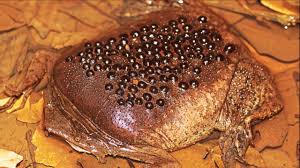


From Wikipedia – apparently the female suffers no ill effect from the birthing process:
Suriname toads are best known for their reproductive habits. Unlike the majority of toads, the males of this species do not attract mates with croaks and other sounds often associated with these aquatic animals. Instead, they produce a sharp clicking sound by snapping the hyoid bone in their throats. The partners rise from the floor while in amplexus and flip through the water in arcs. During each arc, the female releases 3 to 10 eggs, which get embedded in the skin on her back by the male’s movements. After implantation, the eggs sink into the skin and form pockets over a period of several days, eventually taking on the appearance of an irregular honeycomb. The embryos develop through to the tadpole stage inside these pockets, eventually emerging from the mother’s back as fully developed toads, though they are less than an inch long (25 mm). Once they have emerged from their mother’s back, the toads begin a largely solitary life.
After giving birth to the new toads, the mother slowly sheds the thin layer of skin that was used to birth them, and can begin the cycle again.
The male praying mantis has it much much worse.
David, I gotta agree. The male anglerfish’s love life is no bed of roses either. Yikes.