
INTRODUCTION
I want to emphasize that I will not give advice in this piece on whether to vaccinate or not. Each person’s situation is different, so no general advice is in order. Rather, I want to set forth an aspect of probability analysis that, in my view, has been ignored in articles about relative risks for the alternatives. It’ll be short and as non-mathematical as I can make it. It is then the reader’s responsibility to look up data and make his/her own decision, using the probability considerations outlined below.
PASCAL’S WAGER AND EXPECTATION VALUES
As an aid to understanding let’s go back to Pascal, one of the two fathers of probability theory (Fermat was the other). Pascal’s wager (see here for a short exposition) emphasized that one has to consider not only the probability of an event, but the consequences—the payoff. Even though the probability that God exists might be very small, the payoff of belief and going to heaven is so large, that the prudent man should make every effort to believe and to follow religious practices. Now there are both probability and philosophical arguments against Pascal’s Wager (see the linked article for references), but the general considerations explained below can’t be disputed.
In using probability arguments one has to consider not only the probability, large or small, but the payoff. This is done by using an “expectation value,” the product of probability and a numerical value assigned to the event if it happens. The “expectation value” (or in finance, the “expected value, EV”) represents the average value over many trials of some event. Let me give an example. You’re betting on a card drawn from a standard deck. You’ll bet $1 that the card drawn will be the ace of spades. What should be the winning payoff for the bet to be a good gamble? Well, there are 52 cards in the deck. If it’s a fair deck, shuffled thoroughly, and there’s no slight-of-hand in the draw, then probability that the card drawn will be the ace of spades is just 1/52. Then to make the bet a good gamble your expectation value if you win should be greater than the expectation value if you lose. The probability that the card will not be the ace of spades is 1- 1/52= 51/52. Accordingly you want the payoff X to be such that X * (1/52) > 1 *(51/52) or X > $51.
COVID CONSEQUENCES VS VAX SIDE EFFECTS
Let’s consider some general consequences of vaccinations and the Wuhan flu. This will not be comprehensive; I’m only going to give a few examples. And there won’t be any attempt to do epidemiological analyses. There are contradictory reports and I don’t subscribe to the “Peer Reviewed = Holy Writ” dogma, having been involved in over 300 instances of peer review myself, and knowing that’s it’s a good tool, but not infallible, given human weaknesses.
Here’s an anecdotal example. At 91 and semi-obese (whatever that means), I’m in a high-risk category as is my wife (younger, but with other co-morbidities). After some misgivings (see below) I decided to take the Moderna vaccinations (least objectionable in terms of fetal tissue use). About two months after the vaccination I developed severe muscle pains, difficulty in walking and getting up from a sitting position. My doctor diagnosed this condition as PMR (polymyalgia rheumatica) (confirmed by blood tests), an anti-immune disorder. Fortunately this has been treated by prednisone, and I now have only the normal aches and pains of old age. After this diagnosis I found a reference that suggested PMR followed vaccinations and viral infection. The evidence presented is suggestive, but not conclusive that vaccination may disturb the anti-immune response and cause PMR.
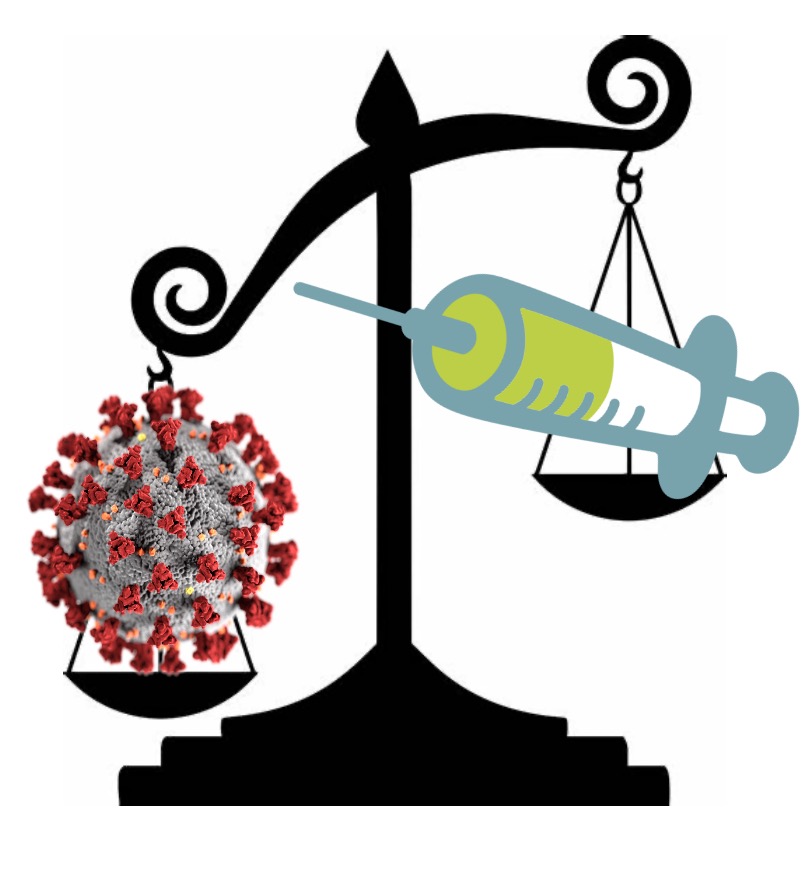
So, retrospectively, if I had known that PMR might follow vaccination, should I have done it? Here are the considerations: I’m in a high risk category (likely to die) if I contract covid in one of its deadly variants (not necessarily the Omicron). On the other hand the consequences of getting PMR can be dealt with. If I weigh in the balance an expectation value for contracting covid and dying versus an expectation value for getting PMR from a vaccination, my decision would have been to be vaccinated. This weighing of the balances does not take into account many other factors, however (see below).
But the scales will not always shift that way. The risk increases greatly with age; younger people, particularly children are much less at risk from the Covid in its variants than old folks. Six of my 11 grandchildren have contracted covid, some as breakthrough cases after vaccination. Their symptoms have been mild with the exception of # 3 grandson who suffered a loss of taste and smell for several months. However, there are rare but severe side effects that follow vaccination for some children. Rare (probability very low) instances of heart muscle or lining inflammation have been reported for the Pfizer and Moderna mRNA type vaccines. Now it is up to a parent to weigh the expectation value of this rare, but serious event against the expectation value of a likely (if not vaccinated or even as breakthrough) case with only mild symptoms.
FINAL THOUGHTS
In the discussion above I have not considered the fact that all of the Covid vaccines are, to a greater or lesser degree, tainted by use of fetal tissue, either for testing (as in the Moderna and Pfizer vaccines) or in production and development. In my own case I’ve relied on double -effect arguments from Church hierarchy, my priest, and an MD heavily involved in Catholic bioethics, to justify my vaccination. (See here.) Others do not accept these arguments, and I respect their decision.
Moreover, no long-term clinical tests were made on the novel biotechnology on which the Pfizer and Moderna vaccines are based. Were I to have a life expectancy of 20 more years (covid aside), I would not have taken the vaccines because of this unknown.
Finally, I urge those who face this decision for themselves or their children to weigh in the balance the expectation value. I know that one cannot put a number on one’s own death or that of a loved one. Nevertheless, it is necessary to consider not only the probability of events but their consequences, even if the events be rare.


The wager must not be made based on risks of a shot vs. risks of COVID. It must be made on the risks of taking the shot every six months for the rest of your life vs. risks of COVID, and in the second case only the risks of hospitalization and death. The UK and Israeli data pretty strongly shows that the effectiveness of the vaccines against transmission has always been practically nothing, and the effectiveness against severe disease drops to nothing or worse after six months or so. This was suspected to be the case from the beginning, and the data has borne it out.
Even a small risk per shot can become a high cumulative risk over dozens of shots. When we are talking about children, we are talking about potentially hundreds of shots over the course of their lifetimes. (And while I only have anecdotal data on it, the people I know who have been boosted report more severe side effects on the boost.)
Meanwhile the risk to children and young adults for severe COVID is very slight. For Omicron it may be nil. Death information for Omicron is maddeningly hard to come by (it’s buried by articles suggesting, but not outright stating, that it is very deadly.) Of the (very few) articles I have found which actually list deaths, I have not found a single death of anyone below 50 years old.
But another confounding factor is that it’s not clear that the vaccines provide ANY protection against Omicron, even with boosting. When I did a survey of Omicron cases which had vaccination information listed, about 80% of the cases were among people said to be “fully vaccinated” and about 30% of them were among people said to be have received a booster shot.
If you are 70+ you might weigh the pros and cons of the vaccine. But if you give one to your children you are either willfully ignorant or willing to endanger your children to fall into line with social norms.
WOW………..
Thanks RH for a complete and convincing anti-vax argument, of which I was aware, but not willing to put into the piece, in order to be (or seem to be) objective.
In any event, prayers extended.
to further assess vax risks go here:
https://www.theepochtimes.com/dr-peter-mccullough-vaccine-mandates-should-be-repealed_4167066.html
It’s a difficult decision to make, getting this tainted vaccine or not. If I had been younger I likely would not have gotten it, but I opted to get it given that I (60) was diagnosed with a congenitally defective aortic valve, for which I put off the operation a year with COVID. Two months now post op from open heart surgery I’m fine. It is a matter of probability, for me the risk of the vaccine was less than the risk of COVID.
Death, is not the only possible bad outcome from COVID. https://www.mayoclinic.org/diseases-conditions/coronavirus/in-depth/coronavirus-long-term-effects/art-20490351
It is rare, yet I personally know of two persons this has affected, one is his 50s and the other in his 60s. One is continually short of breath, the other is now on oxygen.
Those who condemned us for “imposing our morality” on others re: abortion now have no problem imposing their morality re: vax tyranny on us. This is a very interesting piece: “Whether There Is A Moral Obligation To Be Vaccinated, Catholic World Report, April 9, 2021.” The author says NO and hints at a moral obligation to not get vaccinated. For now, I rejoice I live in Texas. Guy, Texas
My 65-year-old husband and I (52) decided against the vaccine, initally due to the abortion connection. Aside from a case of the “sniffles,” we’ve not gotten sick. (Who knows, maybe the sniffles were caused by SC2/Omicron variant?)
.
Now I view getting the vaccines in a different light: why go looking for trouble?
.
Eat apples, walk daily, take Cal/Mag/Zinc/D3 pill. It has worked so far.
National Catholic Register has ran two articles on the vaccine. The presentations sounded a bit one-sided in favor of the vaccine. The links are:
Part I
https://www.ncregister.com/commentaries/a-physicians-letter-on-covid-19-vaccines-and-treatments-part-1
Part 2
https://www.ncregister.com/commentaries/a-physicians-letter-on-covid-19-vaccines-and-treatments-part-2-udecz1uj
*
Comments on the articles are closed for the holiday. I’m interested other peoples’ views on these articles.
The NCR articles are largely choosing from the worst opposition arguments. For example they address the claim that “the vaccines provide no immunity” rather than “the immunity provided by the vaccines is limited and reduces greatly after a few months.” The latter claim would have to be addressed with the data, which is not favorable in the long term. But simply stating that the vaccine can provide some immunity at some time is much easier to argue. Furthermore note that the idea of a vaccinated individual being more susceptible the disease is dismissed out of hand as “illogical,” again without analyzing the data. But Antibody Dependent Enhancement is a very real phenomenon. It may or may not be relevant to COVID vaccines particularly, but a real argument address whether it is or not, and why. To simply dismiss the fear as “illogical” either shows ignorance on the side of the author, or a refusal to argue in good faith.
Similarly the VAERS data is dismissed by saying that the deaths could all be fraudulent. There is no effort to show if this has actually happened, and if so to what scale. There is also no discussion of comparative rates between COVID and non-COVID rates (since surely if people input nonsense for COVID vaccines they would do that for other vaccines as well, so even if the raw numbers are not reliable the comparison between rates should tell us something.) Note too that this is analyzed in the context of the claim of “more people have died from vaccines than COVID” which is an extreme claim and much easier to dismiss than something like “the risk for COVID vaccines is much higher than other vaccines, even though the overall risk is low” or “in populations at extremely low risk for COVID complications, such as children, the vaccines may be more dangerous than a COVID infection.” There is not any real serious attempt to deal with the criticisms.
The articles are more than “a bit” one sided.
One other consideration is getting vaccinated when one has already had Covid. It has been pushed by many but there appears to be no legitimate reason to do so given the data which indicates that natural immunity converts stronger and more durable immunity. Vaccination of naturally immune may only provide marginal increased immunity with exposure to side effects.
Anecdotally, I am naturally immune and did not get vaccinated and was “granted” and exemption by my employer. Haven’t had a breakthrough infection though multiple of my vaccinated co-workers have. I’ve been in multiple meetings with those who subsequently tested positive the very day of said meeting.
Good post, Dr. Kurland!!!!
Risk analysis is a topic that laypersons typically do not understand. Risk equals probability or likelihood of event occurrence multiplied by consequence, severity, or impact of event occurrence. When those two variables (probability and consequence) are measured in powers of ten, the exponents are added to determine a numerical value of risk. Then, using a risk table like the one at the link below, a determination is made on whether to proceed, or institute mitigation measures, or use a different technology or pathway.
https://www.researchgate.net/figure/A-risk-evaluation-matrix-table-scoring-2-x-functions-consequence-x-likelihood-where_fig4_340299110
We use this process when performing probabilistic risk assessments in nuclear power. Here are some guidance documents from the US NRC (you have NO idea how complex this can get) – and BTW, EVERYTHING is regulated in nuclear power:
NUREG/CR-2201, Probabilistic Risk Assessment and Regulatory Decision-Making: Some Frequently Asked Questions https://www.nrc.gov/docs/ML1624/ML16245A032.pdf
NUREG/CR-2300, A Guide to the Performance of Probabilistic Risk Assessments for Nuclear Power Plants, Volume 1:
https://www.nrc.gov/docs/ML0635/ML063560439.pdf
NUREG/CR-2300, A Guide to the Performance of Probabilistic Risk Assessments for Nuclear Power Plants, Volume 2
https://www.nrc.gov/docs/ML0635/ML063560440.pdf
This same sort of methodology is used in the medical industry, the aerospace industry, the locomotive industry, the pharmaceutical industry, and automotive industry, the petrochemical industry, the hydroelectric industry, etc. Everything is based on risk likelihood multiplied by severity. The same therefore is true of the use of COVID-19 vaccines (or any vaccines for that matter). Nothing – absolutely NOTHING is without risk. You must dispassionately weigh the chance something bad will happen against the results of the occurrence of that bad thing, and then make an intelligent informed decision. And yes, since you and I have neither the access to the relevant medical data nor the ability to perform these kinds of complicated statistical gyrations, we must rely on experts.
I did this kind of thing ONCE in my nuclear power career. I had to perform a software hazards and failure analysis of a digital controlled whose function had a nexus (however oblique) to reactor safety via introducing an unintended reactivity impact on a failure. The controller was a very simple one based on late 1990s microprocessor technology. The software was function block, menu driven in nature. The FMEA was 62 pages long. Each separate hardware and software failure event (well, software doesn’t really fail, but rather has latent bugs in it – too complicated to explain here) was assigned a probability and a consequence value in exponents (powers of ten), then the exponents were added for each event row. And event that had a resulting risk value greater than a predetermined setpoint required either redesign or the institution of mitigation measures. Nowadays as things have modernized, we got NUREG/CR-6901, Current State of Reliability Modeling Methodologies for Digital Systems and Their
Acceptance Criteria for Nuclear Power Plant Assessments (published in 2006 and needs to be updated, but the US NRC moves at a glacial pace):
https://www.nrc.gov/docs/ML0608/ML060800179.pdf
The point is this: to vax or not is a decision to be made based on risk analysis and NOT emotion. Get your feelings out of the way because no one cares how you feel and paying attention to your feelings can kill you. That said, if you have a moral qualm about using vaccine made from or tested with embryonic stem cells (as are most of all vaccines), then don’t get vaccinated. It’s that simple. But realize this: that’s a decision based on your moral qualms and not the math. As for me? I did NOT get the Johnson & Johnson vaccine because I was informed it was made with embryonic stem cells. But I did get the Pfizer vaccine because (1) it was only tested with embryonic stem cells, not made with them (less bad), and (2) I have significant co-morbidities which increases both likelihood and consequence of contracting the disease die to (a) lower immune system capability and (b) impact on cardio-respiratory system. I note with interest that God did not let me die from cocaine / heroine overdose when I was speed-balling in my misspent youth, so if I do die of COVID-19 (no vaccine in 100% preventative), then I will still be able to thank God for an extra 30 years of life.
BTW, my older brother got his third booster shot and had a very bad reaction for 3 days; he even had to go to the emergency room. He has sworn no more booster shots. I don’t blame him, and I am undecided about a booster shot. I will rely on my physician because I don’t have enough data to do a detailed risk analysis at this point.
Typo:
Change: “contracting the disease die to (a) lower immune system capability”
To
“contracting the disease due to (a) lower immune system capability”
I wish we could edit our entries here for typos. Argh!
Spoke to my brother on Christmas. He tells me he’s gotten a booster and gives his opinions in his inimitable way about the risk-reward calculus. Then tells me he’s scheduled a doctor visit because he’s had some unexplained fatigue. This actually is disconcerting because he exercises every day, has no excess weight and has never had any notable medical problems he admits to bar knee problems derived from an old sports injury and some cardiac issue (‘atrial fibrilation’). Sister calls yesterday and mentions in passing that his doctor tells him he has this autoimmune problem which is called…polymyalgia rheumatica. I’m told the steroid he was prescribed helps with the fatigue.
Art, sorry for your brother’s ailment. Prednisone did alleviate the PMR symptoms for me, but has possible side effects itself, my doc told me: loss of vitamin D (whatever ensues from that), bone loss. prayers up!