
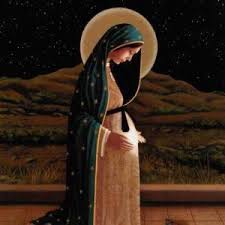
[On Sunday within the octave of her nativity.] This festival was appointed by Pope Innocent XI., that on it the faithful may be called upon in a particular manner to recommend to God, through the intercession of the B. Virgin, the necessities of his church, and to return him thanks for his gracious protection and numberless mercies. What gave occasion to the institution of this feast was a solemn thanksgiving for the relief of Vienna, when it was besieged by the Turks in 1683. 1 If we desire to avert the divine anger, justly provoked by our sins, with our prayers we must join the tears of sincere compunction, and a perfect conversion of our manners. This is the first grace we must always beg of God, that he would bring us to the dispositions of condign penance. Our supplications for the divine mercies, and our thanksgivings for benefits received will only thus be rendered acceptable. By no other means can we deserve the blessing of God, or be recommended to it by the patronage of his holy mother. To the invocation of Jesus it is a pious and wholesome practice to join our application to the Virgin Mary, that, through her intercession, we may more easily and more abundantly obtain the effects of our petitions. In this sense devout souls pronounce, with great affection and confidence, the holy names of Jesus and Mary.
Note 1. The Turks had formerly laid siege to Vienna, under Solyman the Magnificent, in 1529, in the reign of Charles V. But after losing sixty thousand men, and lying a month before the place, without making any considerable advances against it, they raised the siege. (See Surius in Commentariis sui temporis, anno 1529.) The danger was much more formidable when those infidels made a second attempt upon this bulwark of Germany, in the reign of the Emperor Leopold. Great part of Hungary having taken up arms against that prince, the revolted cities were reduced to his obedience, and the ringleaders, the Counts Nadasti and Serini, with Christopher Frangipani, were beheaded in 1671. Count Serini had in view to make himself sovereign of Hungary, and his son-in-law, Prince Ragotzi of Transylvania. The flame of this rebellion was only covered, not extinguished, by these executions; it soon broke out again, and Emeric, count Tekeli, who had married Ragotzi’s daughter, at the head of thirty thousand good troops, carried all before him; and the better to stand his ground, invited the Turks into Hungary, Cara Mustapha being then Grand Vizier under Sultan Mahomet IV. The opportunity was embraced by the infidels; and on the 2nd of January, 1683, the fatal horse-tails, the usual ensigns of an ensuing war, were seen upon the gates of the seraglio at Adrianople, and the whole Ottoman empire was in motion, to carry fire and sword into the bosom of the German empire.
The vizier with great expedition marched through Hungary at the head of a mighty army, meeting with no opposition till he came to Raab or Javarin, a small strong town in Lower Hungary, on his road towards Vienna. This place he despised, and leaving it behind him, in the month of July, came within sight of the capital of Austria. At the view of the fire kindled in the camp of the Tartars on both sides of the Danube, the emperor, in the utmost consternation, yielding to the earnest entreaties of his generals, quitted Vienna with his empress, who was six months gone with child, and retreated with the greatest precipitation, without carrying with him either furniture, money, or jewels. The court narrowly escaped falling into the hands of the Tartars; the emperor retired first to Lintz, and finding himself not safe there, fled with equal precipitation to Passaw. In this flight the empress and her ladies were obliged to pass a whole night in a forest, where nothing but a truss of straw could be procured, and this not without difficulty, to lay her majesty upon. Tekeli joined the Turkish army with forty thousand men, and was master of Buda, and almost all Hungary.
The vizier with one hundred and fifty thousand Turks (besides Hungarians, Transylvanians, and Tartars) sat down before Vienna, and began to open the trenches on the 14th of July. His army took up an incredible tract of ground; his own quarter was upon the little rising hills which surround the palace: in it, a display of immense riches in gold and jewels made the most splendid show amidst all the terrors of war. The infidels burnt the suburbs, with the palace called the Favourite, and the houses of the nobility in the suburb of Leopoldstad. The fortifications of the city were at that time very weak in many places; the counterscarp was in a sad condition. The place where the attack was made, was flanked by two small bastions, and fortified by a ravelin which covered the curtain. The rampart lay close to the houses, and if the outworks and first posts had been carried, it would have been impossible for the city to have held out much longer. There was in it good store of provisions and ammunition, with skilful engineers to manage the artillery: the garrison was joined by a great number of citizens, who seemed resolved either to save their country or to perish in its ruins. The count of Staremberg, the governor, supported the drooping spirits of those who seemed to despond, and by his courage, address, and indefatigable industry, held out till succour arrived. This, however, he could not have done, had not the vizier been slow in his attacks, probably for fear of taking the city by assault, that he might preserve the plunder. All his mines were countermined; not one of them succeeded; a battery of seventy pieces of cannon was not able, in six weeks’ time, to break down one single pan of the ravelin. The duke of Lorrain, the emperor’s general, came out of Hungary with thirty thousand men; but could not attempt to relieve the besieged. The elector of Saxony joined him with ten thousand men, and the emperor implored the succours of all the Christian princes. Pope Innocent XI. and John Sobieski, king of Poland, had entered into a league the year before to support him against the common enemy. Vienna indeed is the key, not only of Germany, but also of Italy and Poland, and a great bulwark of Christendom.
Butler’s Lives of the Saints

