
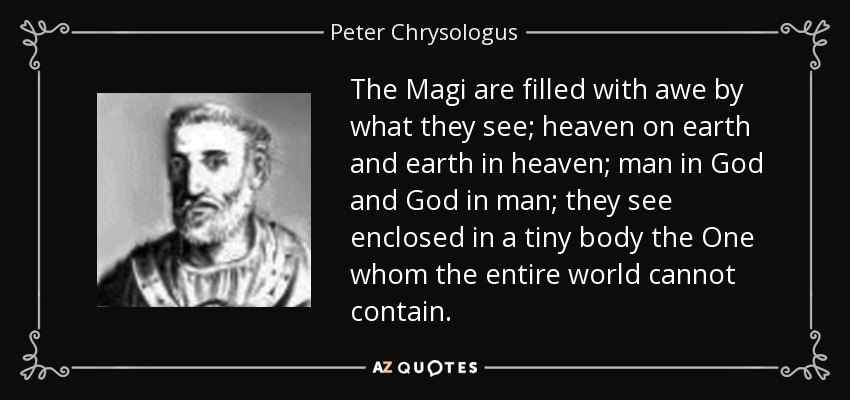
St. Peter Chrysologus, Bishop and Doctor of the Church (Feast-July 30) Born at Imola, Italy in 380, St. Peter was baptized, educated, and ordained a deacon by Cornelius, Bishop of Imola. St. Peter merited being called “Chrysologus” (golden-worded) from his exceptional oratorical eloquence. In 433, Pope Sixtus III consecrated him bishop of Ravenna. He practiced many corporal and spiritual works of mercy, and ruled his flock with utmost diligence and care. He extirpated the last vestiges of paganism and other abuses that had sprouted among his people, cautioning them especially against indecent dancing. “Anyone who wishes to frolic with the devil,” he remarked, “cannot rejoice with Christ.” He also counseled the heretic Eutyches (who had asked for his support) to avoid causing division but to learn from the other heretics who were crushed when they hurled themselves against the Rock of Peter. He died at Imola, Italy in 450 and in 1729 was made a Doctor of the Church, largely as a result of his simple, practical, and clear sermons which have come down to us, nearly all dealing with Gospel subjects.
Peter Chrysologus (Greek: Ἅγιος Πέτρος ὁ Χρυσολόγος, Petros Chrysologos, “Peter the Golden-worded”; c. 380 – c. 450[2]) was Bishop of Ravenna from about 433 until his death.[3] He is known as the “Doctor of Homilies” for the concise but theologically rich reflections he delivered during his time as the Bishop of Ravenna.
He is revered as a saint by the Roman Catholic Church and the Eastern Orthodox Church; he was declared a Doctor of the Church by Pope Benedict XIII in 1729.
Go here to read the rest.


I hope one day to learn more about Sts. Chrysogonus, Peter Chrysologus, and John Chrysostom, but I doubt I’ll ever be able to distinguish between them. Or maybe that’s one of the neat things about Heaven: you get to spend time with each of them. You can figure out how many Jameses and Philips there were in the early Church. One day you can hang out with John Neumann, the next day with John Henry Newman. “Eye hath not seen…”