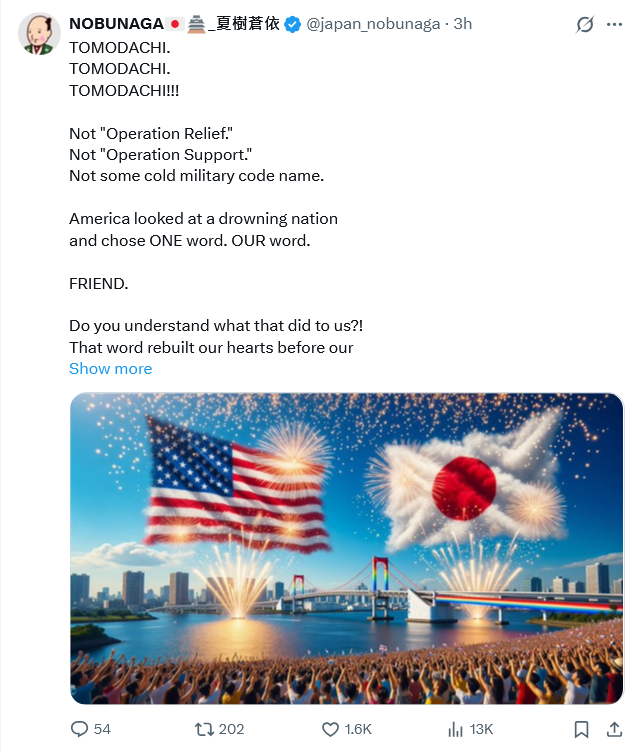
Gratitude is one of the noblest human emotions, and I think the Japanese understand that. Twitter auto translate has made a lot of friends between the Japanese and the Americans. Long may such friendship endure.
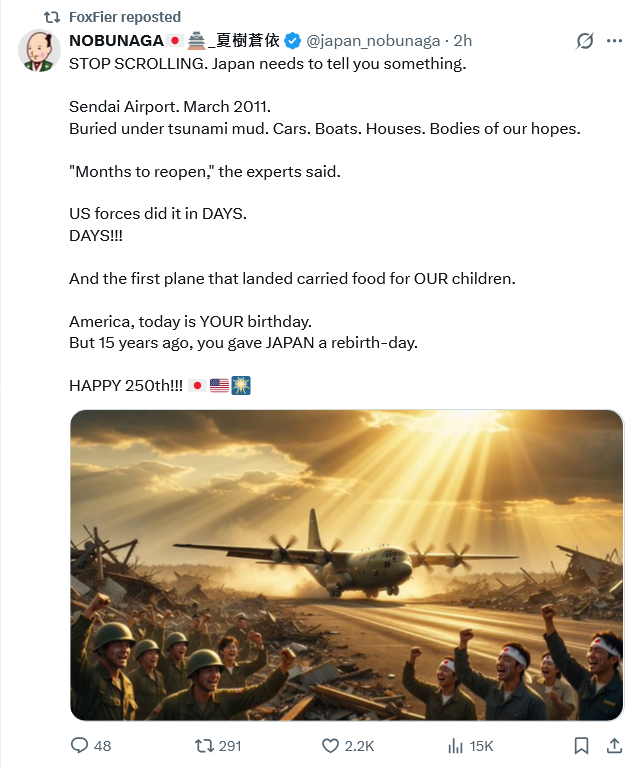

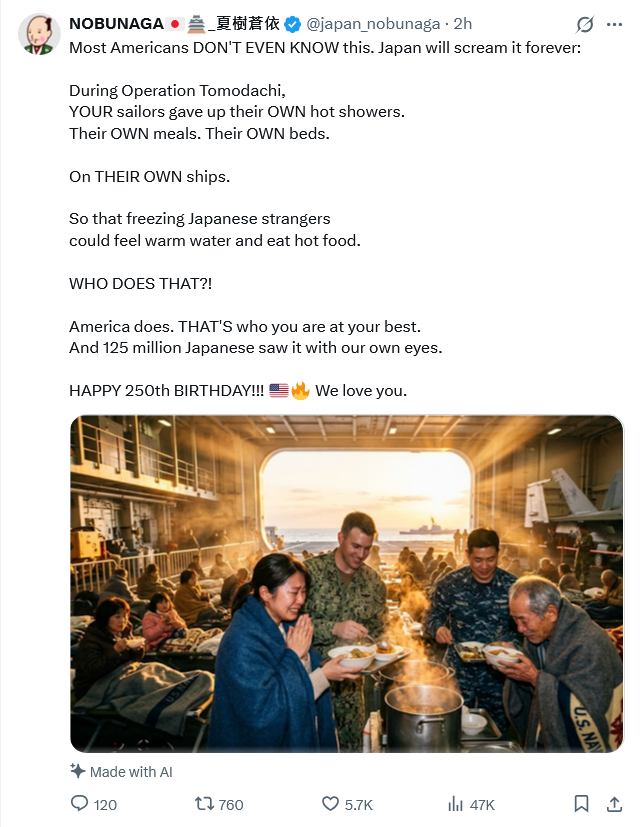
Gratitude is one of the noblest human emotions, and I think the Japanese understand that. Twitter auto translate has made a lot of friends between the Japanese and the Americans. Long may such friendship endure.


With the surrender of Japan in World War II, George Marshall’s plan sent food to Japan, Germany and the Islands.
The Marshall Plan was applicable only to Europe. Under the Government Aid and Relief in Occupied Areas Japan received food and medical aid from the US during 1946-1952. The rebuilding of Japan under MacArthur’s plan was to be done by the Japanese, who benefited greatly from US purchases of Japanese goods during the Korean War. The US sent banker Joseph Dodge to Japan in 1949 to help the Japanese government to implement a strict balanced budget program which drove inflation out of the Japanese economy and stabilized the yen.
Our occupation of Japan was a master course in how to get a war devastated country back on its feet quickly. Small wonder that by the end of the American occupation in 1952 some Japanese were referring to MacArthur as the Liberator of Japan.
Thank you for posting Nobunaga. Many of us were aware of the tsunami destruction, but not aid of the US forces.
I’d read that the Japanese had put on an elaborate fireworks display to celebrate our 250th, but I did not know why they were so eager to celebrate with us. Thank you for pointing out the history behind ‘Nobunaga’.
God bless them.
Don:
It helped MacArthur that the Japanese had an orderly society, used to following rules from above through a high bureaucratized order, dating to the old shogunate and tweaked by European models (for law codes as for the army: Imperial Germany). Imagine conquering and rebuilding Russia.
Thank you, Donald.
I remember donating to help Japan in my high school years 1954-1958.
I did not know that MacArthur was in charge of rebuilding Japan. I do know that the Japanese children no longer fit in the paper houses for they had grown taller with good food.