
Dave Griffey at Daffey Thoughts talks about the influence of Christianity on early D&D:
One of my longtime readers sent me a link to a video here. In it we learn that E. Gary Gygax and David Arneson, who created the famous and of much maligned roleplaying game Dungeons & Dragons, were Christian. At least Arneson was. Gagyx was technically a Jehovah’s Witness, though in later years I believe he did convert to Protestant Christianity.
By Gygax’s admission, that’s why the early versions of the game sported demons and devils as possible opponents, but there were no stats for Satan. Much less stats for Jesus. It’s also noteworthy that while such demonic foes were out and about, there were no angels. Gygax said he didn’t feel right since ‘demon’ can be a generic bad guy found in many cultures, but angels were more specific to the Judeo-Christian tradition.
Now this wasn’t a shock to me now, or when I first heard of it when I began researching the game ages ago. I’ve said it meant little to me for most of my life. It was that game the press attacked that was based on things like The Lord of the Rings. Only years later did I learn Gygax himself insisted any connection to Tolkien’s works was just cheap marketing. According to him, he personally despised Tolkien’s works (at least LoTR). I actually don’t believe it, and have concluded Gygax is to be trusted with his memories in the same way George Lucas is to be trusted when talking about Star Wars.
When I first heard they were Christian, however, it didn’t surprise me. For that matter, when I read this little article, it made perfect sense. Not only were they Christian, but the game itself was infused with an implicit Christianity. Beyond the clear biblical or cultural Christian references, an underlying Christian look and feel was there. The early art and references to pop Christian religious attitudes and items (such as crosses) were plentiful.
That’s because the game was first published in 1974. That was the year I was in first grade. Believe it or not, a sort of Christian residue was still the default religious cultural reference in America at that point. In my public schools, the first few teachers I had brought a tremendous amount of ‘Christian’ into various subjects. At Thanksgiving we learned much about the pilgrims’ Christian beliefs. At Christmas we learned about various Christian elements of the holiday, as well as learning and hearing the Christmas story itself.
 |
| Christian looking clerics in 1978 Players Handbook |
Two developments are noteworthy, however. By the time I was in late elementary school, the Christian elements of anything were fading. No more guest speakers presenting stories about the first Christmas. No more lessons about mangers. By the time I was in high school, the ‘keep Christ out of Christmas’ movement was taking hold. We hadn’t gone to BCE/CE yet, but we changed our homeroom Christmas decorating contest to our homeroom holiday decorating contest.
It was at this time, in ninth grade, I first heard of the game D&D. By then the recent editions of the game no longer had much in terms of Christian influence. New editions invented pantheons of fictional gods and goddesses, and explicitly Christian imagery and references were fast being replaced. Crosses were now generic ‘holy symbols’ and artwork was becoming more religiously, if not culturally, androgynous.
Beyond the clear pushing of Christianity out of the social fabric, there were also generations at work. When I think of those teachers in my school teaching us about that baby in the manger, they were old. I mean near retirement. The first couple would retire only a few years after I had them as teachers. That means they were likely in their late 50s, early 60s. Meaning they started teaching when my parents were in school in the 1930s! Meaning they were schooled around then as well.
It’s worth noting my kindergarten teacher was young, and an exception. In hindsight, we were likely her first teaching job. And while I have vivid memories of that first school Christmas, I remember nothing about the religious part. We read The Little Match Girl. We did Christmas bell art (I remember that like yesterday). We had a Christmas party with Santa. But nothing about the religious side. She would have been schooled in the 1960s. After third grade, my teachers were all in their early 50s to late 40s. None of them brought religion into the discussion either.
 |
| Contrast: A modern cleric pic |
That’s because in the time from the early 70s to early 80s, America went from a vague Christian identity to that identity and all of its references being eradicated from the popular culture. That’s because somewhere between the 1930s and 1960s, we were taught to do just that. If Gygax and Arneson had published D&D in the 80s would their Christian influence have shown? By the 80s, even while Gygax was still there (Arneson parted ways in the mid-70s), it was already being stripped away from the product.
Today, of course, it is the eradication of the whole cultural roots of the game. New editions of the game make sure to avoid any faux European medieval setting, and to sever the literary roots of the game when those roots are deemed hateful or offensive today. Specific references to historical or cultural items or monsters are purposefully edited out. On the off chance an old game concept from the past remains, outrage ensues and the publishers quickly expunge the offending reference. It goes without saying that anything remotely Christian is as far removed from modern versions of the game as they are from most modern church events held in a public setting.
So no, I wasn’t surprised when I learned Gygax and Arnseon were Christian or Christian influenced. Nor did it shock me to learn just how seeped with Christian concepts the early game was. By the time churches joined the media’s assault on the game in the 1980s, however, that was already beginning to pass, as it was in our nation in general. Perhaps that will teach them next time.
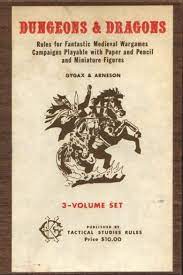
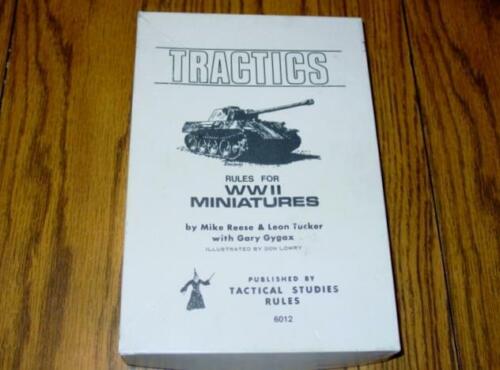
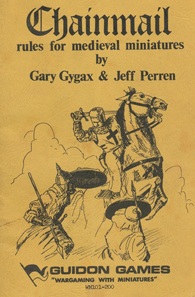
Go here to comment. I lived through this process as a young adult. Gygax Dragonlord was actually an old time wargamer. The Avalon Hill General, and other war gaming journals of the time, often had letters from him on wargames years before he developed D&D. The name of the company he established, TSR, stood for Tactical Studies Rules, showing where his emphasis was. TSR published some straight wargames in its early years, 1066 (1976) for example, a first rate simulation of the Battle of Hastings. In the early years D&D was sold to wargamers as bringing wargame miniatures, in a medieval and fantasy setting, to tabletop without miniatures.
The whole RPG element took off, and D&D morphed into something different. Gygax may have been influenced by his religion, although I saw little evidence of it, but his primary influence was his wargaming background, which remained a feature of TSR during its early years until Gygax lost control of the company in 1985. (Gary should have paid more attention to the utility of the able lawyer class in his RPG systems. Expensive characters but quite useful when needed.)


:Salutes the comment pointing out that the attack on D&D was media, not “them horribad churchies peoplez” type revisionism:
Foxfier, when I started reading up on the game, I found out that there is an entire ‘Satanic Panic’ narrative. Most say that’s what tanked the game on the popular level back in the 80s. I explain to people that there were ministers on the bandwagon, but it was a bandwagon entirely built by the media and including professionals from all walks, including medical, educational and mental health. Not to mention Hollywood turning on the game.
Dave G-
I’m e-friends with a guy who grew up at the school the ‘Mazes and Monsters’ guy went to, with his mom doing her nonsense the whole time.
He’s agnostic and still gets salty about how now that the obvious bad effects happened, the folks who made a mess try to blame the Uncool Kids.
I’ve read about that incident. I remember it, and the movie. I’d say that movie did as much to ‘stigmatize’ the game as anything. I know when I first heard about D&D around 1981, there was no real stigma about it, any more than Pac-Man or Trivial Pursuit. By 1985, when I graduated, half the guys who had played it wouldn’t be caught dead around it. They didn’t just not play, but they denied ever having played it at all. I recall the hallway conversation after that movie aired. I don’t think the timeline is a coincidence. The difference seemed to be that up until that movie, the Media narrative was that if you played D&D, you’d go bat nuts and do crazy things and become an outcast. In the movie, it not so subtly suggested that if you played D&D, you were probably already there – which is why you played the game. A big difference in the minds of 1980s American teens.