
Job in this chapter is eloquent as to the transitory nature of the earthly goods obtained by the wicked:
After discussing these arguments to refute his friends and strengthen his own opinion, he goes on to his principal proposition which is that it is not contrary to divine providence if the evil prosper temporally in this world and the just are afflicted temporally. He has clearly shown this above, (19:25 and 21:32) using future rewards and punishments which are reserved to the good and the evil after this life. But now he demonstrates this by the weakness of temporal goods which evildoers possess in this life and the greatness of the spiritual goods which are granted to the good. (c.28) He first maintains that it is useless for sinners if they attain temporal goods in this life without the goods of the soul, and so he says, “What is the hope of the hypocrite if he should steal things greedily,” if he should gather riches unjustly, “and God not free his soul,” from sin through the gifts of grace? What good can he attain from this? He uses the hypocrite or tactician to stand for all sinners because, “equity pretended is evil twice over.” Also, hypocrites, as falsely virtuous, appear especially reprehensible in the eyes of God. As he later says, “Tacticians and cunning men provoke the anger of God.” (36:13)
He shows as a consequence that they are deprived of hope in two ways. One of these is the hope the just have that God hears their prayer in time of need, but he excludes this by saying, “Will God hear his cry when anguish comes upon him?” He implies the answer “No.” The reason for this is found in the book of Proverbs when the voice of Wisdom says, “I have called and you refused me,” (1:24) and continues a little later, “Then,” when anguish will come upon them, “they will invoke me and I will not hear.” (1:28) Further on in the same book he says, “The prayer of the man who turns his ear away so that he does not hear the law will be accursed.” (28:9) The second hope of the just is that when they lack temporal consolation in time of trial, they enjoy delight in God and are delighted in his praise, but he excludes this from the impious man saying, “Or will he be able to find joy in the Almighty,” whom he did not love as his works prove, “and invoke God in every time?” For from great love of God some men always praise God in speech.
After he has shown the small value of the temporal goods which the evil possess without the hope of the just which the saints have, he shows as a consequence that the temporal goods which the impious sometimes possess are fragile. Before asserting what he is about to say, he begins with two things. First, what he will say accords with divine wisdom, and so he says, “I will teach you by the hand of God,” by his strength, “what the Almighty has,” fixed in his wisdom, “and I will not conceal it,” what I learned when God instructed me. Second, he shows that what he is about to say is so clear that even they cannot be ignorant of it, and so he says, “Behold all of you know,” what I am about to say is true, and so it is strange that you speak so irrationally against the plain truth. He expresses this theme saying, “and why do you speak foolishness without proof,” that is, things with no reasonable support? For men are dull when they know the premises, but usually do not perceive the conclusion which follows from them.
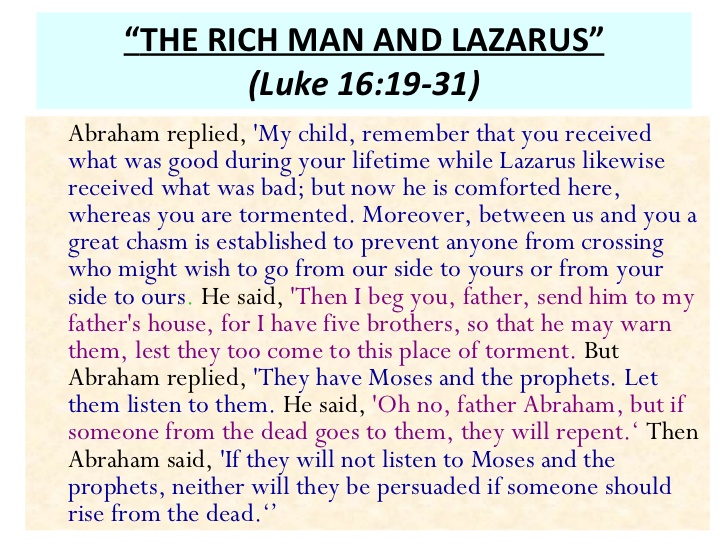
Go here to read the rest. Job also notes that the wicked may not take their material goods into the next world where judgment awaits.


Let us pity and pray for the rich. They are often blind to the hazards of the life they live.