
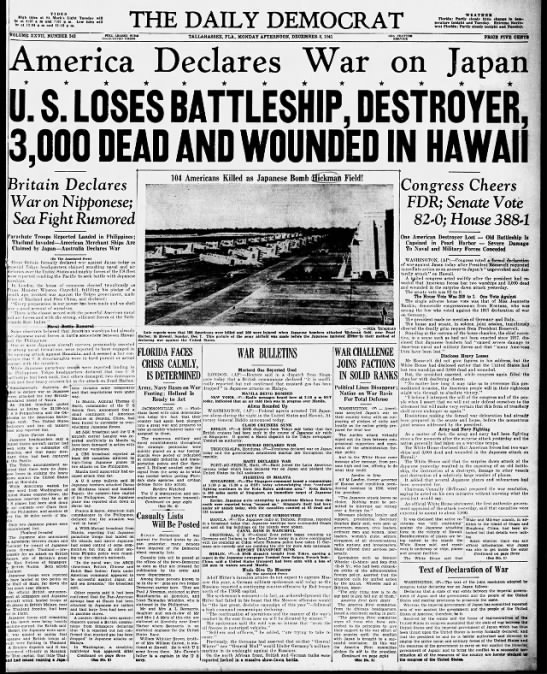
If you have ever seen the factories in Detroit or the oil fields in Houston then you know Japan can’t win a war against the United States.
Yamamoto
At the end of the epic movie Tora, Tora, Tora, Admiral Isoroku Yamamoto, the head of the combined Japanese fleet, after the successful attack on Pearl Harbor, refuses to join in the elation of his staff, and makes this haunting observation: “I fear all we have done is to awaken a sleeping giant and fill him with a terrible resolve.” The line is almost certainly apocryphal. The director of the film, Elmo Williams, claimed that Larry Forester, the film’s screenwriter, had found the line in a 1943 letter written by Yamamoto. However, he has been unable to produce the letter, and there is no other evidence that such a letter exists.
However, there is no doubt that Yamamoto would fully have endorsed the sentiment that the line contained. He had studied at Harvard in 1919-1921, and served two tours as a naval attache at the Japanese embassy in Washington DC. He spoke fluent English, and his stays in the US had convinced him of that nation’s vast wealth and industrial power. He had also developed a fondness for both America and Americans.
In the 1930’s Yamamoto spoke out against Japan allying with Nazi Germany and Fascist Italy, fearing that such an alliance would lead inevitably to a war with the US that Japan would lose. He received frequent death threats as a result from fanatical Japanese nationalists. These were not idle threats, as such nationalists did assassinate a fair number of Japanese politicians and military men during the Thirties who were against war with the US. Yamamoto ignored the threats with studied contempt, viewing it as his duty to the Emperor and Japan to speak out against a disastrous course. Yamamoto wrote in a letter to one nationalist:
Should hostilities once break out between Japan and the United States, it would not be enough that we take Guam and the Philippines, nor even Hawaii and San Francisco. To make victory certain, we would have to march into Washington and dictate the terms of peace in the White House. I wonder if our politicians (who speak so lightly of a Japanese-American war) have confidence as to the final outcome and are prepared to make the necessary sacrifices.
After war came, and his warnings were ignored, Yamamoto fought to win it for Japan, until he died at the hands of an American P-38 Lightning raid, specifically targeting the plane he was flying in, the US eager to have their brilliant adversary no longer at the helm of the Japanese navy. In the aftermath of the Pearl Harbor raid, on January 9, 1942, when Japan was riding high on a wave of rapid conquest throughout the Pacific, Yamamoto made the following comment which indicated both his moral qualms as to the Pearl Harbor raid, and his fears as to the ultimate outcome:
“A military man can scarcely pride himself on having ‘smitten a sleeping enemy’; it is more a matter of shame, simply, for the one smitten. I would rather you made your appraisal after seeing what the enemy does, since it is certain that, angered and outraged, he will soon launch a determined counterattack.”


Hitler and the Japanese both underestimated the United States of America.
I frequently read the columns and articles on the Crisis Magazine website. Certain writers there, it seems, are dismissive of the USA for a number of reasons. There is a narrative found on various Internet websites crediting the USSR for winning the War in Europe based on the massive loss of life incurred by the USSR. The American and British contributions are downplayed and diminished.
I doubt any of these opinionated folk ever talked to anyone who landed on Omaha Beach or fought at Anzio, but the greater point I am trying to make is that the USA fought in TWO theaters of war while supplying allied nations with food, fuel and equipment at the same time.
Japan tore through Asia like wildfire but was vanquished by an enemy who was:
• A nation that was thousands of miles away across the Pacific Ocean;
• A nation that came into existence less than 165 years before the Pearl Harbor attack;
• A nation that had a Pacific Coast presence for less than 100 years before 1941, and:
• A nation whose mainland could never be successfully invaded for a host of reasons, not the least of which was and is an armed populace.
Since that time, much has been made of the US “losing” in Vietnam, Afghanistan, etc. despite the fact that the US has never surrendered to any foreign power. The US QUIT in Vietnam after the North sued for peace. The US quit in Afghanistan because, in part, Biden is a senile old man who belongs in a high chair in a nursing home.
Great Britain could not defeat Nazi Germany and Imperial Japan on her own and supply the USSR with food, fuel and equipment. The USSR fought on one front..against a nation they started the war with as an ally and ignored Great Britain’s warning that Nazi Germany would attack them. Stalin attacked Japan in Manchuria only after the US did all the hard work.
It will take more than a generation to get American manufacturing back where it should be (not in China) but when it does happen, we can hope that bad actors such as Putin and Xi, who will always be around, will tread more cautiously.
Peace through strength means more than having a well trained military armed to the teeth. It means we can grow, build, manufacture and develop everything we need.