
The Mexican revolts against dictator Porfirio Diaz in 1910 led to a complex and ever shifting mixture of groups and personalities fighting for control of Mexico in an intermittent vicious civil war that would last for over two decades. Inevitably the US became involved in this vast struggle with the US occupying the Mexican port of Veracruz in 1914 for six months. In early 1916 part time revolutionary general, and full time bandit, Francisco “Pancho” Villa and his “Army of the North” were on the run after being defeated by the forces of José Venustiano Carranza Garza, who would go on to become President of Mexico until assassinated in 1920. Villa was angered that the United States no longer gave him clandestine support and had switched its support to Carranza in hopes that he could form a stable government.
Desperate for supplies, Villa launched a raid on Columbus, New Mexico by five hundred of his men. Villa, relying on faulty intelligence thought that Columbus was garrisoned by 30 US troops. Actually, 341 troopers of the 13th Cavalry were stationed in the town.
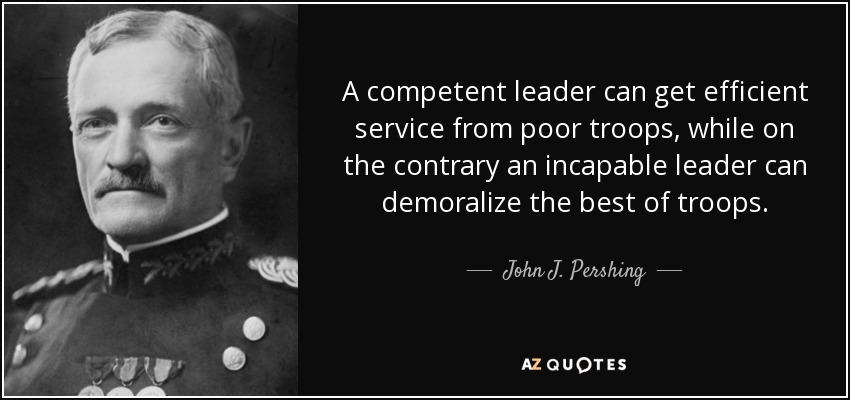
Although taken by surprise, the 13th Cavalry, and the men of the town, many of whom were armed, put up a ferocious resistance after Villa’s force launched their attack in a two prong assault at 4:15 AM. In the ensuing fighting eight American soldiers were killed along with eight Americans civilians. Eight Americans were wounded. Ninety of Villa’s men were killed, thirteen were wounded and six captured. The Americans chased the retreating Mexicans fifteen miles into Mexico. The furious Americans tried and executed five of the captured Mexicans by hanging, with the sixth being sentenced to life imprisonment. As the news spread throughout the US, national outrage boiled. At Fort Bliss, commanding General John J. Pershing readied his troops.


My old National Guard unit, the 3rd Infantry Regiment, later to become the 162nd Infantry was mobilized during that time to secure the border against further raids by Villa. It is commemorated on the unit insignia by a cactus.
The punitive expedition was a much needed shakedown cruise for the National Guard just prior to the ordeal of World War I.
Very true. My grandfather was part of the pursuit of Villa into Mexico, and he later served in the trenches in France. I probably heard more stories about his life than any other veteran in the family.
–
BTW, Don, remember the story about my wife’s grandmother’s fiancé being killed the day before the Armistice? I’ve now seen the condolence letter. He was killed when a shell exploded in the artillery piece his crew was operating. Doubly bad luck.
“He was killed when a shell exploded in the artillery piece his crew was operating. Doubly bad luck.”
It is a tragedy when a loved one is killed in a War, and so much worse when the War was almost over. War poet Wilfrid Owen’s mother received the telegram announcing his death as Church bells throughout Britain were joyously ringing in the Armistice.
The Punitive Expedition into Mexico in chase of the brigand Pancho Villa was a fascinating chapter of American history. “Black Jack” Pershing’s commanding officer who sent him into Mexico, Frederick Funston, had been in charge of the relief efforts after the huge San Francisco earthquake 10 years earlier, at which time he had commandeered all private vehicles for use in the relief efforts (most of the horses were dead and/or useless for service with the city engulfed in flames). He became convinced of the usefulness of automobiles at that time, and it is no surprise that Pershing’s expedition into Mexicao was highly mechanized. At the National Archives are many photos which depict some of the hundreds of 1916 Dodge Touring cars, trucks, motorcycles, airplanes that were brought on that mission.
Also a little known officer under Pershing by the name of George S. Patton, who ,with his men, was on the way to a Mexican farmhouse to buy some provisions when they stumbled on a contingent of Villa’s soldiers. Patton and his men were at the time in some of the 1916 Dodge Touring cars. He promptly ordered the very first mechanized cavalry attack ever. He returned to camp with a couple of dead Mexican soldiers strapped across the front of his car.
[…] the wake of Pancho Villa’s raid on Columbus, New Mexico, go here to read about it, the US wasted no time in putting together a punitive force to enter Mexico and […]
[…] the wake of Pancho Villa’s raid on Columbus, New Mexico, go here to read about it, the US wasted no time in putting together a punitive force to enter Mexico and […]
“Una cosa da me risa, Pancho Villa sin camisa…”
Some trivia: As noted Frederick Funston ordered Black Jack Pershing into Mexico. Funston later was awarded the Medal of Honor and became a Major General. His name struck a note and I remembered that at age 5 my mother, younger brother and I sailed on the Funston to Alaska to join my father at USAF Base Elmendorf. The Funston was a troop transport ship one of the few owned by the Army.