
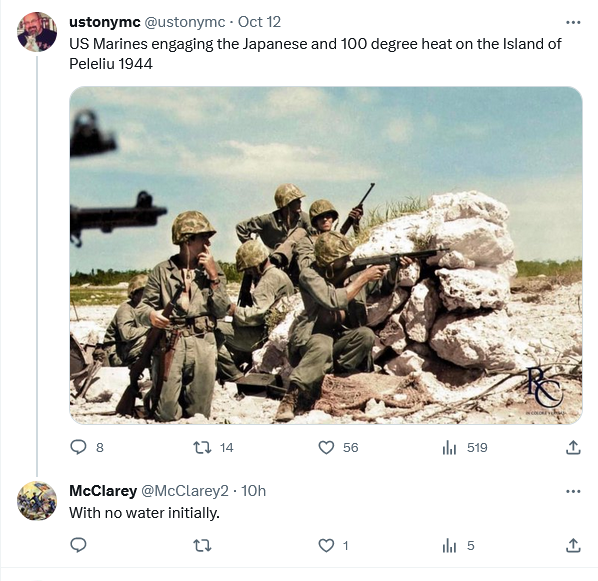
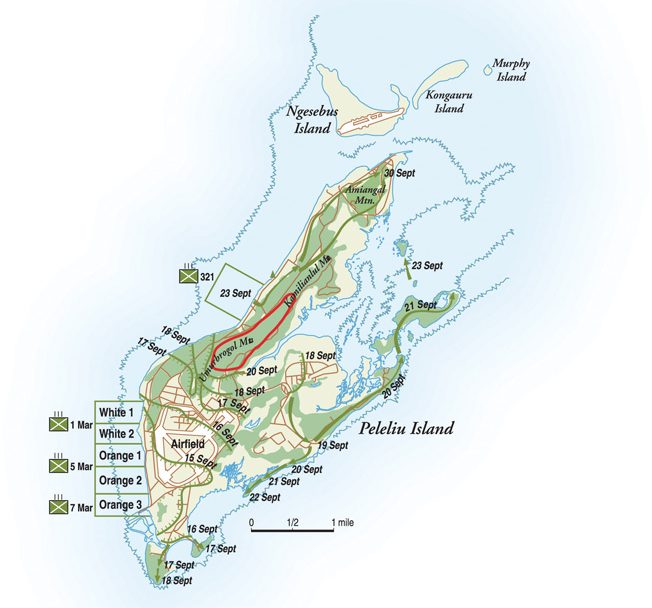
The Pacific War was replete with hell holes with odd names to American ears that American troops wrote into American history with their blood. One of the worst was Peleliu, invaded on MacArthur’s return to the Philippines. It was thought it would make a convenient location for an air base. The commander of the 1rst Marine Division, The Old Breed, predicted the island would be taken in four days. Perhaps if the Japanese had persisted in their foolish shore line defense strategy. Instead, the Japanese commander fortified much of the island, so the Marines and the GIs had to fight their way through endless mazes of defense works, taking heavy casualties as they went. The heat was incredible and the Marines at first did not have potable water as no one had thought that barrels which previously held fuel needed to be thoroughly cleansed before water was put into them.
US casualties were in excess of 11000, 1573 battle deaths and the rest wounded. Japanese casualties were in excess of 12,000, 11000 battle deaths and the rest wounded and captured.
By the time the island was completely secured, the US had numerous air bases in the Philippines. It detracts not a whit from the extreme valor displayed by the US troops who fought there to conclude that the invasion was unnecessary and that the island should have been bypassed.


No marine has ever died in vain.
Indeed.
The annual atomic bomb debate has been over for about a month. I bring it up again because my Great Uncle Mike, a WWII veteran who fought in both the DDay invasion and the Battle of the Bulge, may well have been sent to the Pacific to fight in the planned invasion of Japan had Truman not authorized the use of the atomic bombs.
Every theater of the war had its horrors. I once spoke to a veteran of the Pacific war…mostly, I listened as there was nothing I could tell the gentleman. How the returning servicemen were able to live with the memories of war and go on with their lives is something not recognized or appreciated enough.
RIP Sgt. Anthony P. Garite, aka “Monk”
As a boy in the early 1960s, my Scout leaders were all either WW2 or Korean War vets, or both. They were no-nonsense leaders but truly cared about us. One was a Marine veteran of Tarawa, a non-com. He had a Japanese army battle flag in his rec room. When we had a Troop event there one night, no one had the nerve to ask him how he got it, but he wouldn’ t have told us anyway. I never met a combat vet who would, for that matter. I can’t possibly imagine what they endured.