
The Voyage
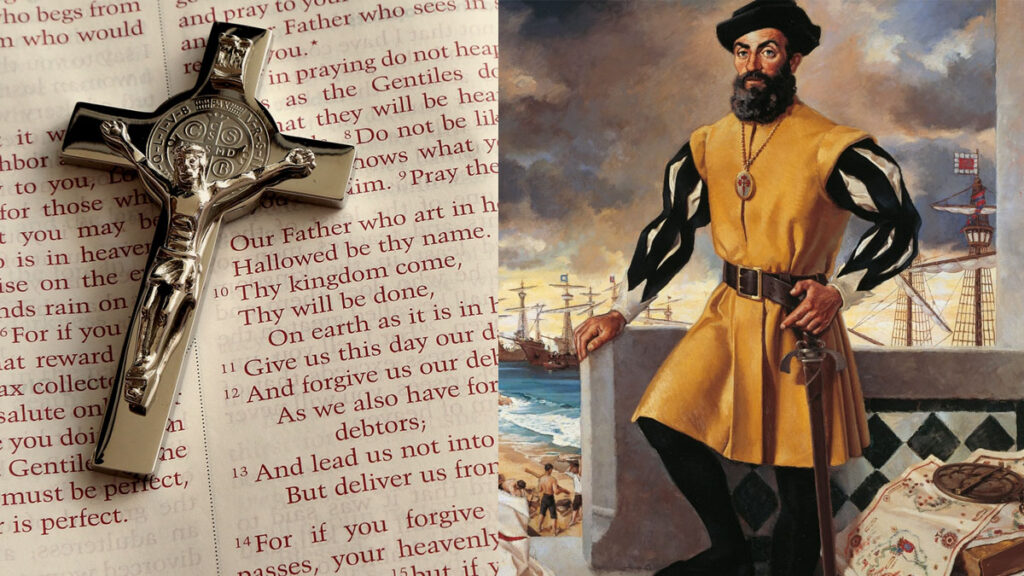
On this day in 1519, the Portuguese explorer, Ferdinand Magellan, set sail for his ambitious mission to reach the Spice Islands via passage through an unknown strait in South America. The unknown strait, which Magellan had only heard rumors of, would provide more accessible trade routes for his Spanish purveyors to the well sought after Spice Islands near Indonesia. This mission, pending a safe return to Portugal, would make Magellan the first sailor to circumnavigate the globe. After setting sail with his ships the Trinidad, San Antonio, Concepción, Victoria, and the Santiago, they would encounter a number of adversities.
Adversities
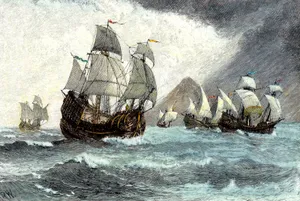
The first part of the voyage to Brazil was beset by intense weather conditions which would lead to the loss of 2 of his ships. Once Magellan had discovered the unknown strait which now bears his name, a mutiny erupted with disgruntled Spanish captains. Once the mutiny was extinguished, Magellan set sail for Indonesia. During this time the crew endured 99 days of no fresh food, even resorting to eating the leather off the yardarms on the ship. After a long and brutal voyage, Magellan and his fleet finally landed on the Island of Cebu in the Philippines. There, Magellan encountered a friendly native population who became enamored with the new Christian religion practiced by Magellan and his fleet.
Conversion of the Natives
The chieftain of Cebu, who at the time had instructed pagan worship to idols, had requested to be baptized very early into his friendship with Magellan. Fearing, however, that the natives were only converting out of fear of their powerful European visitors, Magellan had resisted saying:
“They should not be forced to accept the sacrament out of fear, but out of good will and love of God.”
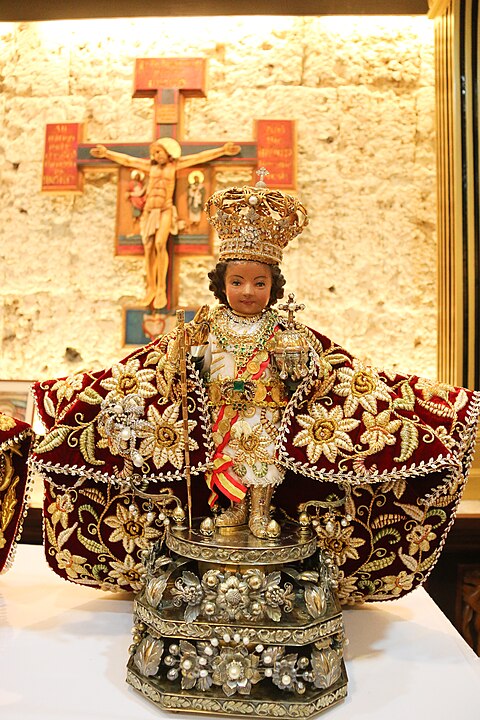
After longer instruction of Christian beliefs to the natives, Magellan relented and baptized the local chieftain and his queen. As a gift, Magellan gifted the queen a statue of Our Infant King and encouraged her to replace the idols of their former gods with the statue. The queen was happy to do so and immediately had all of the idols destroyed and replaced with the image of Our Infant King.
The Sacrifice of Magellan
Through wisdom and Christian determination, Magellan had converted the populous of Cebu and now had found new meaning for his voyage. With hopes to convert the neighboring island of Mactan, he set sail but was quickly met with hostility. In an effort to save his crew, he met his untimely demise on Mactan while striving to advance the Kingdom of God. His legacy lived on in the Philippines as just 25 years after the first conversion of the Island of Cebu, approximately half of the entire archipelago was converted to Christianity.
An Example to Follow
Magellan’s voyage demonstrates the heroism and determination that is required in order to promulgate the advancement of God’s Kingdom. As Christians, we must be heroic in times as bleak as ours. We must look past the temptations of the world that offer us fleeting comforts at the price of our souls. We must prefer the long and treacherous voyage to holiness rather than the lies of society.
Cue the epic Alex Jones rant against Justin Bieber and how ‘cool’ Magellan was.
While Jones’ antics are entertaining, he makes a good point. How can Christians be heroic if we do not have heroic role models? In a world filled with adversity, the average Catholic must show the will and determination that was found in Magellan. We must look to the heroes of the past to become the heroes of the future. I end with a quote by the great C.S. Lewis;
“Since it is so likely that (children) will meet cruel enemies, let them at least have heard of brave knights and heroic courage. Otherwise you are making their destiny not brighter but darker.”


I knew Magellan didn’t make it out of the Philippines. I didn’t know he tarried there for Our Lord. Awesome.
Second point is that the Philippines produced one of the finest priests I have ever known. The things he carried lightly and the things he generously forgave his family are also – awesome.
He must be one of those wicked fruits of colonialism we read so much about 😏
Is there a movement to have Magellan canonized?
[…] Catholics3. The Great Good of Social Dancing: A Reply to My Critics – Tradition and Sanity4. Magellan and Catholic Will – Raymond Hilbrich at The American Catholic5. Two Lawsuits Accuse Missouri Dioceses of […]
I totally agree with Joseph above. I am in a 21 days pilgrimage now here in Spain and, after learning more about the deep faithfulness to the lord god and, learning more about F. Magellan, I think that he should be considered for sainthood. The lord god sent him to the Philippines to proclaim his existence!🙏🏼
There is currently no open cause for his canonization. I think the modern Church would see issue with canonizing someone who technically died fighting natives, even it was for self preservation and the advancement of the faith.