
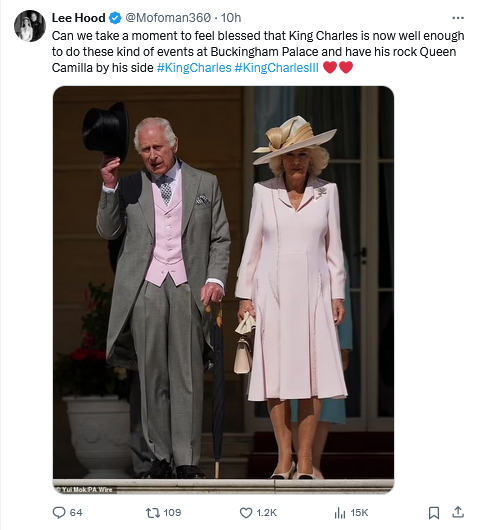
The essence of contemporary monarchy is to pretend that deeply ordinary people, at best, by virtue of their birth, are something special. By the luck of the genetic draw something special will sometimes come about, but not often. Having as a national symbol an animal like the American bald eagle, is usually less troublesome. Once monarchs ceased to rule, but reigned, their shelf life became limited. Modern monarchies are vestigal portions of the body politic with no function other than to lend color to the drab business of government, something Queen Elizabeth II understood, but her son, with his constant search to make the British monarchy “relevant”, does not. Royal theme parks tend to be good for tourism I suppose, but for little else. Monarchs can sometimes look good compared to the politicians the demos throws up, but that is a low bar, and a function of the royals having neither responsibility nor power.
Having said that, I suppose if I had been born a British subject I would wish to retain the monarchy, if for no better reason than its longevity and for fear of the desire of politicians to pretend that they are monarchs during their periods of rule. Taking away the real monarch might intensify that pernicious delusion. That, and I doubtless would be swayed by the devotion of Winston Churchill to the monarchy:


Chesterton thought that the “ordinariness” of the modern monarch was a strength: that he was more likely to keep the humanity lost by professional politicians in their pursuit of power precisely because his status was hereditary. Your last paragraph makes a good point: a prime minister, although head of government, is perpetually reminded that he is a servant, which is not a bad thing for any public officer.
Too many of our fellow Americans, since the time of FDR, have been pushing our president to become a de facto emperor. So far, Congress, the courts and the much-derided electoral college system have forestalled this, but calls for “executive orders” (aka rescripts or ukases) are not encouraging. Caesar and Napoleon had “democratic” support, too, at the start.