
https://www.youtube.com/watch?v=Z4ek3R6P6wY
Continuing our Advent look at Messianic prophecies, a series which we began in Advent 2011 and continued in 2102, 2013, 2014, 2015, 2016, 2017, 2018 and 2019, the earlier posts of the series may be read here, here, here ,here, here, here, here, here , here , here, here, here, here , here, here, here , here, here, here, here, here, here , here, here, here, here , here, here , here, , here , here , here , here , here, here , here, here here and here, we come to Hosea 1: 2-3:
[2] The beginning of the Lord’s speaking by Hosea: and the Lord said to Hosea: Go, take thee a wife of fornications, and have of her children of fornications: for the land by fornication shall depart from the Lord. [3] So he went, and took Gomer the daughter of Debelaim: and she conceived and bore him a son.
Saint Augustine in this passage sees a similarity to an incident in the life of Christ:
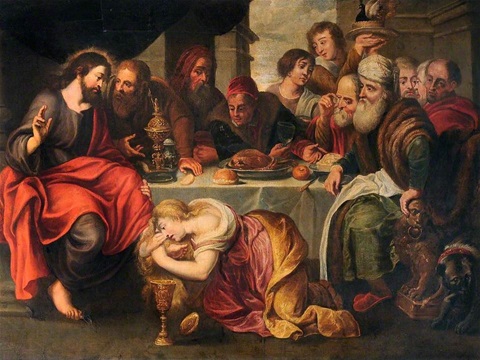
Nobody in his sober senses would believe, for example, that when our Lord’s feet were anointed by the woman with precious ointment, John 12:3 it was for the same purpose for which luxurious and profligate men are accustomed to have theirs anointed in those banquets which we abhor. For the sweet odor means the good report which is earned by a life of good works; and the man who wins this, while following in the footsteps of Christ, anoints His feet (so to speak) with the most precious ointment. And so that which in the case of other persons is often a sin, becomes, when ascribed to God or a prophet, the sign of some great truth. Keeping company with a harlot, for example, is one thing when it is the result of abandoned manners, another thing when done in the course of his prophecy by the prophet Hosea. Hosea 1:2


One interpretation:
Hosea 1-3: Love Triumphant
Boo Heflin | Southwestern Journal of Theology Vol. 36 – Fall 1993
Introduction
Three major themes are reflected in the book of Hosea: First, that God suffers exceedingly because of human rebellion against him; second, that God loves unconditionally; and third, that God forgives completely. It is apparent that the prophet Hosea learned these timeless truths out of the fire of personal experience. It was his tragic lot in life to have an unfaithful wife and a broken home. While Hosea was too modest to give us a detailed account of his personal struggle, he shared enough to let us know that in the profound tragedy of his broken marriage, his message took on flesh and life. His theology found meaning and understanding. Surely our best theology is not that of the head, but rather of the heart.
The little that Hosea does tell us of his personal crisis is found in chapters 1-3 of his book. These chapters are generally recognized by Old Testament scholarship to constitute the first major division of the book. Here Hosea describes-sometimes in rather veiled fashion-his marital crisis and its analogy with the marriage relationship of God and Israel. There is little doubt that in the context of the book Hosea’s major emphasis is on the God/Israel relationship, but his own personal struggle underlies the message. Thus, the two marriages – God/Israel and Hosea/Gomer – are interwoven in the fabric of the prophet’s proclamation.