
Not too long ago, I attended a high school signing ceremony. For those not familiar, a signing is when a high school senior publicly commits to continuing some activity they did during high school at the collegiate level; usually in the area of sports. This particular signing was for those in the Fine Arts who plan to continue in the Fine Arts in college as their official major, not a minor or extracurricular.
During the opening speech, the Fine Arts Director of the high school said something very intriguing. It was something to the effect of:
“People won’t necessarily remember what you did or what you said. They will remember how you made them feel.”
I immediately thought to myself “That’s very insightful!” and was quite happy to find a new truism to ponder, but my second thought was, “That’s not good!”, and my elation faded as I considered the problem of Original Sin.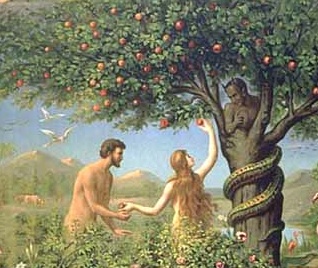
The Director’s comment was made in terms of a future in music, theater, art, etc., but think of what it means in everyday life if all we remember are “feelings”? If you made me feel good, whatever you did or said must have been essentially good. If you made me feel bad, whatever you did or said must have been essentially bad.
Think of advertising that says or shows nothing substantial about the product it’s selling but seems to be only attempting to stir your emotions; have you seen any good perfume commercials lately? How about celebrities, entertainers & politicians? If what they did or said made us feel good, they must be good, so let’s follow them and listen to them.
Now think in terms of the Catholic faith. If we speak Truth and that Truth gave someone a bad feeling, their conclusion may be that it was bad and/or false. This can also work in reverse for happy-clappy feel good churches, whether Catholic or non-Catholic. If you made me feel good, whatever you did or said must be good and/or true.
Many think that people are basically good and the reason they do bad things is due to some injustice or oppression they have experienced. This thinking probably started with the 18th century philosopher Rousseau. Seems more and more there is a tendency to think that people are not ultimately responsible for their own bad behavior; it’s the rest of society that must change. If the government could only build an equitable utopia, all the “basically good” people would be happy and no longer do bad things.
In Catholicism however, humas are good, but flawed. Everything God made is good…very good. “God looked at everything he had made, and found it very good…” (Genesis 1:31). But the Church teaches that we all have the stain of Original Sin. “As a result of original sin, human natur e is weakened in its powers, subject to ignorance, suffering and the domination of death, and inclined to sin” (CCC 418). If someone denies the Doctrine of Original Sin, ask them if they’ve ever spent time with a two-year-old, and have them note that we don’t need to teach children how to be bad; they just do it naturally. We need to teach them to be good.
We have a natural inculcation toward sin, so our feelings can lead us astray, and if people only remember and act upon how they feel, bad things will happen…very bad. Probably the worst advice I’ve ever heard was “Follow your heart”. This may be fine to say under certain circumstances and depending on the state of one’s “heart”, but terribly foolish as a universal platitude.


Unfortunately many people in the world operate like this. They will associate with you as long as the truth, your truth, doesn’t step on their toes.
My most vivid impressions of anybody in my past are not due to how they made me feel, but rather how well they made me think. I believe that the art director was perhaps a bit cocksure of his own muse.
WK,
Remember the context of his muse was the Fine Arts. Perhaps in the long run you are more likely to remember the way a performance or work of art made you feel as opposed to the detail of what was done or said.
Jeremiah 17:9-10
9 The heart is devious above all else;
it is perverse—
who can understand it?
10 I the Lord test the mind
and search the heart,
to give to all according to their ways,
according to the fruit of their doings.
That is one of the problems with Star Wars too. Luke is told to “search his feelings” to find the truth.
Back in my days as a catechist for the parish RCIA program, I used to handle the presentation on abortion and euthanasia every year. I knew my time to move on was fast approaching when the arguments from the pro-abort class members changed over from disputing the humanity of the preborn to “I just don’t feeeeel there is anything wrong with an abortion if…” (fill in the blank-poor family can’t afford another child, rape, incest, or the ever-popular “save the life of the mother” trope). In reply, I pointed out the irrelevance of one’s feelings to a matter of moral truth, and every year, I saw an increasing number of blank stares in response. I suppose the final straw was when I lost my temper a tiny bit, and told one group that if they didn’t accept the existence of eternal Truth, they were in the wrong place and should stop wasting both their time and ours in RCIA. 🤷🏻♂️
Frank,
I’m in RCIA now and have not had that problem…yet. But when I taught RE a few years ago students might say something like “You gotta live your truth”. I would respond, “Osama bin Laden could have said the same thing.”
Something coincidental happened at work (e.g., Neutrons ‘R Us) the other day with respect to this post. A very senior level person wrote a Condition Report / Deviation Event Report (or whatever you want to call it) in which he / she stated, “Engineering judgment would indicate that the [xyz] was adequate, but the basis for that feeling was not clearly documented.” I couldn’t believe what I was reading – and from a nuclear engineer no less! Who gives a flying frack about feelings? What does the nuclear regulation say? Did we follow the regulation or not? Did we document what we did or not? Just the facts! Take your freaking feelings and shove them where the sun doesn’t shine! I absolutely hate this godless liberal progressive Democrat culture of feelings, feelings, feelings. As these reprobate liberals always remind us, “Follow the science!”