
(My Bride and I yesterday evening watched a restored version of the film Go For Broke (1951) last evening on Prime Video. In honor of that, I am resurrecting this post from 2010. I see lots of full length versions of the film are posted on YouTube, the film now being in the public domain. Go here to watch it.)
My wife gave me for my birthday on Saturday a compilation collection of 15 World War II films. I immediately noticed one of the titles: Go For Broke (1951). It had been over thirty years since I last viewed that film and I watched it last night and greatly enjoyed it.
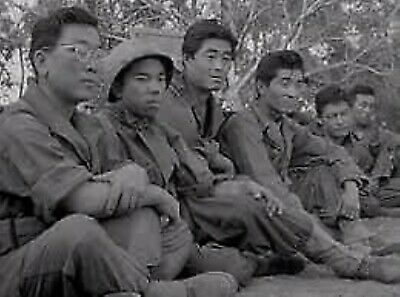
Go For Broke, tells the story of the 442nd regimental combat team during World War II. Made up of first generation Japanese-Americans, Nisei, the 442nd, along with the 100th Infantry battalion, made up of Nisei from Hawaii and which became associated with the 442nd, fought in Italy, France and Germany. Many of the Japanese-American actors in the film were combat veterans of the 442nd which lends the film a very realistic, almost documentary feel, especially in the combat sequences.
The film opens in 1943 at Camp Shelby, Mississippi where the men of the 442nd are being trained. Van Johnson, portraying Lieutenant Michael Grayson, is a “90 day wonder”, an enlisted man commissioned as a 2nd Lieutenant after completing a 90 days officer’s candidate school. Prior to officer’s candidate school he had been a member of the 36th National Guard Division, one of several National Guard units from Texas that fought in World War II, sometimes waggishly refered to as the Texan Army. Grayson was hoping that he would be reassigned to the 36th and is dismayed to find that he will be leading Japanese-American troops, sharing to the full the prejudice that most Americans felt against everything Japanese following Pearl Harbor. He immediately asks Colonel Charles W. Pence, portrayed by Warner Anderson, for a transfer to the 36th. Pence quickly realizes, despite the denials of Grayson, that he is prejudiced against the Japanese-Americans, and informs him in no uncertain terms that his men are loyal Americans, that there will no be transfer, and that he is to take up his duties as a platoon commander, a 40 man unit, immediately. The scene shifts to the platoon, where the men are relaxing in the barracks. Other than their ancestry, and different slang, viewers quickly realize that they are like other American soldiers, griping about the Army, wondering what is going on back home, playing craps, etc. Grayson and his men are a poor fit initially, but he does his job and helps turn them into soldiers.
He learns that the men are from Hawaii, calling themselves Buta-heads, or Buddha-heads, and the mainland of the US. The mainland Japanese-Americans are designated by the Japanese-Americans from Hawaii Katonks, a reference by the Japanese-Americans from Hawaii to the empty sound they claimed to hear when they thumped the heads of the mainland Japanese-Americans! All of this is explained in the film with wry good humor by the Japanese-Americans. We learn that the Japanese-Americans from Hawaii have imbibed a lot of the Hawaiian culture and like singing Hawaiian songs off-duty.
We also learn that some of the mainland Japanese-Americans from the west coast have relatives in internment camps set up after Pearl Harbor during the invasion scare. Several thousand Italian-Americans and eleven thousand German Americans were also interned during the war, but these were individuals who were picked up because investigations indicated that they could be a domestic threat. The west coast Japanese were simply scooped up with no individual investigations. J. Edgar Hoover, head of the FBI, opposed the internment of the Japanese, regarding it as completely unneccessary, but his views sadly were ignored. About 120,000 Japanese -Americans were interned during the war, the vast majority loyal Americans. The Supreme Court ruled the internment of loyal Americans unconstitutional in December of 1944 in the case of Ex Parte Endo. After the decision Japanese-Americans were free to leave the internment camps, although about a quarter of the internees had already left to live and work in areas of the country other than the west coast zones excluded to them, or by volunteering for military service. An excellent article on the internment of Japanese-Americans during the war is here.
The film deals forthrightly with the issue of racial prejudice. Some of the men of the 442nd express understandable bitterness that they are fighting for a country that is imprisoning their relatives. However, they are also all volunteers. They believe that by fighting for the US they will show that they and their families are loyal Americans. Many express a desire to fight against the Japanese in the Pacific, especially one young soldier whose parents were killed during the attack on Pearl Harbor. As the war goes on the men of the 442nd learn in letters that their friends and relatives on the home front have taken great pride in the accomplishments on the battlefield of the 442nd. Lieutenant Grayson by the end of the film will also take great pride in his men, but it is a slow and realistic transition from bigot to friend and it is handled well in the film.
The 442nd was a regimental combat team. What this means is that it was a self-sufficient fighting unit. It had three infantry battalions, each about 600-800 men, an artillery battalion, an engineering company, an anti-tank company, a cannon company, a service company and even an army band. This gave the unit flexibility as as a fighting force and allowed the Army to use it in emergency situations when fast action was needed.
In the film after training the 442nd is shipped out for Italy. We see Grayson reading an Army pamphlet about Italy warning Americans that the Mussolini government has told the Italians that Americans look down on the Italians and that the troops must avoid any racial prejudice against Italians. At the words racial prejudice Grayson glances at his own men and looks uneasy for a moment. The troops land in Italy and begin interacting with the local population and having their first combat experiences. The film accurately depicts the generosity shown by most American troops during the war to civilians, especially kids. Although it sounds somewhat silly, for me one of the more poignant moments in the film is when one of the soldiers, who acquires a pet pig during combat in Italy, he calls the pig “Paisan”, sacrifices the pig in France to feed a family where the kids are going hungry. We realize that the pig means a lot to the soldier after all they have been through, and the scene is heart-rending, at least it was for me.
The combat sequences are very realistic. No fake Hollywood heroics. The actors, most of whom were combat veterans, use actual tactics from the real war. Men die, and no objective is gained without cost. Through out it all, the men gripe about the Army, as I can attest most soldiers on active service do, and have sad and humorous interludes. One of the humorous interludes is when Grayson’s platoon overruns a German position. A surrendering German officer, played by the future Sergeant Schultz, John Banner, stares at Grayson’s men and asks Grayson if the troops are Chinese. Grayson replies, to the smiles of his men, that Hitler must not have told the officer that Japan had surrendered and that the Japanese were fighting against Germany now!
At the end of the film the 442nd, now attached to Grayson’s old outfit, the 36th Division, rescues the 1st battalion, 141st infantry in the Vosges Mountains on October 24, 1944. The 442nd sustained 400 casualties in pulling off this very difficult operation. During the operation Japanese-American radio operators spoke Japanese to throw off Germans attempting to listen in.
In one sequence depicted in the video at the beginning of the post a Catholic chaplain is talking to one of the soldiers who is wounded and on a stretcher. He notices beads in the man’s hand and wonders why he hasn’t seen him at any of the services. The soldier says respectfully, “Different type of rosary. I’m Buddhist, Father” The priest smiles, pats him on the shoulder and tells him that if he needs him to just call him.
The 442nd in its fighting in Germany was among the first of the units to liberate the Dauchau Concentration camp, an experience that the members of the 442nd never forgot.
For its size and time in service the 442nd was the most highly decorated unit in American military history. The unit received an incredible 9,846 Purple Hearts for wounds, 4000 Bronze Stars, 15 Soldier’s Medals, 22 Legion of Merit medals, 560 Silver Stars, 1 Distinguished Service Medal, 52 Distinguished Service Crosses, and 21 Medals of Honor. The recipients of the Medals of Honor are:
- Barney F. Hajiro
- Mikio Hasemoto
- Joe Hayashi
- Shizuya Hayashi
- Daniel K. Inouye
- Yeiki Kobashigawa
- Robert T. Kuroda
- Kaoru Moto
- Sadao Munemori
- Kiyoshi K. Muranaga
- Masato Nakae
- Shinyei Nakamine
- William K. Nakamura
- Joe M. Nishimoto
- Allan M. Ohata
- James K. Okubo
- Yukio Okutsu
- Frank H. Ono
- Kazuo Otani
- George T. Sakato
- Ted T. Tanouye
At the end of the film we see the 442nd returning home and receiving a Presidential Unit Citation from Harry Truman. It was the eighth Presidential Unit Citation for the 442nd, which is more than any other unit has received.
The title of the movie, Go For Broke, was the motto of the 442nd. It was Japanese-Hawaiian pidgin English slang for betting everything on a wager, giving everything you got. The men of the 442nd often shouted it on the battlefield as they attacked. They lived up to their motto. Under conditions which would have caused any man to question fighting for the US, they gave valorous service to America. They were a credit to their country and to their race, the human race.



I have a documentary on DVD of the 442nd and Americans of Japanese descent serving in the U.S. military in WWII. It was common for Japanese immigrants to send their children back to Japan for school, wanting their kids to get a traditional Japanese education. Of the few American Japanese that served in the Pacific theater did as interpreters assisting in interrogation of the very Japanese soldiers taken prisoner. Some of the Japanese vets say they often had to interrogate some of their former classmates.
Griping about military life was not exclusive to Army soldiers, something I can attest to from personal experience. FTN (F$&k the Navy) is as much a part of Navy tradition as Anchors Aweigh. And we were often given much to whine about.
And we were often given much to whine about.
Isn’t that the sad and sorry truth! As we used to say in the Green Machine, the Army, not just a job, but a really crappy adventure!
Mr. Miyagi from “The Karate Kid”, was a veteran of the 442nd.
“Isn’t that the sad and sorry truth!“
Sad, sorry, and also necessary. As a young 19-20 something sailor I bristled at the hardships and the other BS of Navy shipboard life. But looking back on it, I realized it had to be that way. Being in the military involves the necessary sacrifice of rights enjoyed by civilians. Now, I wouldn’t have been caught dead saying that 35 years ago. I also, have to admit what I got in return was a pretty good deal in more than one respect.
I think few people enjoy military service, but I think most people benefit from it long term. As the saying goes, I wouldn’t do it again for a million dollars, but I wouldn’t take a million dollars and have the experience removed from my life.
“I think few people enjoy military service, “
On one of the several Navy Facebook pages I subscribe to, one guy described his Navy experience as “the most fun I ever hated”. I find that to be a spot on assessment. Some of the best and worst times of my life were in the Navy. I got to see the world, albeit a little more than I should have. And yes, it was also mostly water. But I got to see about 15-20 countries. Spent a lot of time in Japan, as well much of the Far East with one trip to Australia, and two deployments to the Persian Gulf, with a couple of stops in Muscat, Oman. If I never see the Persian Gulf again, it would be too soon.