
The Brigittines, founded by St. Bridget of Sweden in 1346, were governed by an abbess, known as the Sovereign, who ruled both male and female communities. They used the same cathedral-like chapel but lived in separate wings of the monastery.
Here is an arrangement that should gladden all feminist hearts. However, the intense poverty and almost endless hours spent in prayer may not appeal to today’s liberated mind. Apart from the complete Divine Office chanted in choir, the sisters and monks added the eight offices from Our Lady’s book of hours.
Syon, at the time of the dissolution, had 60 nuns, 13 priests, four deacons, and eight lay brothers who helped with the heavy work around the abbey and farm. Their special interior devotions were the Passion of Christ, and a deep love of the Blessed Virgin.
Each day had its apogee with solemn Mass, always celebrated with great splendor and the complementary Gregorian choirs of men’s and women’s voices attracted throngs of worshippers even on weekdays. The abbey was a citadel of sanctity.
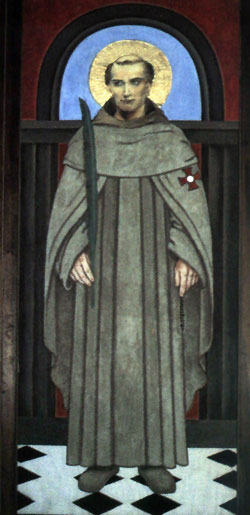
Further turning the King against the frightened Brigittines was Richard Reynolds, a priest-confessor. Not only was he exceptionally loyal to the Holy Father but he refused to accept that Henry could divorce his wife, Katherine, and that his monarch could be head of the Church of England.
This infuriated Henry because Father Richard was something of a folk hero. He could not be killed summarily, largely because of the widespread unrest among the laity. So he was brought to trial and interrogated by Chancellor Audley, a successor to St. Thomas More, who also was martyred for maintaining papal authority.
Tragically, Richard got little support from the bishops and senior clergy. They had recently seen the Cardinal Bishop of Rochester, John Fisher, go to the block, and now was not the time for heroics.
In fact, Cardinal Reginald Pole, later the Papal Legate under Queen Mary, lamented that Richard was let down by the bishops. All 19, except St. John Fisher, had agreed to severing ties with Rome, and this acquiescence was used as a cudgel against him. Thus, he was characterized as a rebellious priest who was disloyal to England’s hierarchy.
Richard did not yield. According to Cardinal Pole, he kept a level head and reminded Audley that, more importantly, on his side were “all Church general councils, all the historians, the holy doctors of the Church for the past 1,500 years, especially St. Ambrose, St. Jerome, St. Augustine and St. Gregory.”
He went to his martyrdom on May 4, 1535, and this probably sealed the fate of Syon abbey. King Henry was a vindictive man, and it is likely he harbored a grudge against the Brigittines. When Thomas Cromwell’s bullboys arrived four years later, the nuns fled to a Brigittine convent in Flanders.
Go here to read the rest.

