Donald R. McClarey
Cradle Catholic. Active in the pro-life movement since 1973. Father of three, one in Heaven, and happily married for 43 years. Small town lawyer and amateur historian. Former president of the board of directors of the local crisis pregnancy center for a decade.
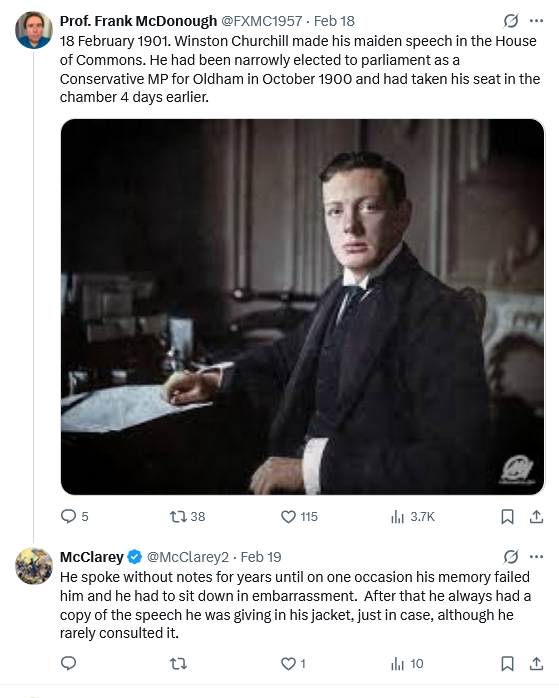



It’s the old cliche of when you’re giving a speech or a talk that you write it all down, then reduce it to an outline. After that you then reduce it to a word. And the risk is that you might forget the word.
When I do talks I have a binder in front of me with the text. Very rarely have I ever given it word for word.
I did have a question about closing arguments – is it allowed to be more of a free-for-all or are there strict parameters as to what an attorney is permitted to say?
There are rules like no appealing to religious prejudice, no deliberate misstating of evidence and so forth. Objections can be made and the Judge of course can intervene, but normally an attorney can make the argument he or she wishes within fairly broad parameters.
Thank you for the clarity. Closing has always been the biggest point of confusion for me regarding the process of trials.
Wayne Wheeler, the Anti-Saloon League political boss during Prohibition (probably not your favorite person), spoke extemporaneously but always kept a copy of his speech in his pocket, as well as typed press releases of it to distribute to newspapers. Anyone who could tell the president and congress what to do, and be obeyed (1920-27), must have known what he was doing.
Churchill also had a mild speech impediment that caused him to be quite deliberate and careful when speaking. Ironically, it was probably at least partly responsible for the sterling words he used to illustrate the points he was making and enhanced their gravity.