
Something for the weekend. Tomorrow Advent gets under way and to rush it a bit we have my favorite version of O Come O Come Emmanuel, which has always sounded to me as if a group of Zealots were singing it. Emmanuel or Immanuel, “God With Us”, comes from the seventh chapter of Isaiah:
10 And the Lord spoke again to Achaz, saying:
11 Ask thee a sign of the Lord thy God either unto the depth of hell, or unto the height above.
12 And Achaz said: I will not ask, and I will not tempt the Lord.
13 And he said: Hear ye therefore, O house of David: Is it a small thing for you to be grievous to men, that you are grievous to my God also?
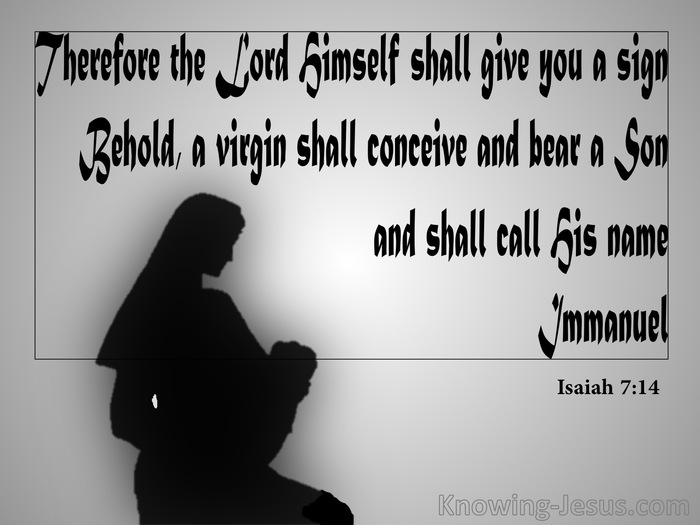
14 Therefore the Lord himself shall give you a sign. Behold a virgin shall conceive, and bear a son, and his name shall be called Emmanuel.
These words, which would find their fulfillment in Christ, were uttered during a time of calamity for Judah. The great Syro-Ephramite War was raging (736 BC-732 BC) which set the stage for the ultimate destruction of the Kingdom of Israel by Assyria, the super power of the time in what we call the Middle East, in 721 BC. Judah would avoid destruction by Assyria in the aftermath of the war, but only by the smallest of margins.
In that time of doom Isaiah began the great cycle of messianic prophecies centered around the Messiah, Emmanuel, God With Us. There is a great lesson for us in this piece of history. No matter how desperate our situation in this world, God is with us. Nations rise and fall, triumphs and disasters come our way, and through it all God is with us. That is the great meaning of Advent.
Bonus:


Great message Donald.
Thanks.
Thank you Philip and have a happy Advent.
THE BREAD OF LIFE
Into Bethlehem, the city of bread – Our Savior came.
For the Eucharist, bread of life is yet another name.
He lay in a manger that gives animals food for life.
In a bitter cold cave, life began in intended strife.
Heavenly angels came to proclaim to shepherds great joy,
and announce the birth of Our Savior as a baby boy.
Shepherds were overcome by awe and associated fear.
Fear gave in to joy for the glorious sounds they could hear.
Power and might of the heavenly host calmed shepherd’s fears.
They were truly assured that God was indeed very near.
Many said let us go so we can view this divine sight.
They were in awe of Mother and Child in glorious light.
For their humility they were God’s most honored choices,
to be privileged as first to hear the heralds’ voices.
Three wise men were proceeding on a journey from afar.
They were promised to be guided by a special bright star.
The sight of wondrous displays were such a heavenly cue,
so that everyone would then understand worship was due.
The world has surely strayed so far from the message heard,
it has never had a greater need for the Incarnate Word.
Bob Rowland
VI/IV/MMXII
[…] O Come, O Come Emmanuel – Donald R. McClarey, The American Catholic […]
“No matter how desperate our situation in this world, God is with us. Nations rise and fall, triumphs and disasters come our way, and through it all God is with us. That is the great meaning of Advent.”
Thank you,Donald, for this powerful Post and the Hymns.
Thank you Mary and have a happy Advent!
This seems like the place to ask this.
I am wondering if I am the subject of the Mandela Effect.
Everywhere I see and hear this song, the chorus is, (as in the version here), “Rejoice, rejoice, Emmamuel, shall come to thee O Israel.”
But I distinctly remember when I was kid, the chorus to this song as: “Rejoice, rejoice, O Israel, to thee shall come Emmanuel.”
Does anyone else have that memory?
GH, yes, I recall the O Antiphons being different, as you describe. Per Wikipedia:
The seven-verse Latin text[edit]
The 1710 text was published in Joseph Hermann Mohr‘s Cantiones Sacrae of 1878, with two additional verses of unknown authorship paraphrasing the two “missing” O Antiphons. The order of verses now followed that of the antiphons (beginning with “Sapientia” and ending with “Emmanuel”), and accordingly the hymn’s title in this hymnal was “Veni, O Sapientia”. The refrain had undergone a slight change and was now “Gaude, gaude, O Israel. Mox veniet Emmanuel”, i.e. “Rejoice, rejoice, o Israel. Soon shall come Emmanuel”.[7]
O Come, O Come, Emmanuel – Wikipedia
The year 2031. The 500th anniversary of Our Lady of Guadalupe. The beginning of the 7th day of creation? Peace on Earth? God is with Us;
https://spiritdailyblog.com/news/51381
Peace.
[…] Pope at CSDJoin in the St. Andrew’s Christmas Novena – Mary Ann Kreitzer at Les FemmesO Come, O Come Emmanuel – Donald R. McClarey, J.D., at The American CatholicAdvent 2024: 4 Catholic Resources to Help […]