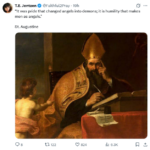
Pope Benedict on Saint Athanasius, a Saint For Our Times
His epitaph is Athanasius contra mundum, “Athanasius against the world.” We are proud that our own country has more than once stood against the world. Athanasius did the same. He stood for the Trinitarian doctrine, “whole and undefiled,” when it looked as if all the civilised world was slipping back from Christianity into the religion of Arius—into one of those “sensible” synthetic religions which are so strongly recommended today and which, then as now, included among their devotees many highly cultivated clergymen. It is his glory that he did not move with the times; it is his reward that he now remains when those times, as all times do, have moved away.
CS Lewis
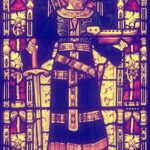
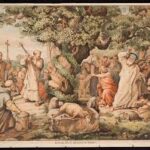
Saint Athansius stood for the Trinity at a time when the Emperor, Constantius, was Arian, and much of the Church in the East had embraced some form of Arianism. Exiled five times by Constantius and his successors, Athanasius was a pillar of iron who never bended and tirelessly proclaimed the Truth, no matter the forces arrayed against the Truth. His relevance for our day needs no elaboration from me. Here is Pope Benedict on Saint Athanasius: Continue reading
Saint Athanasius On the Incarnation
His epitaph is Athanasius contra mundum, “Athanasius against the world.” We are proud that our own country has more than once stood against the world. Athanasius did the same. He stood for the Trinitarian doctrine, “whole and undefiled,” when it looked as if all the civilised world was slipping back from Christianity into the religion of Arius—into one of those “sensible” synthetic religions which are so strongly recommended today and which, then as now, included among their devotees many highly cultivated clergymen. It is his glory that he did not move with the times; it is his reward that he now remains when those times, as all times do, have moved away.
CS Lewis
Something for the weekend. O Holy Night sung by Celtic Woman. I can think of nothing more appropriate for Christmas Eve than this passage from On the Incarnation by Saint Athanasius:
For this purpose, then, the incorporeal and incorruptible and immaterial Word of God entered our world. In one sense, indeed, He was not far from it before, for no part of creation had ever been without Him Who, while ever abiding in union with the Father, yet fills all things that are. But now He entered the world in a new way, stooping to our level in His love and Self-revealing to us. He saw the reasonable race, the race of men that, like Himself, expressed the Father’s Mind, wasting out of existence, and death reigning over all in corruption. He saw that corruption held us all the closer, because it was the penalty for the Transgression; He saw, too, how unthinkable it would be for the law to be repealed before it was fulfilled. He saw how unseemly it was that the very things of which He Himself was the Artificer should be disappearing. He saw how the surpassing wickedness of men was mounting up against them; He saw also their universal liability to death. All this He saw and, pitying our race, moved with compassion for our limitation, unable to endure that death should have the mastery, rather than that His creatures should perish and the work of His Father for us men come to nought, He took to Himself a body, a human body even as our own. Nor did He will merely to become embodied or merely to appear; had that been so, He could have revealed His divine majesty in some other and better way. No, He took our body, and not only so, but He took it directly from a spotless, stainless virgin, without the agency of human father—a pure body, untainted by intercourse with man. He, the Mighty One, the Artificer of all, Himself prepared this body in the virgin as a temple for Himself, and took it for His very own, as the instrument through which He was known and in which He dwelt. Thus, taking a body like our own, because all our bodies were liable to the corruption of death, He surrendered His body to death instead of all, and offered it to the Father. This He did out of sheer love for us, so that in His death all might die, and the law of death thereby be abolished because, having fulfilled in His body that for which it was appointed, it was thereafter voided of its power for men. This He did that He might turn again to incorruption men who had turned back to corruption, and make them alive through death by the appropriation of His body and by the grace of His resurrection. Thus He would make death to disappear from them as utterly as straw from fire.
Athanasius Contra Mundum
Saint Athanasius, a Doctor of the Church, and the foremost defender of the divinity of Christ, is one of the key figures in the history of the Faith. His era, the Fourth Century, was a time period of turbulent change, not unlike our own in that respect. With the conversion of the Emperor Constantine to Christ, the Church was suddenly transformed from a proscribed cult into the religion of the Empire. Instead of being executed for their faith in Christ, bishops found themselves important players in what was rapidly becoming a Christian Empire. To many Christians, it seemed as if they had reached a golden period in human history when the Church could rapidly reach its goal of bringing all men to Christ. History, however, never ceases to twist and turn as it charts the affairs of Man.
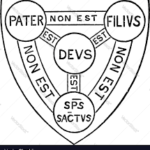
One of the more dangerous twists of History in the Fourth Century for the Church, was the meteoric rise of the Arian heresy. A priest of Alexandria, Egypt, Arius propounded the doctrine that the Son, since he was begotten of the Father, was a creation of God, and not God. He was the greatest of God’s creations, and next to God, but he was not God. Of course, Arius thus destroyed the doctrine of the Trinity, and reduced Jesus from being God to being a creature serving God. This doctrine, if it had prevailed, would have transformed Christianity into a Unitarian faith and inevitably downplayed the centrality of Christ. The doctrine of Arius began to spread, until it was necessary for it to be addressed at the Council of Nicaea in 325 AD, the first of the ecumenical councils. Called specifically to address Arianism, the Council was unequivocal in its condemnation of Arianism as indicated by the Nicene Creed written at the Council:
We Believe in one God, the Father Almighty, maker of all things visible and invisible; and in one Lord, Jesus Christ, the Son of God, begotten of the Father, only begotten, that is, from the substance of the Father; God from God, Light from Light, very God from very God, begotten, not made, Consubstantial with the Father, by whom all things were made, both things in heaven and things in earth; who for us men and for our salvation came down and was incarnate, was made man, suffered and rose again the third day, ascended into heaven, and is coming to judge the living and the dead. And in the Holy Spirit, and those who say “There was when he was not” and “Before his generation he was not” and “He came to be from nothing” or those who pretend that the Son of God is “Of other hypostasis or substance; or “created” or alterable” or “mutable”; the Catholic and apostolic Church anathematizes.
Is Bishop Roger Morin Mendaciously Defending CCHD?
Bishop Roger Morin is the Chair of the Catholic Campaign for Human Development (CCHD) Subcommittee that directs the CCHD. In theory the CCHD works towards ending poverty and injustice in the United States by basically offering grants to organizations that support these goals. But reality is far harsher than what is written.
Numerous organizations have investigated the CCHD and have uncovered many nefarious groups that are diametrically opposed to the teachings of Jesus. Many of these groups promote abortion to ‘gay marriage’. What is striking is that the CCHD doesn’t do anything to end the funding unless a very bright light is shined on them such as the case with ACORN.
Bishop Roger Morin continues to issue memorandums defending CCHD’s vetting process and grants. Yet time and time again he has been proven unequivocally wrong. From the Young Workers United to the Chinese Progressive Association, CCHD apparently sees no evil… anywhere.
Is Bishop Roger Morin being mendacious in his continual defense of the indefensible. I am having a really hard time believing that he could be so obtuse to such an important matter as this.
Cardinal Egan's Inability To Raise Vocations

Outgoing Archbishop of New York Cardinal Egan demonstrates why he is a complete failure in raising the number of vocations in his archdiocese. In comments made to a radio program in Albany two days ago Cardinal Egan [may have] insinuated that because priests aren’t allowed to marry was the cause of his inability to raise the number of vocations. Cardinal Egan openly admitted it was his “greatest” failure in bringing in more seminarians.
[I am using the Cardinal's own words in describing the issue of raising the number of vocations]
Why the Incarnation?

Why did God come to us, as one of us, in the Incarnation? Why this particular path for our salvation? Great saints throughout the history of the Church have sought to answer this question, and perhaps the best answer is one of the earliest, that given by Saint Athanasius of contra mundum fame:


Recent Comments
(4 minutes ago)
(23 minutes ago)
(24 minutes ago)
(27 minutes ago)
(1 hours ago)
(1 hours ago)
(1 hours ago)
(1 hours ago)
(1 hours ago)
(1 hours ago)
(2 hours ago)
(2 hours ago)
(2 hours ago)
(3 hours ago)
(3 hours ago)
(3 hours ago)
(3 hours ago)
(3 hours ago)
(3 hours ago)
(3 hours ago)