Newt Is (or at Least Was) Kind of a Jerk
Marianne Gingrich’s claim that Newt wanted an open marriage is the news story of the day. In all honesty, this doesn’t tell us that much more about Newt than we didn’t know already. Some have already said that this is no worse than simply cheating on your spouse, and, politically speaking, this might not have any impact at all on the race.
That being the case, it does serve as a forceful reminder that Newt Gingrich is kind of a jerk. In fact, I think that if his ex-wife’s claims are true (and admittedly, we don’t know for certain), then it is even a bit creepier than just having an affair. It indicates that Newt is not that concerned about the feelings of other people. Based on what we know of the man, he gives off a vibe that he views other people as simply pawns. While he would hardly be the first such personality to become president, it doesn’t mean we should be so flippant about allowing such a man to obtain the highest office in the land.
Now, we know that Newt has had a conversion, and that people change over the course of their lives. Perhaps the Newt from the mid 1990s is not the same man that he is today. We can’t really judge the state of a man’s soul, and I don’t propose to do that now. But we have to consider a couple of things. First of all, as we are all too well aware, simply becoming a Catholic does not make one a saint. We are abundantly aware that we are all sinners, and though we all hope that a closer relationship to Jesus fostered through the Church makes us better people, it’s still a struggle.
More importantly, this didn’t happen when Newt was a young man. Newt was nearly two decades older than I am right now when this all happened. Yes, men older than Newt have had conversions of the heart. But a conversion is not necessarily a transformation into a completely new man.
I don’t know what kind of person Newt is right now. But I know what he has been, and I’m not going to turn a blind eye to an individual’s character simply because people on the other side of the aisle are all too willing to do so.
William Roper v. Richard Rich
In good faith, Mr. Rich, I am more sorry for your perjury than mine own peril; and know you that neither I nor any one else to my knowledge ever took you to be a man of such credit as either I or any other could vouchsafe to communicate with you in any matter of importance.
Saint Thomas More
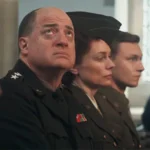
Two arresting scenes from A Man For All Seasons, (1966). Usually the second scene in the video clip is remembered for the statement by Sir Thomas More that he would give even the devil benefit of the law. I have written about that statement here. However there is another interesting facet to the pairing of these two scenes: a comparison of William Roper and Richard Rich.
Sir Thomas is fond of Roper the suitor of his daughter, and the fondness is obvious in the scene. However, he will not allow him to marry his daughter because he is a heretic. More notes that at one time Roper was a passionate churchman and now he is a passionate Lutheran and hopes that when his head stops spinning it will be to the front again. (Roper did become an orthodox Catholic again and remained one till his death, even under the reign of Bad Queen Bess.) In spite of Roper being something that Sir Thomas detests, that does not alter either his liking or his high regard for the young man. Why is this? Because Roper is obviously seeking after the truth and attempting to do what he thinks is right. Such good motivation is to be respected even when it reaches erroneous conclusions.
Richard Rich on the other hand lacks such motivation. More likes him also, but recognizes that he has no character. Rich will do whatever it takes for him to rise in the world, and if that involves immoral actions, so be it. Unlike Roper he lacks any good motivation or honest intent. (The historical Rich was a complete scoundrel and recognized as such at the time. He specialized in betrayals and making himself useful to whoever was in power at the time. Under Henry and Edward he persecuted Catholics, under Mary he persecuted Protestants, and under Elizabeth he was whatever she was. It is a sad commentary on the human condition that such an open, time-serving villain prospered and died in his bed, the founder of an aristocratic dynasty.) Continue reading
Trolley Madness
At last, I have come across the Trolley Problem which truly gets at the difficulties of modern life.
On Twin Earth, a brain in a vat is at the wheel of a runaway trolley. There are only two options that the brain can take: the right side of the fork in the track or the left side of the fork. There is no way in sight of derailing or stopping the trolley and the brain is aware of this, for the brain knows trolleys. The brain is causally hooked up to the trolley such that the brain can determine the course which the trolley will take.
On the right side of the track there is a single railroad worker, Jones, who will definitely be killed if the brain steers the trolley to the right. If the railman on the right lives, he will go on to kill five men for the sake of killing them, but in doing so will inadvertently save the lives of thirty orphans (one of the five men he will kill is planning to destroy a bridge that the orphans’ bus will be crossing later that night). One of the orphans that will be killed would have grown up to become a tyrant who would make good utilitarian men do bad things. Another of the orphans would grow up to become G.E.M. Anscombe, while a third would invent the pop-top can.
If the brain in the vat chooses the left side of the track, the trolley will definitely hit and kill a railman on the left side of the track, ‘Leftie,’ and will hit and destroy ten beating hearts on the track that could (and would) have been transplanted into ten patients in the local hospital that will die without donor hearts. These are the only hearts available, and the brain is aware of this, for the brain knows hearts. If the railman on the left side of the track lives, he too will kill five men, in fact the same five that the railman on the right would kill. However, ‘Leftie’ will kill the five as an unintended consequence of saving ten men: he will inadvertently kill the five men rushing the ten hearts to the local hospital for transplantation. A further result of ‘Leftie’s’ act would be that the busload of orphans will be spared. Among the five men killed by ‘Leftie’ are both the man responsible for putting the brain at the controls of the trolley, and the author of this example. If the ten hearts and ‘Leftie’ are killed by the trolley, the ten prospective heart-transplant patients will die and their kidneys will be used to save the lives of twenty kidney-transplant patients, one of whom will grow up to cure cancer, and one of whom will grow up to be Hitler. There are other kidneys and dialysis machines available; however, the brain does not know kidneys, and this is not a factor.
Assume that the brain’s choice, whatever it turns out to be, will serve as an example to other brains-in-vats and so the effects of his decision will be amplified. Also assume that if the brain chooses the right side of the fork, an unjust war free of war crimes will ensue, while if the brain chooses the left fork, a just war fraught with war crimes will result. Furthermore, there is an intermittently active Cartesian demon deceiving the brain in such a manner that the brain is never sure if it is being deceived.
What should the brain do?
Excerpted from:
– Michael F. Patton Jr., “Tissues in the Profession: Can Bad Men Make Good Brains Do Bad Things?”, Proceedings and Addresses of the American Philosophical Association, January 1988
Moral Sense and Unequal Exchange
Every week I make a point of finding the time to listen to the EconTalk podcast — a one hour interview on some economics related topic conducted by Prof. Russ Roberts of George Mason university. Roberts himself has economic and political views I’m often (though not always) in sympathy with, but he’s a very fair and thoughtful interviewer and has a wide range of guests. This week’s interview was with a semi-regular on the show, Prof Mike Munger of Duke University, and the topic was the concept of euvoluntary exchange which Munger has been attempting to create.
Munger’s project aims to identify why it is that some seemingly voluntary transactions are seen as morally repugnant by most people, and are either socially disapproved of or outright outlawed. So for example, say that Frank is very poor and desperately wants to provide for his family. Tom is very rich and is loosing eyesight in both his eyes. His doctor believes they can pull off a revolutionary new surgery and transplant a healthy eye into him, but they need the eye of a live, healthy person who matches Tom’s blood type and DNA well. Frank is a match and is willing to give up an eye in return for a million dollars.
Now, there are a few people who lean heavily in the rationalistic direction who would say this sounds like a great idea because it makes most people better off, but most people would react to this with revulsion, and it is in fact illegal to do this kind of thing in the US.
The interesting thing is that voluntarily donating an organ (so long as giving it up isn’t considered too big a detriment to you) is considered morally admirable, and is legal. So, for instance, there was a case a year or two ago in our parish where one young woman in the parish donated a kidney to another parishioner who needed a transplant.
Munger’s argument is that in the Frank and Tom example, the transaction may seem voluntary but it’s not really voluntary because of the disparity in means between Tom and Frank. Continue reading
Choosing Hell
This post originally ran (I’ve cleaned up a few typos, but otherwise left it unchanged) back in 2006, but the topic has been on my mind, and having found it via Google while researching the topic of the Fundamental Option I decided to rerun this one rather than writing a new one.
Quite some time back, Pontifications ran a post about the theory of “fundamental option”, which it seems is the theological term for the idea that one’s salvation is based upon a fundamental choice that one makes either for or against God.
This image for the determination of one’s salvation has a certain utility in that it is simple and evocative. C. S. Lewis uses it in The Last Battle, where all of Narnia’s creatures face Aslan and swerve either to his right (with loving expressions) or to his left (with hate in their eyes). And yet, like any image or illustration, applying it absolutely leads to distortion. The ‘encounter God and choose’ image helps to emphasize that God’s judgment is not some arbitrary judgment imposed upon us. It also helps to explain how someone externally appearing to have sinned many times might be saved, while someone who to all appearances led a virtuous life, yet held pride in his heart, might reject God and be condemned. And yet, taken as an absolute of ‘salvation by choice alone’ the theory of ‘fundamental option’ becomes just as much a heresy as ‘salvation by faith alone’.
Continue reading
If I Weren’t Catholic, I Would…
As a Catholic, one is sometimes accused of being so mindlessly doctrinaire that one “accepts anything the pope says without thinking”. However, at other times, one is faced with the opposite challenge: Does your Catholic faith cause you to take any political or moral positions that you wouldn’t take anyway?
Typically, both of these objections are leveled by people who don’t like one’s political or moral stances, but while in the one case it stems from a belief that one would obvious agree with the speaker if only one’s head wasn’t befuddled by religious notions, the other seems to stem from the idea that if only one really took one’s faith seriously, one would agree with the speaker on the point at issue. (Or perhaps alternately, merely a skepticism as to whether anyone actually modifies his life at all due to religious beliefs.)
I think this is a pretty valid question, but if one attempts to think about it seriously, it is a very difficult question to answer, since it leaves one to try to puzzle out how much of one’s beliefs and character are the result of one’s faith, versus how much one picks one’s faith based on beliefs or tendencies one already has. Continue reading
Roundup of Catholic Blogosphere Reaction to Pope’s Condom Comments
The Pope’s comments in an unauthorized excerpt release from Peter Seewald’s latest book, “Light of the World, The
Pope, The Church and The Signs of the Times”, has caused quite a stir.
Basically he said, as an extreme example, if a male prostitute was to use a condom during sex, it was a step towards a better morality.
Pope Benedict wasn’t speaking ex-cathedra.
Nonetheless, the secular media, like clockwork, has declared that condoms are now allowed by all fornicators (not like dissident Catholics were following the teachings of the Church anyways).
So here is a short roundup of the better informed among us:
Pope Approves Restricted Use of Condoms? – M.J. Andrew, TAC
Understanding Pope’s Dilemma on Condoms – Jimmy Akin, NCRgstr
Condoms, Consistency, (mis)Communication – Thomas Peters, AmP
Pope Changed Church Condoms Teaching? – Q. de la Bedoyere, CH
A Vatican Condom Conversion? – Mollie, Get Religion
Pope: Condoms, Sex Abuse, Resignation & Movie Nights – John Allen
What The Pope Really Said About Condoms in New Book? – Janet Smith
Ginger Factor: Pope Approves of Condoms! – Jeff Miller, The Crt Jstr
The Pope and Condoms – Steve Kellmeyer, The Fifth Column
Condoms May Be ‘First Step’ In Moralization of Sexuality – Cth Herald
Pope Did Not Endorse the Use of Condoms – Fr. Zuhlsdorf, WDTPRS?
Did Pope Change Teaching About Condoms? – Brett Salkeld, Vox Nova
(Hat tips: The Pulpit & Henry Karlson)
Proxy Morality: Advocacy and 'Solidarity'
A couple weeks ago, I wrote a post on how we sometimes impute excessive virtue to ourselves for being on the right side of historical conflicts, though a sort of proxy morality. I’d like to follow-up on the theme with the other area in which I think we often fall into a mentality of proxy morality: issue advocacy and solidarity with oppressed groups.
Let me start by trying to lay out a little bit more clearly what I think proxy morality is and why I think it is a danger to us. Proxy morality consists of drawing a strong sense of virtue or righteousness from identification with some cause or group. It is, I think, a dangerous tendency because it allows us to indulge in a great deal of pride and righteousness, while at the same time running of the risk of both excusing ourselves from taking any direct moral action in regards to the issues which we congratulate ourselves on due to proxy morality. Continue reading
Proxy Morality: Taking Sides in History
Generally speaking, I think we would say that moral behavior consists of choosing to do right in one’s actions. However, there are a number of instances in which we tend to think of ourselves as behaving virtuously despite not having actually undertaken any action. These are means by which we tell ourselves that we have demonstrated we are “good people” without the burden of actually doing good things.
There are several different ways we do this which I’d like to address under the description of “proxy morality”, by which I mean instances in which someone assigns virtue to himself through no more action than identifying himself with some good which is performed by someone else. The first of these, one which I think people of all ideological persuasions fall into at times, is that of taking sides in history.
It is by now an old saw that those who do not learn from history are doomed to repeat it, and I think there is a good deal of truth in this. Further, it can be of some moral benefit for us to look to history for people and actions to admire. The moment in which we find ourselves suddenly faced with some difficult moral decision is typically not the moment at which are most un-biased or deliberative, and so having clear examples to follow, if they are well chosen, can be a significant benefit.
Continue reading
Proposition 8 Struck Down, For The Time Being
By now I’m sure you all know that Proposition 8 was struck down by a federal judge. Who knows what will happen on appeal. There is much to be said, but I want to focus on one narrow and possibly tangential point. This phrase from the judge’s ruling, a phrase being reposted on facebook in many statuses:
“A private moral view that Same-sex couples are inferior to opposite-sex couples is not a proper basis for legislation.”
The absurdity of that sentence really struck me. There was nothing “private” about the view of the “superiority” of hetereosexual couples. It has been carried on through generations of communities and in the present day was represented by 52% of Californians. How a popular decision that represented thousands of years of ethical thinking and concern for the family became a private morality is baffling.
More troubling is the implication of the judge that a “moral view” is not a proper basis for legislation. Since when has this been the case? Our laws on pedophilia, minimum wage, health care, torture, human rights, etc. are based at least on part on “moral views,” views that in some respects may be just as if not more private than the ones the judge rejects today.
If morality is not a basis for legislation, what on earth is? Morality guides us in making decisions; without a moral or ethical compass (or perhaps even without a religious one) there is no basis for legislation to be made. Laws are supposed to help make society run better, but there is no way to make society run better unless you have a notion of what a “better society” looks like, and you don’t get to that notion without morality.
State recognition of homosexual marriage is one thing, but this ruling attacks the foundation of our government. Morality must have a place in the public sphere and must be one of the foremost foundations of legislation.
To be sure, the judge is simply smoke-screening for the fact that he is imposing his own standards of morality. But the fact that his statement rejecting a moral basis for legislation is being so celebrated should worry all Americans.


Recent Comments
(23 minutes ago)
(1 hours ago)
(1 hours ago)
(1 hours ago)
(1 hours ago)
(1 hours ago)
(1 hours ago)
(1 hours ago)
(2 hours ago)
(2 hours ago)
(2 hours ago)
(2 hours ago)
(2 hours ago)
(3 hours ago)
(3 hours ago)
(3 hours ago)
(3 hours ago)
(3 hours ago)
(3 hours ago)
(3 hours ago)