Jefferson Davis
Jefferson Davis and the Suspension of Habeas Corpus
Continuing on with our examination of the suspension of habeas corpus during the Civil War, the first part of which may be read here, we turn to Jefferson Davis and the suspension of habeas corpus in the Confederacy. The Confederate Constitution provided for the suspension of habeas corpus:
Sec. 9 (3) The privilege of the writ of habeas corpus shall not be suspended, unless when in cases of rebellion or invasion the public safety may require it.
On February 27, 1862 the Confederate Congress vested in Davis the power to suspend Habeas Corpus. On March 1, 1862 Davis used this power, suspending the writ of Habeas Corpus and declaring martial law in a ten-mile radius around the City of Richmond.
Davis would use this power throughout the War, especially in regions where Unionist sentiment was strong, for example in East Tennessee where martial law was imposed and the writ of habeas corpus suspended in 1862.
Continue reading
November 18, 1861: Jefferson Davis Reports
On November 18, 1861, Jefferson Davis issued a report to the Confederate Congress on the progress of the War. It is a fascinating document. It details how he perceived the War at this early stage. Here is the text of the report, interspersed with comments by me:
Richmond November 18th 1861
The few weeks which have elapsed since your adjournment have brought us so near the close of the year that we are now able to sum up its general results. The retrospect is such as should fill the hearts of our people with gratitude to Providence for His kind interposition in their behalf. Abundant yields have rewarded the labor of the agriculturist, whilst the manufacturing industry of the Confederate States was never so prosperous as now. The necessities of the times have called into existence new branches of manufactures, and given a fresh impulse to the activity of those heretofore in operation. The means of the Confederate States for manufacturing the necessaries and comforts of life within themselves increase as the conflict continues, and we are gradually becoming independent of the rest of the world for the supply of such military stores and munitions as are indispensable for war. The operations of the army soon to be partially interrupted by the approaching winter have afforded a protection to the country, and shed a lustre upon its arms through the trying vicissitudes of more than one arduous campaign, which entitle our brave volunteers to our praise and our gratitude.
The Confederacy would expand its industrial plant enormously during the War, but it could never compete with the industrial might of the Union. The crop of 1861 was indeed bountiful, and it did small good for the Confederacy since Davis had decided on an informal cotton embargo which it was assumed would convince Great Britain to recognize the Confederacy since the British textile industry relied upon cotton from the South. It was a ghastly mistake. With the Union blockade in its infancy, most of the cotton crop of 1861 could have been shipped to Europe and earned much-needed hard currency for the purchase of badly needed supplies and weapons. Instead, what cotton was not used for domestic purposes in the Confederacy in 1861, simply sat in warehouses and on docks. This policy was one of the main blunders of the Davis administration in 1861.
Continue reading
Jefferson Davis and Pio Nono

Jefferson Davis was always a friend to Catholics. In his youth as a boy he studied at the Saint Thomas School at the Saint Rose Dominican Priory in Washington County Kentucky. While there Davis, the only Protestant student, expressed a desire to convert. One of the priests there advised the boy to wait until he was older and then decide. Davis never converted, but his early exposure to Catholicism left him with a life long respect for the Faith.
When the aptly named anti-Catholic movement the Know-Nothings arose in the 1840s and 1850s, Davis fought against it, as did his great future adversary Abraham Lincoln.
During the Civil War, Pope Pius wrote to the archbishops of New Orleans and New York, praying that peace would be restored to America. Davis took this opportunity to write to the Pope:
Jefferson Davis and the Crown of Thorns
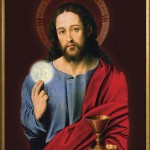
It has long been an article of faith of many admirers of Jefferson Davis that, while he was in Union captivity after the Civil War, he received a crown of thorns from Pope Pius IX woven by the hands of Pio Nono himself. The Museum of the Confederacy in New Orleans has it on display. It is a romantic story and appealing on an emotional level. It is also false. The Pope did send the imprisoned Davis his photograph with the text from Matthew 11:28 ‘Venite ad me omnes qui laboratis, et ego reficiam vos, dicit Dominus.’ (Come to me all all ye who labor and are heavy burdened and I will give you rest, sayeth the Lord.)


(1 hours ago)
(1 hours ago)
(3 hours ago)
(6 hours ago)
(7 hours ago)
(7 hours ago)
(7 hours ago)
(8 hours ago)
(8 hours ago)
(8 hours ago)
(9 hours ago)
(9 hours ago)
(9 hours ago)
(1 days ago)
(1 days ago)
(1 days ago)
(1 days ago)
(1 days ago)
(1 days ago)
(1 days ago)
(1 days ago)
(1 days ago)
(1 days ago)
(1 days ago)