Heresy

My Line In The Sand

Since I have posted, twice, on the methods and actions of Live Action’s undercover sting operations, I have been confronted with the issue more and more in the Catholic publications I read and circles I frequent. I am not going to talk about the morality of lying yet again. Instead I want to talk about what I find to be an incredibly disturbing attitude among people who I normally consider good-willed and faithful Catholics. It goes something like this:

“I approve of lies if they save innocent lives. And I don’t care if it were to turn out that such lies were actually sins. I would do it anyway, and I think God would understand.”

One more extreme version of this argument was “I would gladly die a heretic“, all for the sake of maintaining their own personal position on lying.

Continue reading

LinkedInShare

If Dissident Catholics Had Their Way

Imagine no Catholicism.

Answer:  You get today’s Anglican Communion.


(Biretta tip:  Patrick Archbold of the Creative Minority Report)

LinkedInShare

Benedict Brings the Hammer on Heretics

Michael Voris reviews Pope Benedict’s speech from last weekend.

YouTube Preview Image

To view RealCatholicTV click here.

For RealCatholicTV’s The Vortex click here.

For the RealCatholicTV YouTube Channel click here.

LinkedInShare

Footprints

From the brilliant Paul Nichols at Catholic Cartoon Blog.  Hattip to my friend Paul Zummo, the Cranky Conservative.

LinkedInShare

Bishop Sheen on Fatima

YouTube Preview Image YouTube Preview Image YouTube Preview Image

The things that you find on the internet!  Bishop Sheen gives a brilliant exposition of the miracle of Fatima.

Bishop Sheen believed that our Lady of Fatima would lead to the conversion of Islam.  Here are his thoughts on that subject:

Moslemism is the only great post-Christian religion of the world. Because it had its origin in the seventh century under Mohammed, it was possible to unite within it some elements of Christianity and of Judaism.

Moslemism takes the doctrine of the unity of God, His Majesty, and His Creative Power, and uses it as a basis for the repudiation of Christ, the Son of God.

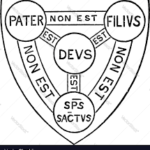
Misunderstanding the notion of the Trinity, Mohammed made Christ a prophet only.

The Catholic Church throughout Northern Africa was virtually destroyed by Moslem power and at the present time (circa 1950), the Moslems are beginning to rise again.

Continue reading

LinkedInShare

Athanasius Contra Mundum

YouTube Preview Image

Saint Athanasius, a Doctor of the Church, and the foremost defender of the divinity of Christ, is one of the key figures in the history of the Faith.  His era, the Fourth Century, was a time period of turbulent change, not unlike our own in that respect.  With the conversion of the Emperor Constantine to Christ, the Church was suddenly transformed from a proscribed cult into the religion of the Empire.  Instead of being executed for their faith in Christ, bishops found themselves important players in what was rapidly becoming a Christian Empire.  To many Christians, it seemed as if they had reached a golden period in human history when the Church could rapidly reach its goal of bringing all men to Christ.  History, however, never ceases to twist and turn as it charts the affairs of Man.

One of the more dangerous twists of History in the Fourth Century for the Church, was the meteoric rise of the Arian heresy.  A priest of Alexandria, Egypt, Arius propounded the doctrine that the Son, since he was begotten of the Father, was a creation of God, and not God.  He was the greatest of God’s creations, and next to God, but he was not God.  Of course, Arius thus destroyed the doctrine of the Trinity, and reduced Jesus from being God to being a creature serving God.  This doctrine, if it had prevailed, would have transformed Christianity into a Unitarian faith and inevitably downplayed the centrality of Christ.  The doctrine of Arius began to spread, until it was necessary for it to be addressed at the Council of Nicaea in 325 AD, the first of the ecumenical councils.  Called specifically to address Arianism, the Council was unequivocal in its condemnation of Arianism as indicated by the Nicene Creed written at the Council:

We Believe in one God, the Father Almighty, maker of all things visible and invisible; and in one Lord, Jesus Christ, the Son of God, begotten of the Father, only begotten, that is, from the substance of the Father; God from God, Light from Light, very God from very God, begotten, not made, Consubstantial with the Father, by whom all things were made, both things in heaven and things in earth; who for us men and for our salvation came down and was incarnate, was made man, suffered and rose again the third day, ascended into heaven, and is coming to judge the living and the dead. And in the Holy Spirit, and those who say “There was when he was not” and “Before his generation he was not” and “He came to be from nothing” or those who pretend that the Son of God is “Of other hypostasis or substance; or “created” or alterable” or “mutable”; the Catholic and apostolic Church anathematizes.

Continue reading

LinkedInShare

Advent and Anti-Christ, Part I

Prior to his conversion to Catholicism, John Henry Cardinal Newman, soon to be Blessed John Henry Cardinal Newman,  preached in 1835 a series of Advent Sermons on the Anti-Christ.  I have always found them extremely intriguing, and I am going to present them on each of the Sundays in Advent this year.

In this first sermon Newman gives us an overview of the Anti-Christ and the time of his appearance.  We see in this sermon Newman’s total command of history and how he uses this knowledge to draw out the implications of the few mentions of the Anti-Christ in Scripture.  Newman intellectually was always first and foremost a historian of the highest order and he puts this talent to good and instructive use in this sermon.  When Newman converted the Church gained one of the finest intellects of the Nineteenth Century or any century for that matter.  Much of Newman’s work concerned the working out of God’s plan for salvation through human history, and his examination of the Anti-Christ places that mysterious part of revelation into that plan.

“Let no man deceive you by any means:
for that Day shall not come,
except there come a falling away first,
and that man of sin be revealed,
the son of perdition.”

Continue reading

LinkedInShare

Can Orthodox Christianity Really Make A Case?

The Orthodox Way is one of the most referenced books in Orthodox Christianity. Despite Bishop Kallistos Ware’s best case, I remain strongly Roman Catholic. In the book, Ware describes the theological doctrines, worship, and life of Orthodox Christians. In the Introduction, Ware emphatically states that Christianity is more than a theory explaining the mystery of the universe, but recalling an ancient name for Christianity, he labels it as “the way” to Truth. On that issue, I don’t disagree with him. But, I do think a close examination of his argument shows that though he is a renowned scholar, he fails to make a case for The Orthodox Church and its doctrines. In comparison to figures such as St. Thomas Aquinas, known infamously for taking on counter-arguments head on, Ware lacks such boldness. He quotes—to an inordinate degree—the Greek Fathers of the Church and theologians of the Orthodox tradition. Rarely is there any mention of early Christians devoted to the traditions and theology of Western Christianity. I think the fact that he doesn’t, at first glance, isn’t surprising at all. Supposedly, the West is in heresy. But then again, the fact that he doesn’t, is very surprising.

Ware cites from seventy-five sources that he refers to as “Orthodox.” Of the group, only three sources—St. Augustine, St. Anthony of Egypt, and St. Leo the Great—are of the Western Christian tradition. He also cites from thirteen additional sources that he refers to as “Non-Orthodox,” implying that the writers are not Orthodox Christians or any of the early Church Fathers. The typical use of sources of this sort is to validate his own convictions or to condemn a specific view, e.g. Augustine’s view of the fall of man.

Continue reading

LinkedInShare

Follow us!

Bookmark and Share

Subscribe by email!

Enter your email address:

Vatican Endorsed & Imprimatur

Recent Comments

RealCatholicTV.com

Digest of Top Posts in St. Blogs

Visitors to our website

Our Subscribers…

Archives