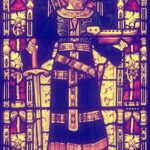
General Robert E. Lee
September 17, 1862: Antietam-America’s Bloodiest Day
Antietam, the bloodiest day in American history. On that single day more American casualties were sustained than in all of America’s prior wars, except for the American Revolution, combined. As for the American Revolution, the 23,000 killed and wounded at Antietam on a single day were more than one-third of the total of 58,000 Americans killed and wounded in the eight years of the Revolution.
Antietam was the culmination of Lee’s Maryland campaign. Lee had decided to enter Maryland in early September 1862 to take the pressure off war-torn Virginia, to gain supplies in Maryland and possibly recruits from sympathetic Marylanders and to inflict, if he could, punishing defeats on Union forces and, with luck, help opponents of the Lincoln administration do well in the fall elections as a result of those defeats. Go here to read a post detailing Lee’s motivation for the Maryland Campaign.
All went superbly for Lee initially in the Maryland Campaign. Supplies were abundant in Maryland. Recruits from Marylanders, while not as abundant as the Confederates would have wished, were first-rate as to quality. The Northern papers, and General Lee gained much valuable intelligence throughout the War by reading carefully every Northern newspaper he could obtain, were largely hysterical about the Confederate offensive, more than a few predicting that the War was lost. General Stonewall Jackson’s II corps was detailed by Lee to capture Harper’s Ferry, which he did on September 15, 1862 against pathetically weak Union opposition, and inflicting one of the worst defeats on the United States Army in its history, the 12,000 Union troops being the largest mass surrender of United States military personnel until the surrender on Bataan in 1942. Go here to read a post on the sorry tale.
Lincoln, desperate to stop Lee, placed Major General George B. McClellan, in disgrace after his humiliating defeat in the Peninsula Campaign, back in command of the Army of the Potomac. McClellan followed Lee in a lethargic pursuit, obviously fearful of being defeated by Lee again. The situation altered dramatically when McClellan was the beneficiary of the biggest intelligence coup of the Civil War, obtaining a copy of Lee’s Special Order No, 191 on September 13, 1862, which revealed to McClellan that Lee had divided his force and the routes that the portions of Lee’s army were to follow. Go here to read a post on the finding of the famous Lost Order. With this order in hand McClellan boasted that he would whip Bobby Lee or go home.
On September 14, 1862 McClellan attacked three gaps at South Mountain to seize them, to allow him to march over the mountain and fall on Lee’s separated units. Lee held two of the gaps after a hard day’s battle. Go here to read a post on the battle of South Mountain. With one of the gaps lost, Lee retreated and began to swiftly reassemble his Army of Northern Virginia to confront the Army of the Potomac. McClellan, inexplicably, threw away his advantage by doing almost nothing on September 15, instead of immediately following Lee in hot pursuit.
At dawn on September 17, 1862, the Army of the Potomac confronted part of the Army of Northern Virginia along Antietam Creek near Sharpsburg, Maryland. Three of the divisions of the Army of Northern Virginia were still on the road from Harper’s Ferry, marching all night to reach Lee. McClellan enjoyed more than a two to one advantage at the beginning of the battle, his 75,000 force confronting less than 30,000 Confederates. McClellan, as he did throughout the War, assumed, against all evidence, that the Confederates outnumbered him.
MClellan issued attack orders for each corps. He made no effort to coordinate attacks between the corps. With the Union advantage in numbers McClellan could have annihilated Lee’s army if he had simply had each corps get into assault position and then attack simultaneously. Instead, this very long day consisted of piecemeal attacks by individual Union corps which gave Lee the opportunity to shift his heavily outnumbered units to meet each threat in turn.
June 25, 1862: The Seven Days Begin
One of the more important series of battles in American history, collectively known as the Seven Days, occurred in Virginia 150 years ago this week. By driving away McClellan’s larger Army of the Potomac from Richmond, Robert E. Lee ensured that the Civil War was not going to be a quick Union victory, and that the Civil War, instead of a minor blip in US history, would, by the beginning of 1863, be transformed into a revolutionary struggle that would destroy slavery and alter the Union forever.
Before taking command of the Army of Northern Virginia after the wounding of General Joe Johnston at the battle of Seven Pines, Robert E. Lee had acquired the nickname of “Granny Lee” due to his construction of fortifications and a perception that he was too cautious and lacked an aggressive spirit. Few nicknames in history have been more inapposite. As a commander Lee was a gambler and far preferred to attack the enemy than to passively await an attack. After taking over command from Johnston at the beginning of June, Lee began working towards a big offensive to drive the larger Union army away from the outskirts of Richmond. To accomplish this he began to draw reinforcements to Richmond from throughout Virginia, most notably Jackson’s Valley Army.
From June 12-15th he had the cavalry of his army, brilliantly commanded by Jeb Stuart, ride around McClellan’s army to ascertain what portion of McClellan’s army was north of the Chickahominy River.
Lee got the information he needed from Stuart’s reconnaissance. McClellan had about 25,000-30,000 men north of the Chickahominy. The remainder of his army, about 60,000, was south of the Chickahominy, in front of the Richmond defenses. Lee’s plan was bold. Leaving about 25,000 men in the Richmond defenses, he would take the rest of the Army of Northern Virginia, and attack McClellan’s troop north of the Chickahominy, giving him a two-one battlefield superiority over the Union forces that side of the Chickahominy. The plan of course was contingent on McClellan remaining passive in front of Richmond. Lee planned on cutting McClellan’s supply lines by turning McClellan’s flank after winning on the north side of the Chickahominy and crossing to the south side and forcing McClellan to retreat or to be destroyed by the converging Confederates from Richmond and Lee’s forces. The plan was daring and complicated, especially for an army as green as the one Lee led.
Continue reading
Will Success Spoil Jeff Davis?
I was four years old when the Civil War centennial began and eight years old when I ended, but even I recall what a big hoopla it all was. In the midst of it all, Thomas Lawrence Connolley, who would become the foremost historian of the Confederate Army of Tennessee, brought out a book in 1963 entitled Will Success Spoil Jeff Davis?, a satirical look at the often over the top aspects of the centennial observations. The book is a howlingly funny look at Civil War mania and still is relevant today. Here is a tiny sample:
The easiest way to publish something on the War is to submit an article to a historical journal. Better still, start your own journal. There are some two thousand in print and, judging by the tone of the articles, many of them are in need of material. Journal writing has its advantages. If he cannot write good prose, the writer can bury himself in footnotes. The footnote is a clever device, designed to confuse the general reader and absolve the author of any lawsuits. For example, consider a typical footnote to the statement “General Crumbley was a bastard.” 34
34. Ibid, see also, Cornstalk, Bastards in Gray, loc. sic.* op. sit., loc. site, sob. Many maintain that General Crumbley was not a bastard. See Thirty Years View by Mrs. Crumbley, op. sit., sic. hoc. Major Kumpley maintained that the General may have been a bastard but that he was indeed a “magnificent old bastard at that/* See diary of Isaac Bumpley, Moose University Archives, XXCI, pt, 2, Sept. 21, 1863. In addition to being a bastard, the General was also a Mason. See diary of Cornelius Kraut, 1st Wisconsin Infantry, SWMVHR (XXI, Je. 45).
Is Robert E. Lee Overrated?
Paul Zummo, the Cranky Conservative, and I run a blog on American History: Almost Chosen People. Yesterday Paul raised the question: Is Robert E. Lee Overrated?
Yeah, the post title is somewhat deliberately provocative, but it’s also meant to be a serious question that I hope will spark some discussion. I was going to ask it in the comments to Donald’s post below, but thought it might be useful fodder for debate in its own right.
General Lee and Guerrilla War
Hattip to commenter Dennis McCutcheon for giving me the idea for this post. We Americans today view the Civil War as part of our history. If different decisions had been made at the end of that conflict, the Civil War could still be part of our current reality. Just before the surrender at Appomattox, General Porter Alexander, General Robert E. Lee’s chief of artillery, broached to Lee a proposal that the Army of Northern Virginia disband and carry out a guerrilla war against the Union occupiers. Here history balanced on a knife edge. If Lee had accepted the proposal, I have little doubt the stage would have been set for an unending war between the North and the South which would still be with us. Douglas Southall Freeman, in his magisterial R. E. Lee, tells what happened next, based upon Alexander’s memoirs, Fighting for the Confederacy.
“Thereupon Alexander proposed, as an alternative to surrender, that the men take to the woods with their arms, under orders to report to governors of their respective states.
65 Years Ago
The video above was produced 2 years ago. If D-Day were to occur today under the current administration I suspect that the coverage of most of the media would be in the nature of “OBAMA STORMS ASHORE IN NORMANDY!” or “THE NAZIS ARE AFRAID OF OBAMA!”. When the press isn’t in the tank however, their coverage of military matters normally is in accord with this sarcastic comment of General Robert E. Lee:
“We made a great mistake in the beginning of our struggle, and I fear, in spite of all we can do, it will prove to be a fatal mistake. We appointed all our worst generals to command our armies, and all our best generals to edit the newspapers.”
Marse Robert
Some of our readers south of the Mason-Dixon line no doubt have perhaps felt left out in my many posts regarding Abraham Lincoln. I am fully aware that great Americans fought on both sides of the Civil War, and one of the greatest of Americans, of his time or any time, was Robert E. Lee.
General Lee's Greatest Victory
“It’s a warm spring Sunday at Saint Paul’s Episcopal Church in Richmond. As the minister is about to present Holy Communion, a tall well-dressed black man sitting in the section reserved for African Americans unexpectedly advances to the communion rail; unexpectedly because this has never happened here before.


(4 minutes ago)
(8 minutes ago)
(28 minutes ago)
(1 hours ago)
(1 hours ago)
(1 hours ago)
(2 hours ago)
(2 hours ago)
(2 hours ago)
(2 hours ago)
(2 hours ago)
(3 hours ago)
(3 hours ago)
(3 hours ago)
(3 hours ago)
(3 hours ago)
(4 hours ago)
(4 hours ago)
(4 hours ago)
(4 hours ago)
(4 hours ago)
(4 hours ago)
(4 hours ago)
(5 hours ago)