Benedict at Westminster
The text of Benedict’s keynote speech on his trip to the UK is here; video of the speech can be found here.
Obviously, you read or watch the speech in its entirety, but I will present a few highlights for readers:
And yet the fundamental questions at stake in Thomas More’s trial continue to present themselves in ever-changing terms as new social conditions emerge. Each generation, as it seeks to advance the common good, must ask anew: what are the requirements that governments may reasonably impose upon citizens, and how far do they extend? By appeal to what authority can moral dilemmas be resolved? These questions take us directly to the ethical foundations of civil discourse. If the moral principles underpinning the democratic process are themselves determined by nothing more solid than social consensus, then the fragility of the process becomes all too evident – herein lies the real challenge for democracy.
MUNIFICENTISSIMUS DEUS
1. The most bountiful God, who is almighty, the plan of whose providence rests upon wisdom and love, tempers, in the secret purpose of his own mind, the sorrows of peoples and of individual men by means of joys that he interposes in their lives from time to time, in such a way that, under different conditions and in different ways, all things may work together unto good for those who love him.[1]
2. Now, just like the present age, our pontificate is weighed down by ever so many cares, anxieties, and troubles, by reason of very severe calamities that have taken place and by reason of the fact that many have strayed away from truth and virtue. Nevertheless, we are greatly consoled to see that, while the Catholic faith is being professed publicly and vigorously, piety toward the Virgin Mother of God is flourishing and daily growing more fervent, and that almost everywhere on earth it is showing indications of a better and holier life. Thus, while the Blessed Virgin is fulfilling in the most affectionate manner her maternal duties on behalf of those redeemed by the blood of Christ, the minds and the hearts of her children are being vigorously aroused to a more assiduous consideration of her prerogatives.
Anne Rice Breaks Up With Christianity
I quit being a Christian. I’m out. In the name of Christ, I refuse to be anti-gay. I refuse to be anti-feminist. I refuse to be anti-artificial birth control. I refuse to be anti-Democrat. I refuse to be anti-secular humanism. I refuse to be anti-science. I refuse to be anti-life. In the name of …Christ, I quit Christianity and being Christian. Amen.
And with that announcement, Anne Rice publicly renounced her identity as a Christian on Facebook.
I’m compelled to wonder, however — who is the more preferable and honest of the two?
- The “Anne Rice”‘s of the world — who recognize their open disagreement with traditional [Catholic / Orthodox] Christianity, and agree that they can no longer identify themselves as such because the moral positions they hold are fundamentally incompatible?
- The “Nancy Pelosi”‘s of the world, who publicly repudiate various traditional moral positions of [Catholic / Orthodox] Christianity, yet simultaneously proclaim themselves “practicing Catholics” (up and including the reception of the Eucharist), and yet relegate their disagreements as “differences of opinion”?
Inception's Leap of Faith: Christianity v. Neo-Conservatives
My wife and I went to see Inception this weekend and I’ve been mulling over it the past two days. I’ve been looking through the internet to find a good analysis and, not finding one fully to my satisfaction, look Tolkien & Lewis’s advice and just wrote my own. If you haven’t seen the movie, I don’t know why you’re reading this but rest assured you will be lost. For those who did see it, I’ll see you after the break.
Is Islam Part of Gods Plan?
Most of us are aware of the Christian exodus from the Middle East where the fundamental problem is Muslim intolerance towards non-Muslims.
Father Samir hopes to change all of that.
In this interview with Father Samir Khalil Samir done by Mirko Testa of Zenit, Father Samir explains the possibility of learning form Lebanon’s coexistence between Christians and Muslims:
The coexistence of Christians and Muslims is good for civil society because their mutual questioning of the other’s faith acts as a stimulus and leads to deeper understanding, says a Jesuit priest who is an expert in Islamic studies.
This is the opinion of Father Samir Khalil Samir, an Islamic scholar and Catholic theologian born in Egypt and based in the Middle East for more than 20 years.
He teaches Catholic theology and Islamic studies at St. Joseph University in Beirut, is founder of the CEDRAC research institute and is author of many articles and books, including “111 Questions on Islam.”
ZENIT spoke with Father Samir regarding the June 21-22 meeting in Lebanon of the Oasis International Foundation, which seeks to promote mutual knowledge among Christians and Muslims.
ZENIT: Why was the subject of education placed at the center of the Oasis meeting this year?
Father Samir: The problem we are experiencing both in the Church as well as in Islam is that we are not always able to transmit the faith easily to the new generation and the generations to come. The question we ask ourselves is: In what way should we rethink the faith for young people, but also in parishes or in mosques, in the talks that religious address to their faithful?
This is what we want: to make a study of the Christian experience in Lebanon, and the Muslim Sunni experience and the Muslim Shiite experience in this ambit. We want to compare, to identify even if it is only the common difficulties, to seek together an answer to them. I think this has been the main objective of our meeting in face of a dialogue of cultures in the Christian and the Muslim faith.
ZENIT: What effect would the disappearance of the Churches of the Middle East have on the Christian and Muslim world?
Father Samir: The disappearance of the Churches of the Middle East would be, first of all, a loss for Christianity, because, as John Paul II said, the Church, as every human being, lives with two lungs: the Eastern and the Western. Now, the Eastern Churches were born here in the land of Jesus, in the territories of the Middle East, where Christ lived. And if this experience, these millennia of tradition are lost, then the loss will be for the whole Church, both of the Christians of the East as well as the Christians of the West.
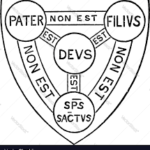
However, there is more to this: if Christian leave the Middle East, in other words, if the Muslims remain alone, an element of stimulation will be lacking — represented, in fact, by that element of diversity that Christians can contribute. Diversity of faith, because Muslims ask us every day: How is it that you say that God is One and Triune? This is contradictory. And we say: How is it that you say that Mohammed is a prophet? What are, for you, the criteria of prophecy? Does Mohammed answer to these criteria? And what does it mean that the Quran is from God? In what sense do you say that it descended on Mohammed? We say that the Bible is divine, but mediated through human authors, whereas Muslims want to remove Mohammed’s mediation.
These questions that they ask us and that we ask are a stimulus, not only for civilization, but also for civil society. It would be a great loss because the risk exists of wishing to found a society, a state based on the sharia, that is, on something that was established in the seventh century in the region of the Arabian Peninsula, even if for Muslims the sharia is generic and true for all centuries and all cultures.
And this is Islam’s great problem: how can Islam be re-thought today? The absence of Christians would make the problem even more acute.
Comedy Central Cowers Before Jihadists While Mocking Christians

The cowards at Comedy Central who censored South Park after receiving death threats from Jihadists, as I detailed here and here, now show their “courage” by announcing a new show mocking Christ. My friend Jay Anderson at Pro Ecclesia gives us the details:
“Fresh off of heavily editing a depiction of Mohammad in “South Park” following threats from practitioners of the “Religion of Peace”, the “edgy” comedy network, Comedy Central, shows its artistic “courage” in announcing a new series blaspheming Jesus Christ:
Comedy Central might censor every image of the Prophet Muhammad on “South Park,” yet the network is developing a whole animated series around Jesus Christ.
Christianity and the Miraculous
Today, Palm Sunday, and throughout the rest of Holy Week, we devote ourselves to the central mysteries of our faith as Christians: Christ’s triumphant entry into Jerusalem. The Last Supper, which instituted for us the mystery of the Holy Eucharist. The suffering and death of Christ on the cross. His resurrection on the third day.
These miracles are the very center of our faith. As Saint Paul said, if Christ did not rise from the dead, then our faith is in vain. Or to paraphrase Flannery O’Connor’s use of rather more modern parlance, “If it isn’t true, to hell with it.”
This central miracle, Christ’s death and resurrection, is the miracle which gives our faith meaning and sets it radically apart from the “he was a good man killed by the authorities for standing up for the poor” substitute which some propose. For if Christ was not God, if He did not rise from the dead, if He did not offer to us eternal salvation, then “he was a good man” is no half-way-there substitute. The resurrection is a miracle so unlikely, so scandalous that we must either embrace it wholly or reject Christianity with scorn. The events of Holy Week are not something we can accept half-way, and by accepting them we accept something which goes utterly and completely beyond the natural and predictable world. A miracle.
Continue reading
Russian Christian Soldier a Martyr of the Chechen War
This is an fascinating story: a Russian soldier who was killed on his 19th birthday in 1996 is being venerated in his home country as a martyr and an icon of him is giving off aromas of myrrh:
Today according to Inferfax of Russia in Penza, an Icon of Evgeny Rodinov gave off aromas of myrrh in the St. Lukas Church at the Penza regional oncologic dispenser. Russian soldier Rodionov was executed in Chechnya in 1996 after refusing to renounce Orthodox faith and take off his cross.
“Myrrh came out in two spots, in a palm of his hand and where one wears the cross,” the church Rector Alexy Burtsev told journalists.
According to the Church Rector, it happened during the All-Night Vigil on February 15. Those in attendance, at the Church, stood behind praying, and took in the strange pleasant aroma.
The priest noted that on February 15, 1996, Penza-born Evgeny Rodionov was captured in Chechnya, imprisoned for hundred days and when he refused to renounce Christian faith, militants beheaded him.
Yevgeny Aleksandrovich Rodionov (Russian: Родионов Евгений Александрович) (May 23, 1977 – May 23, 1996) was a Russian soldier who was kidnapped and later executed in Chechen captivity. The purported manner of his death has garnered him much admiration throughout Russia, and even prompted calls for his elevation to sainthood.
Rodionov was born in the village of Satino-Russkoye, near Podolsk, Moscow Oblast. Though he aspired to be a cook, he was conscripted into the Armed Forces of the Russian Federation in 1995. Private Rodionov was deployed to Chechnya, he served in border troops and on February 13, 1996 he was captured by Chechen rebels. They held him captive for more than three months.
On his 19th birthday Rodionov was beheaded on the outskirts of the Chechen village Bamut. According to his killers, who later extorted money from his mother in exchange for knowledge of the location of his corpse, they beheaded him after he refused to renounce his Christian faith or remove the silver cross he wore around his neck.
Yevgeny Rodionov was posthumously awarded the Russian Order of Courage. There is a growing movement within the Russian Orthodox Church to canonize him as a Christian saint and martyr for faith. Some Russian soldiers, feeling themselves abandoned by their government, have taken to kneeling in prayer before his image. One such prayer reads:
Thy martyr, Yevgeny, O Lord, in his sufferings has received an incorruptible crown from thee, our God, for having thy strength he has brought down his torturers, has defeated the powerless insolence of demons. Through his prayers save our souls.
As of 2003, religious icons depicting Yevgeny were becoming increasingly popular. Yevgeny’s mother has one herself; she has suggested that the icon of her son sometimes emits a perfume which she believes to be holy, to the extent that it actually drips with it.
Evgeny Rodinov, pray for us!
_._
Reprinted with permission by Eric Sammons of The Divine Life.


Recent Comments
(4 hours ago)
(5 hours ago)
(6 hours ago)
(6 hours ago)
(6 hours ago)
(6 hours ago)
(7 hours ago)
(7 hours ago)
(7 hours ago)
(7 hours ago)
(8 hours ago)
(8 hours ago)
(8 hours ago)
(8 hours ago)
(8 hours ago)
(9 hours ago)
(9 hours ago)
(9 hours ago)
(9 hours ago)
(9 hours ago)