Monthly Archives: October 2011
Help for Expectant Mothers
So often we hear stories about how expectant mothers abort children with diagnosed birth defects. As awful as abortion is in its own right, it’s terrifying to think that it is being used for eugenic purposes, whether people realize it or not. Yet, we can’t fully blame parents who believe they have no other recourse.
There are outlets available for parents in such difficult situations, and I just learned of one yesterday. Isaiah’s Promise, as stated on its webpage, provides “support for parents continuing their pregnancy after a poor or fatal diagnosis.” It is a support place to ontact for guidance through the hard decisions about what to do with a poor diagnosis.
They have very limited resources, as their rather bone-thin website indicates. So please take a look at the site and see if there’s any help you can provide, either with manpower or with financial donations. Or, if nothing else, if you know of someone in this situation let them know about this resource.
BOMFOG & Towards Reforming the International Financial & Monetary Systems in the Context of Global Public Authority
Well, I have had an opportunity to review the latest musings of the pontifical counsel for justice and peace. My overall reaction is the same as the famous comment that a Professor once put on a term paper. “This paper is good and original. Unfortunately where it is good it is not original, and where it is original it isn’t good.” On to the fisk!
“The world situation requires the concerted effort of everyone, a thorough examination of every facet of the problem – social, economic, cultural and spiritual. The Church, which has long experience in human affairs and has no desire to be involved in the political activities of any nation, ‘seeks but one goal: to carry forward the work of Christ under the lead of the befriending Spirit. And Christ entered this world to give witness to the truth; to save, not to judge; to serve, not to be served.’”
So far so good.
With these words, in the prophetic and always relevant Encyclical Populorum Progressio of 1967, Paul VI outlined in a clear way “the trajectories” of the Church’s close relation with the world. These trajectories intersect in the profound value of human dignity and the quest for the common good, which make people responsible and free to act according to their highest aspirations.
The last sentence reminds me of a phrase that Nelson Rockefeller used to work into many of his speeches: “The Brotherhood of Man under the Fatherhood of God!” His aides used to refer to it as BOMFOG. The more high-falutin the language, the closer you need to read any concrete proposals embedded within.
Standing for everything will get you nowhere fast…
G.K Chesterton is reputed once to have opined: “It’s not the man who stands for something who scares me. It’s the man who stands for everything.”
![]()
Sadly, it appears the same is true when it comes to peoples’ religious affiliations.
Remember when the United States was considered the dominion of the White-Anglo/Saxon-Protestant (WASP) man?
Well, it seems that the once-powerful Episcopalian denomination in the United States which once stood for something and now stands for everything has come upon very tough times. It now counts less than 2M as members. In fact, a statistical report produced by the denomination notes that its member rolls have shrunk by 40% between 1965 and 2010 even as the U.S. population has increased by more than 50%.
Consider some of the grim statistics:
- In 1965, there were more than 3.5M+ U.S. Episcopalians. In 2010, there were 1,951,907 members.
- The denomination’s 10-year change in active membership (2000-2010) dropped 16% while attendance decreased by 23% to 657,831 in 2010.
-
Parishes are closing. In 2010, 100 parishes closed.


http://www.episcopalchurch.org/documents/Domestic_FAST_FACTS_Trends_2006-2010.pdf
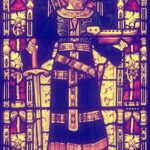
Belated Remembrance of Saint Crispin’s Day: October 25
Notes on the Vatican Statement on Global Financial Reform
UPDATE:
Thinking this post (written last night) over again in the light of morning, it strikes me that while getting a lot of the real text out there is doubtless is a real service, many people simply won’t read the whole thing, so I’m adding the following summary bullets at the top. The document:
- Blames easy money and easy credit for the origins of the global financial crisis (classic Austrian business cycle explanation)
- Criticizes a “liberalist approach” to avoiding intervention and the failure to bail out Lehman Brothers (notes later that financial institutions should be bailed out on condition of contributing to the real economy through “virtuous behavior”)
- Notes that globalization has been a huge benefit to many, but has left others behind
- Calls for people to remember spiritual and ethical considerations rather than putting their hope in technocracy
- Expresses concern that speculation has hurt global markets and the developing world in particular
- Praises the G7 and G20
- Suggests the need for a global “authority” stronger than the UN or IMF
- Says that such a world authority would have to be voluntary in nature, not use force or compulsion, and would probably start as an association of a smaller number of nations (like the G20 or EU)
- Expresses concern that financial markets have grown faster than “real markets”
- Endorses the idea of a world central bank
- Lists as purposes of a world authority and central bank that it would: 1) encourage free trade and efficient markets, 2) prevent excessive government deficits, 3) pursue sound money, 4) prevent speculation and excessive credit, 5) fund itself via a financial transaction tax
Now on to the detailed post.
If my circle of Catholic acquaintance on Facebook is any guide, there’s been a fair amount of buzz going around about the “note” released Monday by the Pontifical Council for Justice and Peace: TOWARDS REFORMING THE INTERNATIONAL FINANCIAL AND MONETARY SYSTEMS IN THE CONTEXT OF GLOBAL PUBLIC AUTHORITY. Those of a more left-leaning description did some preemptive crowing that this would “put the pope to the left of Nancy Pelosi”, but having downloaded a copy of the full document yesterday I figured I’d avoid any commentary, read the document cold, and post thoughts on the text itself.
First, a little context: This document was written by the Vatican’s Pontifical Council for Justice and Peace, an office responsible for providing thought on social justice issues. This is, thus, not something written by the pope, but it does come from people that Benedict XVI has put in charge of thinking on political and economic issues. The document itself is fairly short and less densely written than most encyclicals. Given what it covers, it seems to me that there’s not really any teaching presented here, per se, but rather an attempt to summarize the understandings of certain experts about the current global economic situation, and then to apply well established Catholic moral teachings to the current world situation.
Without getting further into editorializing, I’m going to work through a number of quotes from the text while providing some notes with my own thoughts on it. I’ve preserved the numbered headings of the original document. (The document is in the block-quote indents, my notes are in the out-dents.)
1. Economic Development and Inequalities
In material goods markets, natural factors and productive capacity as well as labour in all of its many forms set quantitative limits by determining relationships of costs and prices which, under certain conditions, permit an efficient allocation of available resources.
This is a fairly standard observation, but as a pricing guy I found it interesting that one of the first things in the document was a note to the efficiency of price as a means of achieving efficient markets.
In monetary and financial markets, however, the dynamics are quite different. In recent decades, it was the banks that extended credit, which generated money, which in turn sought a further expansion of credit. In this way, the economic system was driven towards an inflationary spiral that inevitably encountered a limit in the risk that credit institutions could accept. They faced the ultimate danger of bankruptcy, with negative consequences for the entire economic and financial system.
…
The speculative bubble in real estate and the recent financial crisis have the very same origin in the excessive amount of money and the plethora of financial instruments globally.
This is interesting in that it is an essentially Austrian account of the sources of the financial crisis: blaming it on easy money and easy credit. As Blackadder observed a while back, this wouldn’t be the first time that a Vatican official has taken an explicitly Austrian (and anti-Keynsian) stance on economic issues.) Continue reading
Father Z on the Latest Folly From Justice and Peace
My co-blogger Christopher Blosser has done his usual yeoman work in pulling together reactions from around the Catholic blogosphere to “TOWARDS REFORMING THE INTERNATIONAL FINANCIAL AND MONETARY SYSTEMS IN THE CONTEXT OF GLOBAL PUBLIC AUTHORITY” from the pontifical counsel on justice and peace. One of my favorite blog authors Father Z, who I have designated Master of the Fisk, has some memorable comments on it:
I have a few things to digest yet, and it takes me a while, since this isn’t exactly my bailiwick. However, I can say this: thanks be to God this “white paper” doesn’t form part of the Holy Father’s Ordinary Magisterium.
Every once in a while the Holy See’s smaller offices, Pontifical Councils and so forth, have to put out a paper to justify their budgets and remind everyone that they take up valuable space. These documents, which do not form part of the Holy Father’s Magisterium, can deal with critical issues like how to be a safe driver. The dicasteries keep busy by hosting seminars on how to play sport and so forth.
Some of my favorite points in the new “white paper” include the suggestion that there should be global monetary management and a “central world bank” to regulate it and that the United Nations should be involved. National banks have, after all, done such a good job that we should now make the effort transnational! And is this the same UN that had nations such as Saudi Arabia and, till recently, Libya on the their human rights commission? Wasn’t there a UN financial corruption investigation still going on? Is this the same UN that is pushing contraception pretty much in every poor country on earth? Was that a different UN?
Another high point in the new “white paper”: “These measures ought to be conceived of as some of the first steps in view of a public Authority with universal jurisdiction; as a first stage in a longer effort by the global community to steer its institutions towards achieving the common good.”
Uh huh. Continue reading
Big Bird Exposed!
Well done Klavan on the Culture! Back in the halcyon days of my youth we could get in three television stations, one of them fairly fuzzy, and radio consisted of about 10 stations that we could get clearly. Why in an age of hundreds of tv channels and thousands of radio stations, internet access to endless sources of educational and entertainment videos, and internet radio does one thin dime go to National Public Radio or the Public Broadcasting system? Politics. Democrats know that NPR and PBS lean heavily to the left and find them useful auxiliaries. Continue reading
“Towards Reforming the International Financial and Monetary Systems in the Context of Global Public Authority” – a roundup of reactions
On Monday, the Vatican’s Pontifical Council for Justice and Peace published a statement on the global economic crisis: “Towards Reforming the International Financial and Monetary Systems in the Context of Global Public Authority” [click link for full text]
Suffice to say, reactions were spirited (and in many cases, predictable), reflecting “a tired pattern”, to quote Zach (Civics Geeks)
Everyone once and a while there is a news story about “the Vatican”. “The Vatican” issues a document of some sort. The document says something about current affairs. Immediately there are two very predictable reactions, depending on whether the person is inclined to agree with the Church or not.
- “Look! The Church teaches that Catholics have to think like I think! My opinions have acquired divine authority. The world would be a better place, and the Church would be a better Church, if every Catholic just obeyed Church teaching like I do.”
- “I don’t have to obey the Church – I can think for myself. It’s fine if some old white men in Rome think that, but I don’t have to and I am still a good Catholic.”
These are, of course, caricatures, but I think they express two attitudes that are quite common. They are alike in that they are both dogmatic and reactionary.
What follows then are some mostly thoughtful responses — fodder for a discussion here at American Catholic).
- “The Pope, Chaplain to OWS? Rubbish!” – George Weigel in a characteristic clarification from National Review‘s The Corner, on those who would imbue the document with too much authority:
The truth of the matter is that “the Vatican” — whether that phrase is intended to mean the Pope, the Holy See, the Church’s teaching authority, or the Church’s central structures of governance — called for precisely nothing in this document. The document is a “Note” from a rather small office in the Roman Curia. The document’s specific recommendations do not necessarily reflect the settled views of the senior authorities of the Holy See; indeed, Fr. Federico Lombardi, the press spokesman for the Vatican, was noticeably circumspect in his comments on the document and its weight. As indeed he ought to have been. The document doesn’t speak for the Pope, it doesn’t speak for “the Vatican,” and it doesn’t speak for the Catholic Church.
- Pope Benedict Calls For “Central World Bank” … Only He Didn’t. Here’s Why – Thomas Peters (American Papist) counters the spin of Fr. Tom Reese, who “seems perfectly happy to help the mainstream media fundamentally misunderstand the authority of teaching this document enjoys, [claiming] that the pope has “more in common with the people at occupy wallstreet” than the tea party.”
- “while economists are learning from the Vatican, perhaps the Vatican might learn a few lessons from economic analysts” muses Phil Lawler (Catholic Culture): “If you want to promote Catholic social teaching, don’t wander beyond your expertise. Stick to moral principles, and leave economic analysis to the economists.”
- Also weighing in from “The Corner”, Dr. Samuel Gregg with Catholics, Finance, and the Perils of Conventional Wisdom:
Plenty of other critiques could — and no doubt will — be made of some of the economic claims advanced in this PCJP document. As if in anticipation of this criticism, the document states, “We should not be afraid to propose new ideas.” That is most certainly true. Unfortunately, many of its authors’ ideas reflect an uncritical assimilation of the views of many of the very same individuals and institutions that helped generate the world’s most serious economic crisis since the Great Depression. For a church with a long tradition of thinking seriously about finance centuries before anyone had ever heard of John Maynard Keynes or Friedrich Hayek, we can surely do better.
(Samuel Gregg is research director at the Acton Institute. He has authored several books including On Ordered Liberty: A Treatise on the Free Society, his prize-winning The Commercial Society, Wilhelm Röpke’s Political Economy, and his 2012 forthcoming Becoming Europe: Economic Decline, Culture, and America’s Future).
- Mark Brumley, President and CEO of Ignatius Press, on “Going the way of World Government” (Catholic World Report):
If the Pontifical Council for Justice and Peace is trying to make the Catholic Church sound as if she’s living in a fantasy world or trying to portray Catholic social teaching as completely irrelevant to real world problems, I’d say, “Mission accomplished.” If, on the other hand, the council wants people seriously to think about the problems of globalization, it’s going to have to demonstrate a much better grasp of political and economic practicalities, as well as the limits and dangers of international solutions. At the risk of sounding like an End of the World visionary, I suggest we should temper our enthusiasm for world-authority solutions by re-reading the Catechism of the Catholic Church, paragraphs 675-677, and by consulting the Book of Revelation, chapter 13.
By all means, let’s discuss global problems and possible solutions. Let’s recognize the dangers of nationalism and the imbalances that exist between rich and poor nations. Let’s not overlook the weakness of international capitalism or pretend the free market has all the solutions. Let’s have a good philosophical discussion about world government, and its long-term prospects, if the world endures for a few more centuries. But let’s remember that, historically speaking, those who have tried to act on their talk about a world political order have wound up being tyrants.
- Jeffrey Tucker, editorial vice president of the Mises Institute, author of Sing Like a Catholic
(2009) and Bourbon for Breakfast
(2010), and (familiar to many readers) as a daily contributor to The New Liturgical Movement — “Right Diagnosis, Deadly Cure”:
… the document’s identification of loose credit with market liberty is the beginning of the end of the good sense here. From this point, we plunge straight away into a full endorsement of a world central bank, a world political authority, taxes on financial trading, and heavy regulations. The document doesn’t actually call for an end to the free market. On the contrary, it imagines that enlightened world planners will protect, guard, and even “create” what it calls “free and stable markets.”
This is beyond naive. It seems to illustrate a near total absence of clear thinking. Centralization of money and credit caused this problem. Centralization of political authority caused this problem. Why would anyone imagine that more centralization is therefore the answer? This approach takes a terrible situation and makes it much worse.
- Over at Commonweal, “unagidon” asks “do we need a Global Public Authority to fix the economy?” — and answers in the negative.
- “The Vatican Renders Unto Caesar”, by Nicholas G. Hahn III (Real Clear Religion) 10/25/11:
Any sane person can recognize that the notion of another global civil authority flies in the face of subsidiarity. Simply because the Council says subsidiarity should regulate the relationships of authority, doesn’t mean it actually will.
In fact, global institutions do not often respect autonomy or individual freedom of their memberships. Perhaps even Pius XI, for all his griping against the “greed” of financial systems, might consider the creation of a new “supranational Institution” a “grave evil and disturbance of right order.”
And so, a question that must be asked is: does Rome want a king?
Dr. Robert Moynihan (editor, Inside the Vatican):
The positive thing: this document, in keeping with all of the Church’s social teaching, wishes to defend honesty, transparency, truthfulness and justice in financial dealings over against dishonesty, opacity false representations and injustice.
In this, the document is to be praised, and praised highly. We need honesty and truth-telling in a global economy that is seemingly careening toward a train wreck which will inevitably hurt the poor and weak most of all.
The negative thing: the global economy, and especially the global derivatives market, is big, enormous, in fact, so big, so opaque, so complex, that literally no one knows what the situation really is, or what measures to take to undo the financial detonator that seems ready soon to go off.
In this sense, the Vatican office’s policy recommendations are inevitably insufficient.
- John Allen Jr. (National Catholic Reporter), counters the critics by calling attention to “a southern consensus”:
Focusing on how much papal muscle the note can flex, however, risks ignoring what is at least an equally revealing question: Whatever you make of it, does the note seem to reflect important currents in Catholic social and political thought anywhere in the world?
The answer is yes, and it happens to be where two-thirds of the Catholics on the planet today live: the southern hemisphere, also known as the developing world.
It’s fitting that the Vatican official responsible for the document is an African, Cardinal Peter Turkson of Ghana, because it articulates key elements of what almost might be called a “southern consensus.” One way of sizing up the note’s significance, therefore, is as an indication that the demographic transition long under way in Catholicism, with the center of gravity shifting from north to south, is being felt in Rome.
- Disputations reflects on lessons of the Tower of Babel in the concluding paragraphs of the document:
… the story of Babel not only warns us that we are bound to lack concord if we don’t speak the same language, but — reading it in parallel with the story of Pentecost — that the concord upon which any global authority must be founded to thrive in virtue is nothing less than the peace of Jesus Christ.
As a practical matter, the world is some way away from establishing that foundation. Whether Christians possess the peace of Jesus Christ in sufficient fullness to serve as the cement which, when mixed with the world’s crushed stone, can form a concrete of sufficient strength to bear the weight of the Pontifical Council for Justice and Peace’s proposals is, I suppose, open to question.
- Notes on the Vatican Statement on Global Financial Reform – solid, section-by-section analysis by DarwinCatholic (American Catholic 10/26/11), revealing points that are congenial to both ends of the political spectrum (“There’s much in here that American conservatives and libertarians are not going to like, but there’s just as much that leftist Catholics (particularly populist ones) aren’t going to like either (if they read it.)”).
See additional responses from Rick Garnett @ Mirror of Justice (“many are (perhaps strategically and tactically) mis- and over-reading the Note in order to overstate the consonance between its vision and the current policies of the Democratic Party in the United States and its special-interest constituencies”); Michael Brendan Dougherty @ Business Insider (“WHOOPS! Vatican Lets Slip Plans For One World Government”); Fr. John Zuhlsdorf; Sean P. Daily of Gilbert magazine (“if there is one institution that could unite us, even if it unites [distributists and followers of the 'Austrian' school] only in opposition, it is the Pontifical Council on Justice and Peace”) — and, now blogging for The American Conservative, Rod Dreher hosts a vigorous discussion on his blog here; here; here and here.
40 Martyrs of England and Wales and Cardinal Newman
In so many ways we moderns are pygmies who stand on the shoulders of giants. One group of giants for all English-speaking Catholics is the 40 martyrs of England and Wales who were canonized by Pope Paul VI on October 25, 1970. They deserve to be remembered for their heroic deaths for Christ, and here are their names:
3 Carthusians:
- Augustine Webster d.1535
- John Houghton 1486-1535
- Robert Lawrence d.1535
1 Augustinian friar:
- John Stone d. 1538
1 Brigittine:
- Richard Reynolds d. 1535
2 Franciscans:
- John Jones d. 1598 (Friar Observant – also known as John Buckley, John Griffith, or Godfrey Maurice)
- John Wall d. 1679 (Franciscan – known at Douai and Rome as John Marsh, and by other aliases while on the mission in England)
3 Benedictines:
- John Roberts d. 1610
- Ambrose Barlow d. 1641
- Alban Roe d. 1642
10 Jesuits:
- Alexander Briant 1556-81
- Edmund Campion 1540-81
- Robert Southwell 1561-95
- Henry Walpole 1558-95
- Nicholas Owen 1540-1606
- Thomas Garnet 1575-1608
- Edmund Arrowsmith 1585–1628
- Henry Morse 1595-1644
- Philip Evans 1645-79
- David Lewis 1616-79
13 Priests of the Secular Clergy:
- Cuthbert Mayne 1543–77
- Ralph Sherwin 1558-81
- Luke Kirby 1549-82
- John Paine d. 1582
- John Almond d. 1585
- Polydore Plasden d. 1591
- Eustace White 1560-91
- Edmund G(J)ennings 1567-91
- John Boste 1544-94
- John Southworth 1592-1654
- John Kemble 1599-1679
- John Lloyd d. 1679
- John Plessington d. 1679
7 members of the laity
4 lay men:
- Richard Gwyn 1537-84
- Swithun Wells 1536-91
- Philip Howard 1557-95
- John Rigby 1570-1600 and
3 lay women, all of them mothers:
- Margaret Clitherow 1586
- Margaret Ward 1588
- Anne Line 1601
They were torches that God sent to us to light our way in a frequently dark world. They were representatives of hundreds of martyrs who died for the Faith in England and Wales in the Sixteenth and Seventeenth Centuries. With the Anglican Ordinariate established by Pope Benedict perhaps what Blessed John Henry Cardinal Newman said in the Nineteenth Century will come true in the Twenty-First: Continue reading


(1 hours ago)
(2 hours ago)
(3 hours ago)
(3 hours ago)
(3 hours ago)
(3 hours ago)
(3 hours ago)
(3 hours ago)
(3 hours ago)
(3 hours ago)
(3 hours ago)
(4 hours ago)
(4 hours ago)
(5 hours ago)
(5 hours ago)
(6 hours ago)
(6 hours ago)
(7 hours ago)
(9 hours ago)
(10 hours ago)
(11 hours ago)
(11 hours ago)
(11 hours ago)
(11 hours ago)