Daily Archives: Tuesday, October 7, 2008 A.D.

Pope John Paul II On The "American Experiment"

As Zach indicates, the title of this blog itself is something of a quandary: what does it mean to be a Catholic in America? To participate in this great “American experiment” in ordered liberty? — these are questions which I’ll admit preoccupied me for some time now.

On December 16, 1997, Pope John Paul II welcomed the Honorable Lindy Boggs as Ambassador to the Holy See with the following words to her and the American people:

You represent a nation that plays a crucial role in world events today. The United States carries a weighty and far-reaching responsibility, not only for the well-being of its own people, but for the development and destiny of peoples throughout the world. With a deep sense of participation in the joys and hopes, the sorrows, anxieties, and aspirations of the entire human family, the Holy See is a willing partner in every effort to build a world of genuine peace and justice for all. …

Continue reading

LinkedInRedditPrintFriendlyShare

Lepanto


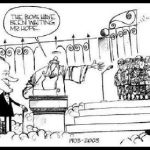
One of our readers, Rick Lugari, asked for a post on Lepanto today on the anniversary date and here it is.

Continue reading

LinkedInRedditPrintFriendlyShare

Catholic Rights Talk

It’s become increasingly common for the Church to talk about “rights” when describing our fundamental duties to our fellow men. Reading through Faithful Citizenship, you’ll find several references to the “fundamental right” to life, echoing statements by the late Pope John Paul II in various encyclicals. However you’ll also find reference to the right to a just wage, housing, accessible health care, the choice of where to educate one’s children, etc. For instance: “Affordable and accessible health care is an essential safeguard of human life and a fundamental human right.” (Faithful Citizenship, 80) “Parents—the first and most important educators—have a fundamental right to choose the education best suited to the needs of their children, including public, private, and religious schools.” (Faithful Citizenship, 72)

I must admit, I really wish the Church had not got into using “rights” terminology at all — in part because I think the Church is using the term “right” in a different way from the standard American usage, thus causing confusion; and in part because it seems to me that it reverses the direction of obligation in human actions.

Continue reading

LinkedInRedditPrintFriendlyShare

Our Priorities

The title of this blog is intended to be descriptive.  But it is possible that some will misinterpret the title, thinking that the term “American” someone how qualifies the term “Catholic”.  Father Richard John Neuhaus speaks of this problem in his recent book Catholic Matters:

“the great thing to discover is not what it means to be an American Catholic but what it means to be a Catholic American. One might think the noun is more important than the adjective, but that is not necessarily so.  The adjective qualifies and, in qualifying, controls.  To say that I want to be an American Catholic assumes that I know what it means to be an American but am uncertain about the Catholic part of ‘American Catholic.’  The goal, rather, is to be a Catholic American; to be a person who knows what it means to be Catholic and is working on what it means to be Catholic in America.” (pp. 166)

Fr. Neuhaus is right.  We are first Catholics, disciples of Jesus Christ.  Our political ideas are not our faith.  Rather, when we are at our best, our political ideas are informed by our faith. And that is perhaps the primary goal of this website: to express clearly and persuasively the influence our Catholicism has on our political life in America. Despite protestations to the contrary, this website is not about the American influence on Catholicism, but the influence Catholics ought to have on America.

Continue reading

LinkedInRedditPrintFriendlyShare

Dominus Noster Jesus Christus Vos Absolvat

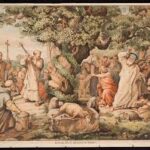
If you travel to Gettysburg you will see a statue to a Catholic priest, and here is why this statue was erected.  One of the crack units in the Union Army during the Civil War was the Irish Brigade.  On July 2, 1863, the 530 men of the Irish Brigade, survivors of the 2500 who originally enlisted to fight under the Stars and Stripes and the green shamrock banner of the brigade, were about to be sent into the Wheat Field.  Brigade Chaplain Father William Corby addressed the troops.

Continue reading

LinkedInRedditPrintFriendlyShare

Dwight and Terrorism

YouTube Preview Image

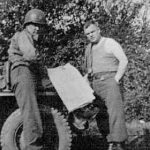
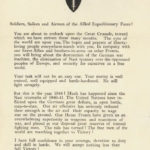
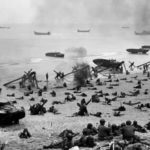
I live in a small town, Dwight, Illinois, about 35 miles southwest of Joliet.  It is a lovely place, about 4400 people, set in the midst of a sea of corn and soybeans.   My wife and I moved here in 1985 and have been very happy.  Soon after we moved to Dwight I joined the local Rotary Club.  There I met Jim Oughton and his brother Richard Oughton.  Both had served in WW2, Jim as a naval officer, and Dick as a marine fighter pilot.  They were also the two richest men in town, the scions of a family that had been the wealthiest family in town for well over a century.

Continue reading

LinkedInRedditPrintFriendlyShare

Follow us!

Bookmark and Share

Subscribe by email!

Enter your email address:

Vatican Endorsed & Imprimatur

Recent Comments

RealCatholicTV.com

Digest of Top Posts in St. Blogs

Visitors to our website

Our Subscribers…

Archives

TAC works best with these browsers: